Best practice
Citations in AI answers: how to show sources people can check
How to design citations in AI answers that people can check: cite each claim, show the passage and its date, use fewer sources and mark what’s unsourced.
· 11 min read · Musab Alfawal
On this page
A citation in an AI answer is a link from a sentence to the place it came from: the document, the section and, ideally, the exact words. Google’s AI Overviews, ChatGPT search, Perplexity and the help bot on a company’s own website all answer with citations, because an answer you can check is worth more than one you have to take on trust.
In practice, people rarely check. Pew Research Center looked at the browsing of 900 US adults in March 2025 and found that people clicked a link inside Google’s AI summaries on just 1% of visits to results pages that showed one. Part of the reason is how citations are usually drawn: a tiny grey number or a row of logos at the end of a paragraph, which opens a long page with no sign of where the claim is.
This guide is about designing citations that make an answer checkable: where to put them, what a citation should show, how many to give, and what to say when there is no source at all. The examples come from a made-up staff assistant that answers questions from a company handbook, but the same rules apply to AI search and to customer help bots.
Why people don’t check citations
A citation does two jobs. It lets someone check a claim, and it makes the answer look trustworthy. The second job happens whether or not anyone checks, and that is the problem.
Nielsen Norman Group’s research on how people look for information with AI found that people rarely click citation links, and warns that it is easy to overtrust an answer simply because it looks well-cited. In a large preregistered experiment, Haiwen Li and Sinan Aral at MIT found that links and citations raised people’s trust in AI search results even when the links were wrong or made up. A study presented at AAAI 2025 found that trust rose even when the citations were random, and fell when people actually checked them.
So a citation nobody can easily check is worse than decoration. It borrows trust from a source that may not say what the answer says. Microsoft’s Guidelines for Human-AI Interaction ask products to make clear why the system did what it did. For an answer, the citation is most of that explanation, so it has to hold up when someone looks.
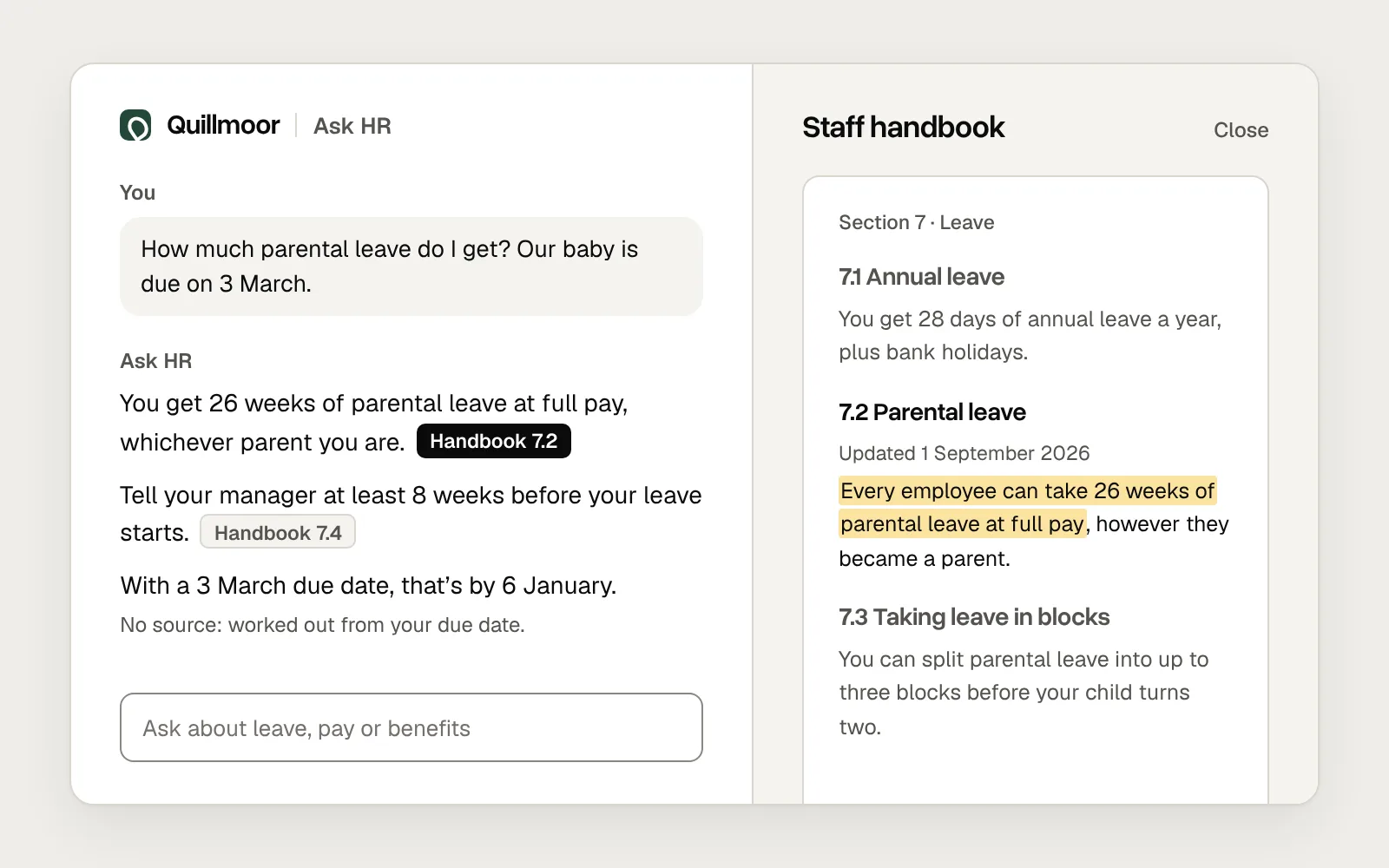
The aim is not to make everyone check everything. It is to make checking the one claim someone is about to act on take a tap and a few seconds. Here is the same answer from a staff assistant, cited two ways. The first looks sourced. The second can be checked.
Before
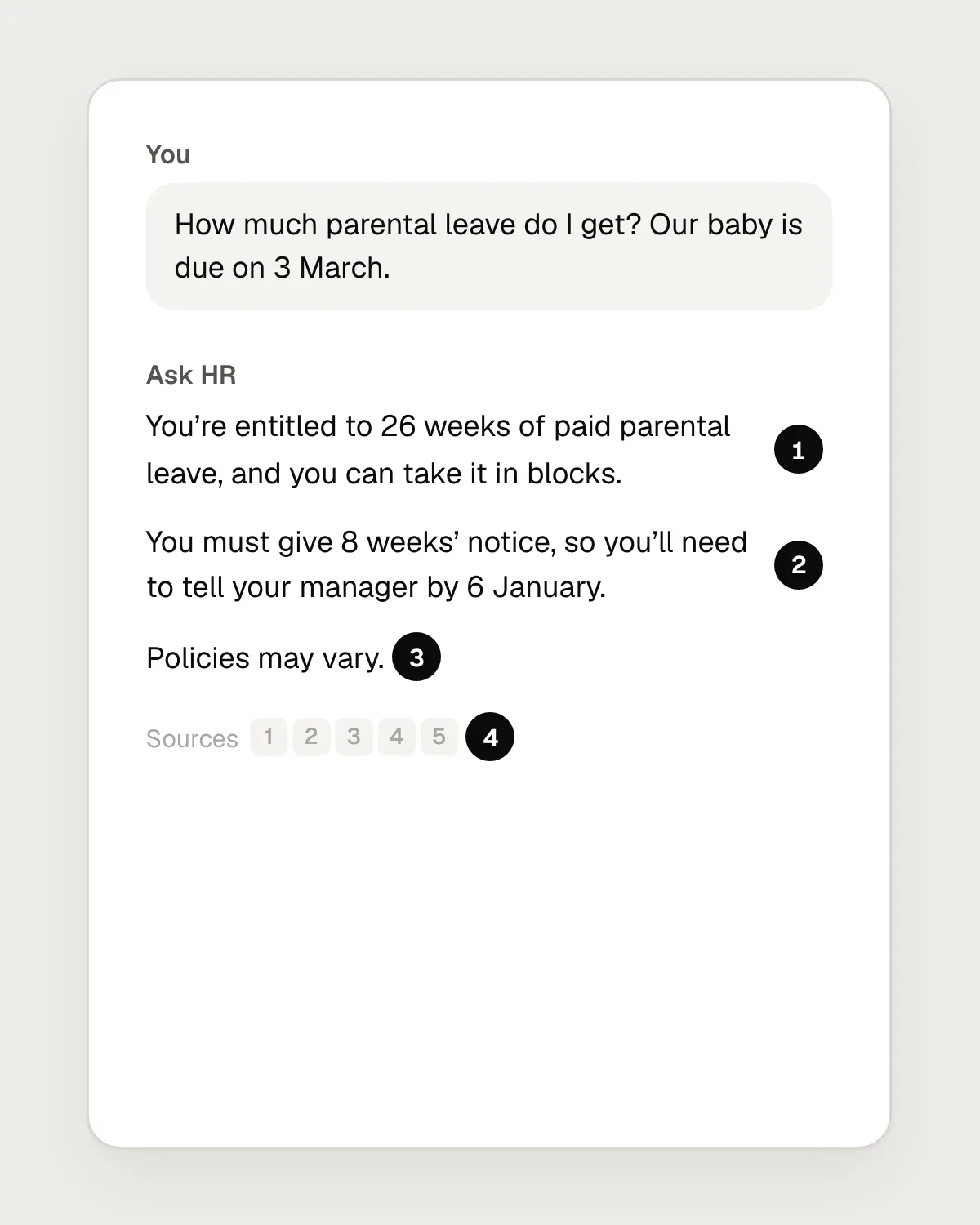
- A figure, with nothing to say where it came from.
- The assistant’s own date sum, written as if it were policy.
- A vague hedge where the policy’s date should be.
- Five bare numbers at the end: no names, no dates, no clue which backs what.
After
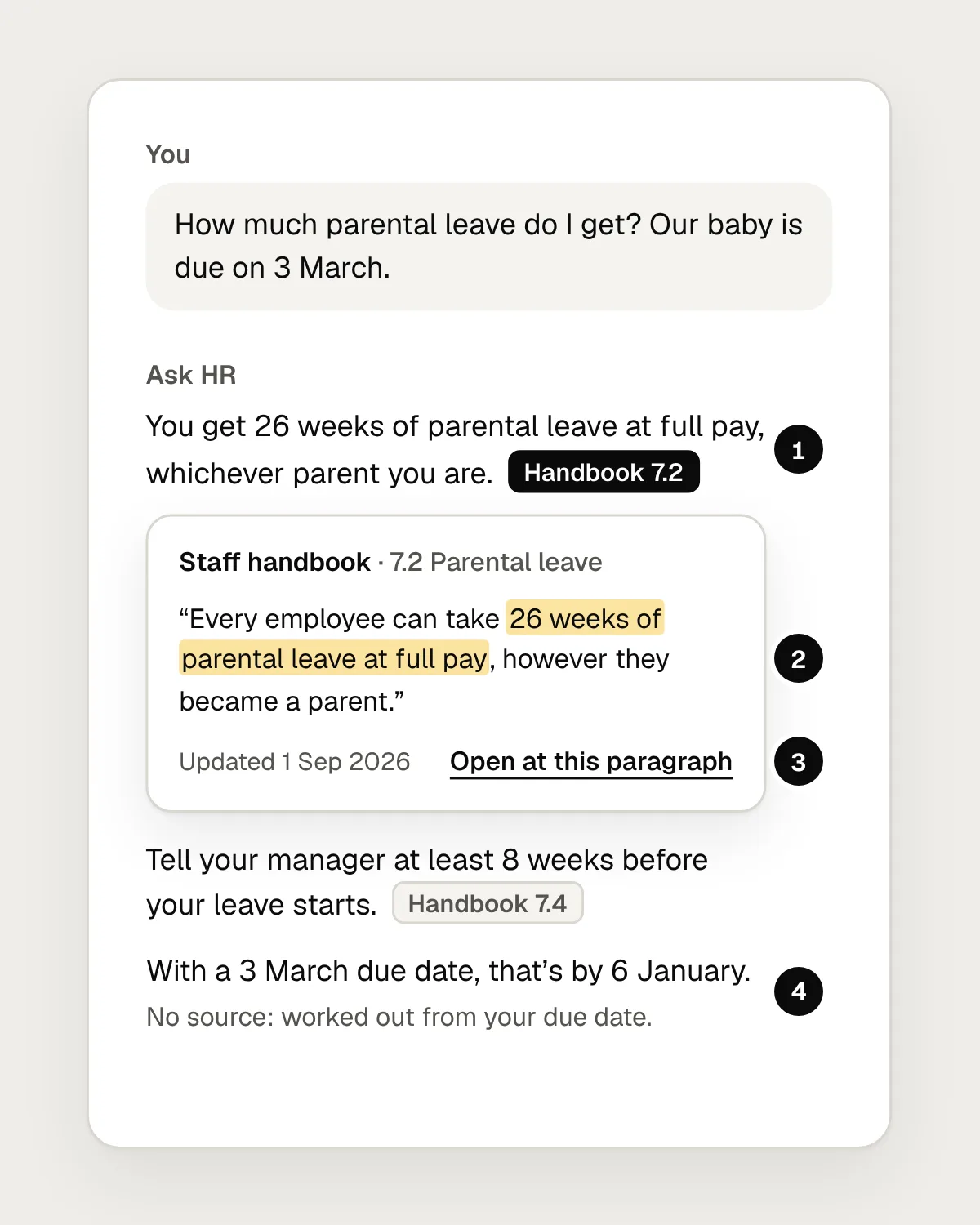
- A marker after each sentence names the section it came from.
- Tapping it shows the exact words, with the part that matters highlighted.
- When the section was last updated, and a link that opens it at that paragraph.
- The date sum is marked as the assistant’s own working, with no source.
Cite at the claim, not at the end
Put a marker straight after the sentence it supports. A pile of numbered links under the answer tells people that sources exist, not which one says what, and most answers mix several. In a 2026 study, Nielsen Norman Group found that even when AI tools gave citations, some participants struggled to tell which claims a named source supported and which parts were the tool’s own synthesis.
Make the marker say something. “Handbook 7.2” tells someone where the sentence came from before they tap it. “[1]” tells them nothing, and a row of identical numbers trains people to skip them.
Cite at whatever level you can honestly support. If one sentence draws on two sources, give it two markers. If a whole paragraph comes from one section, one marker at the end of the paragraph is enough, as long as nothing in it came from anywhere else.
Show the passage, not just the page
A link to a 64-page PDF is not a citation anyone will check. When someone taps or hovers over a marker, show a preview with what they need to judge it without leaving the answer: the source’s name, the section, when it was last updated and the exact words the sentence rests on, with the part that matters highlighted.
Then let them go further, to the right place. “Open at this paragraph” should open the document scrolled to the passage, with it highlighted, not at the top. On the web, a text fragment does this: a link ending in #:~:text= followed by the words makes the browser scroll to them and highlight them. Every major browser has supported it since Firefox added it in October 2024. For your own help centre or documents, link to the section’s anchor.
Google Cloud’s design guidance for generative AI recommends the same pattern: embed citations in the generated text, and highlight the specific passages that informed the answer. Some model APIs return those passages for you. Anthropic’s Citations feature, for example, points to the exact sentences in your documents that each part of an answer came from, so you can show them rather than guess.
Here is the whole loop: tap a marker, read the passage, then open the handbook at that paragraph.
Fewer, better sources
Ten links under a three-sentence answer look thorough. Mostly they are padding: several say the same thing, some are only loosely related, and the one that matters is lost among them. Every extra source is also another chance for one not to say what the answer claims.
Show the sources the answer actually rests on, usually two or three, and prefer the most authoritative one over the most similar-sounding one. For a policy question, that is the policy itself, not a newsletter about it. If people want to see everything the system looked at, put that list one tap away and call it what it is: “Also searched”.
A credible source is no guarantee on its own. In a 2026 study of Google’s AI Overviews, researchers at Washington University in St. Louis split answers into 98,020 individual claims and found that 11% were not supported by the pages cited for them, most often because the page didn’t mention the claim at all. How credible a source was and whether it supported the claim turned out to be largely independent.
Say when a sentence has no source
Not every sentence in a good answer comes from a source. Some are the assistant’s own working: a date it calculated, a comparison it drew, a summary of two sections. Some are general knowledge. Both are fine, as long as they aren’t dressed up as quotes.
Mark them. A sentence the assistant worked out should say so in plain words: “No source: worked out from your due date.” Leave the marker off rather than borrowing a nearby one, because a citation on a calculation tells people the document said it.
If the system can’t find a source for something that needs one, such as a figure, a rule or a deadline, it should say so instead of stating it anyway. “I couldn’t find this in the handbook. Ask your HR partner.” is a useful answer.
Show when sources disagree, or are old
Documents contradict each other. An old policy sits next to its replacement, a help article describes last year’s settings, two pages give different prices. If the answer quietly picks one, people who check will find the other and stop trusting both.
Say it instead. “The 2023 leave policy says 18 weeks. The handbook replaced it on 1 September 2026.” names the conflict, says which source wins and why, and lets people check both.
Make dates visible for anything that changes: prices, rates, policies, opening hours, product settings. Show when each source was last updated, and for figures, from when they apply: “£240 a month from 1 April 2026”. If the newest source is older than you would expect, say that too, rather than presenting an old figure as today’s.
Only cite what the answer actually used
Never show a citation the system didn’t use. A marker should point to a passage the model was given and drew on, not to a page found afterwards because it looks similar. A citation added after the fact can look right and still not say what the sentence claims.
Check every citation before it is shown: the link resolves, the passage is really on the page, and it supports the sentence it is attached to. The failures are common. In March 2025, the Tow Center for Digital Journalism asked eight AI search tools to find the source of excerpts from news articles, and they gave wrong answers more than 60% of the time. More than half of the responses from Gemini and Grok 3 cited fabricated or broken links. A 2026 study of AI research agents found that the best models produced working links more than 94% of the time, yet only 39–77% of their claims were supported by the source they cited.
If a citation fails a check, drop it and mark the sentence as unsourced, or rewrite the sentence until the source supports it. Showing nothing is better than showing something false.
In your own product, cite your own help
A help bot inside a product has an advantage AI search doesn’t: you own the sources. Cite your own help articles, at the heading the answer came from, and show which version of the product the article describes and when it was last updated. “Applies to version 4.2 and later. Updated 14 October 2026.” saves a support ticket when someone is on an older version.
Answer from your help centre first, and say when the bot goes beyond it. If it draws on general knowledge to answer a question about your product, mark that, because it is the likeliest place for it to be wrong.
Treat the help centre as part of the bot. Every out-of-date article is now an out-of-date answer, given with confidence. When an article changes, the answers that cite it should change too, and a citation to a deleted article should never reach a customer.
Mistakes, and what to do instead
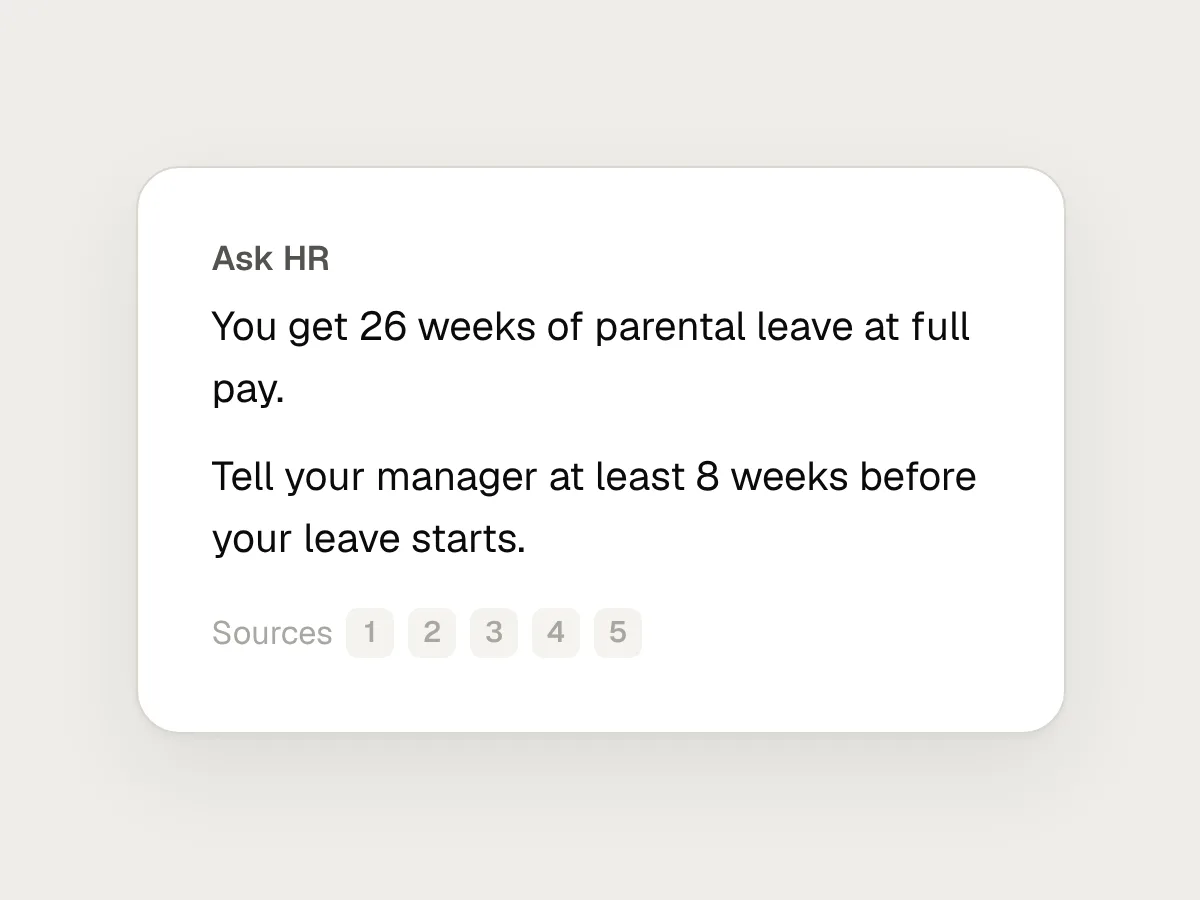
Don’t
A row of numbered links at the end of the answer.
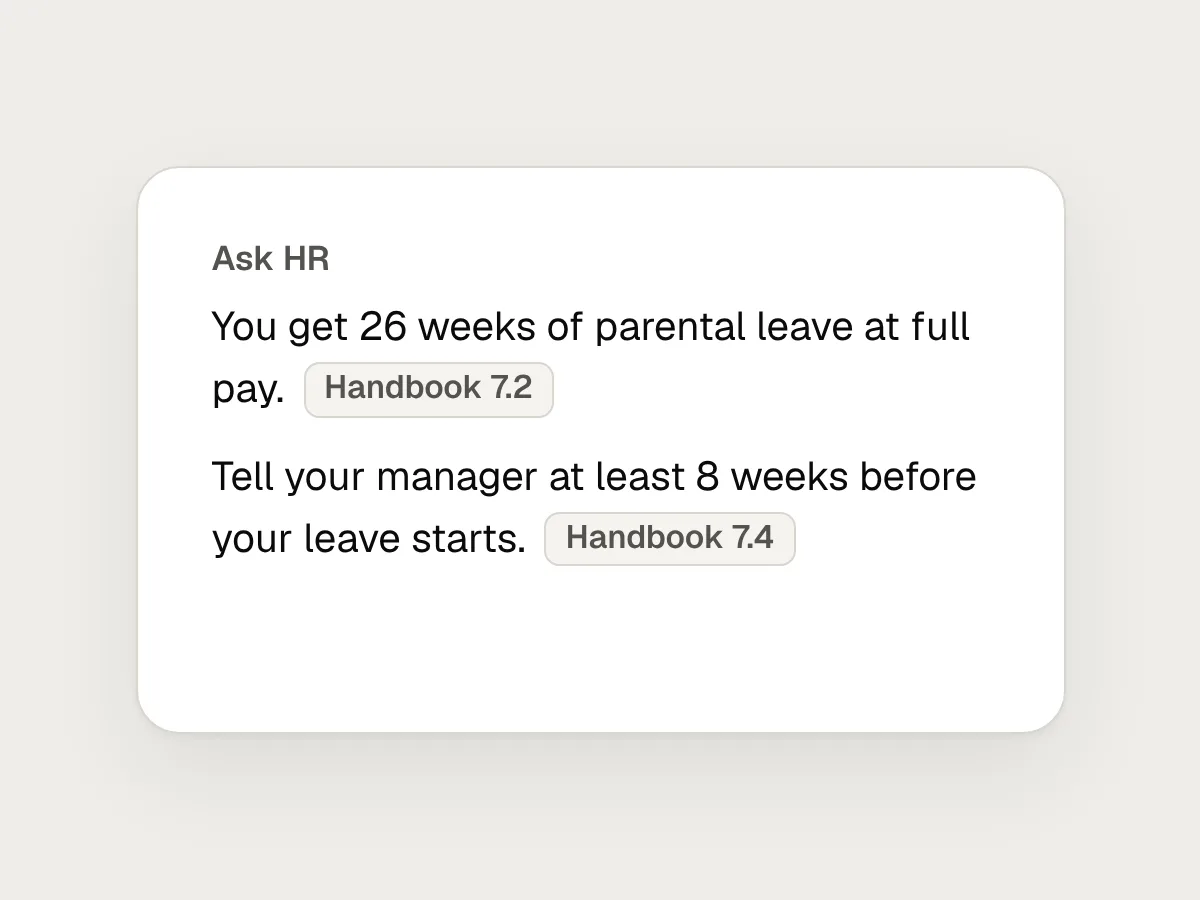
Do
Put a marker after each sentence that names its source.
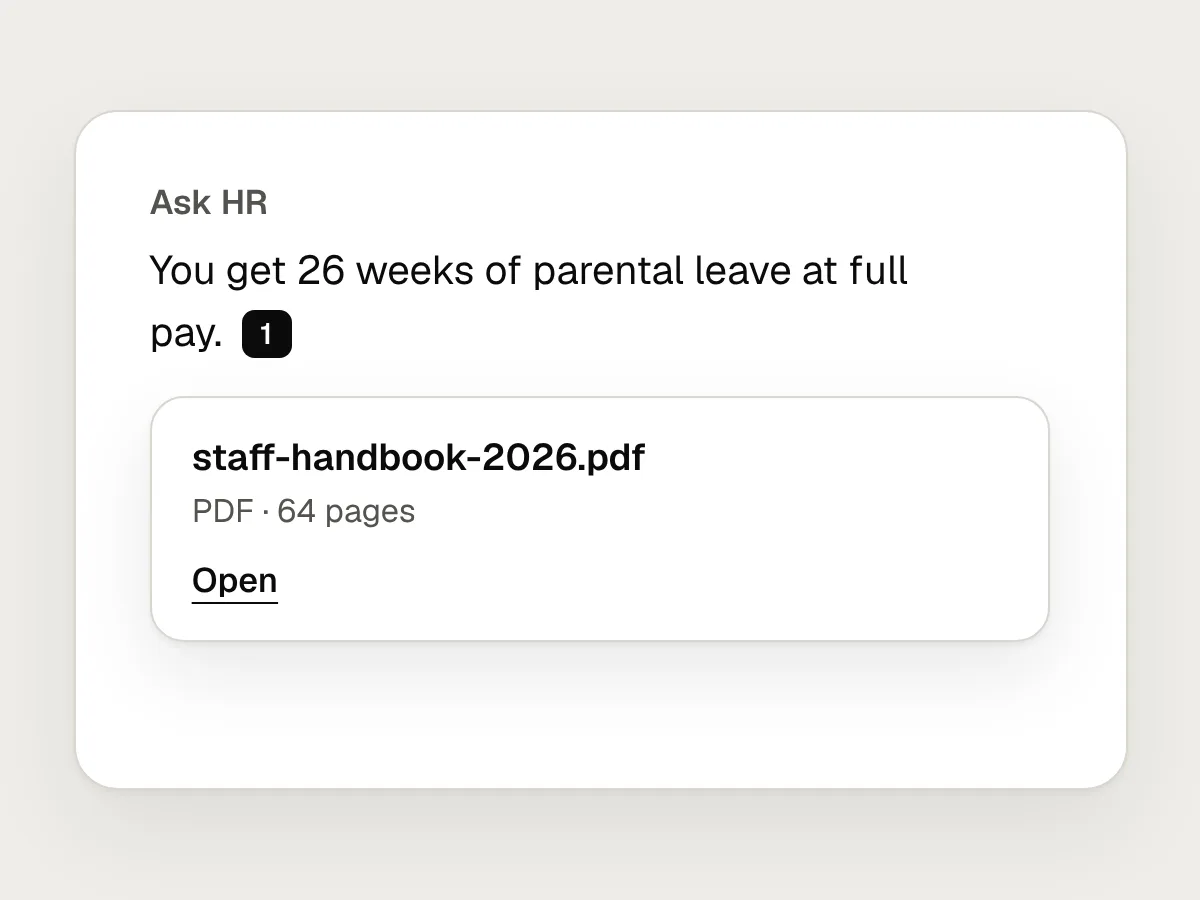
Don’t
A citation that opens a 64-page PDF at page 1.
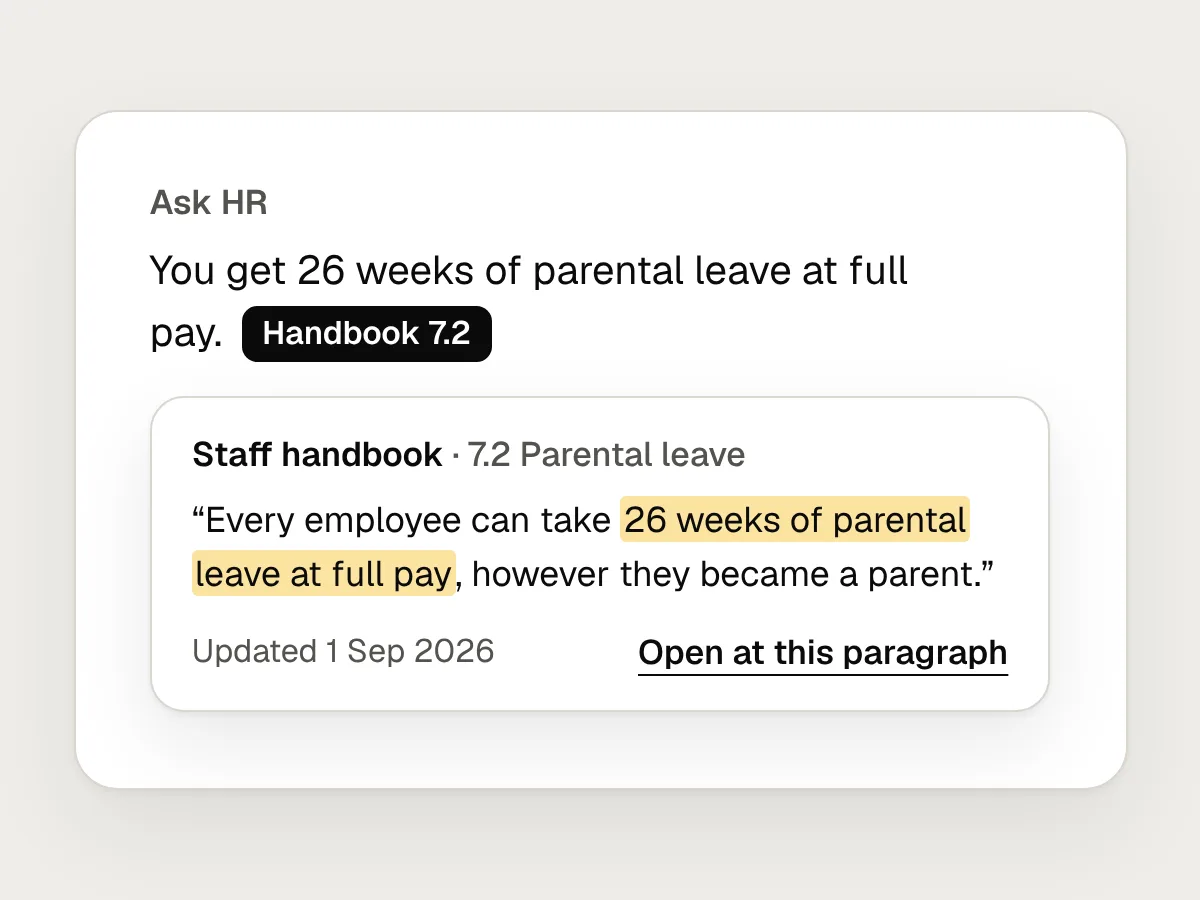
Do
Show the passage, its section and date, and open the source at that paragraph.
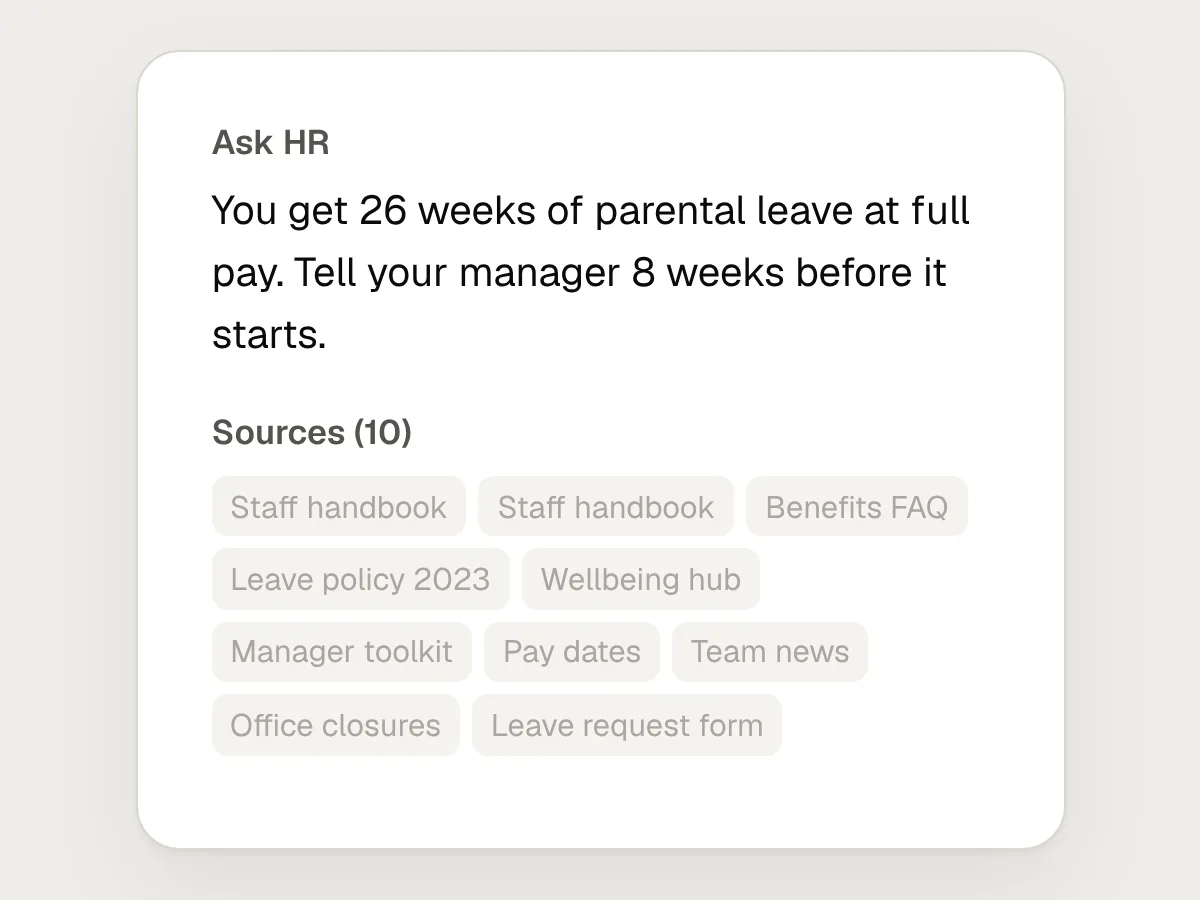
Don’t
Ten sources for a two-sentence answer.
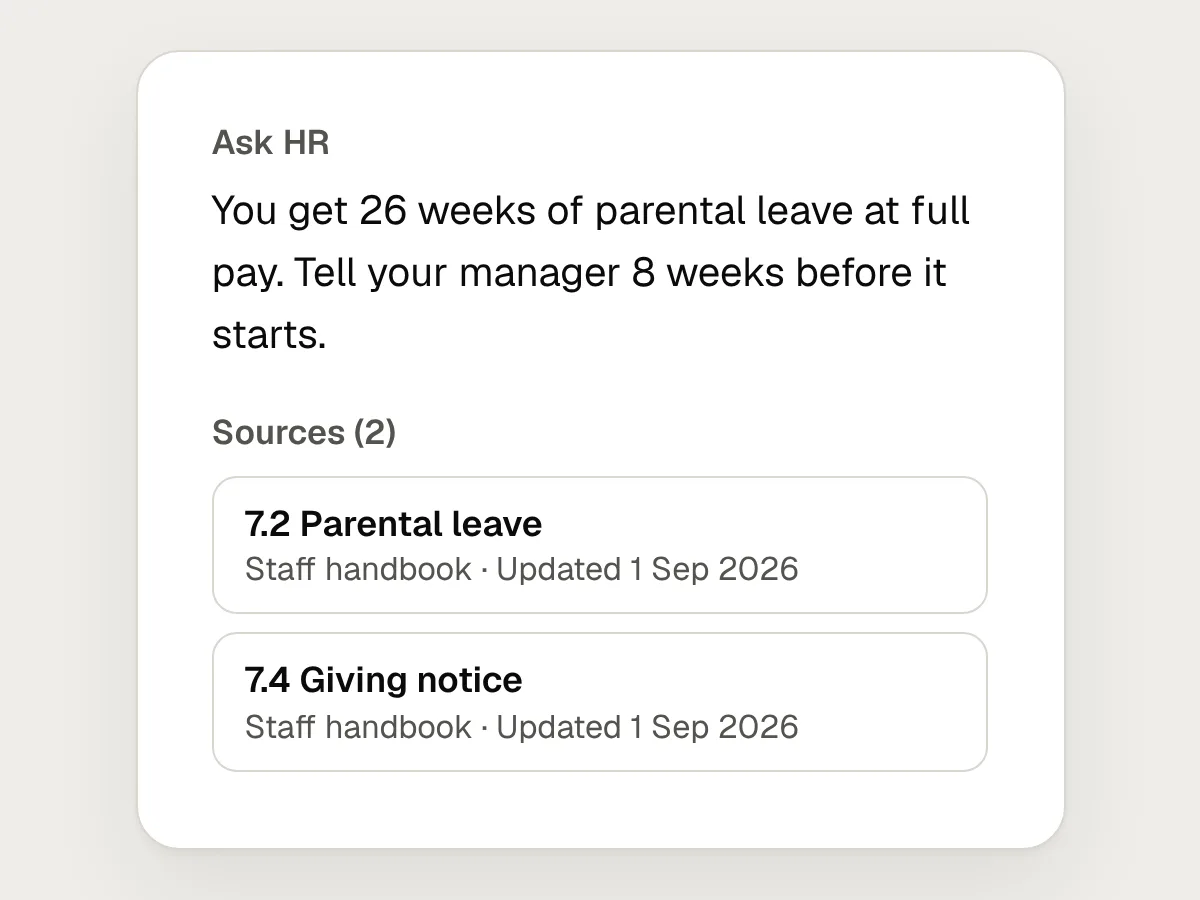
Do
Show only the sources the answer rests on, usually two or three.
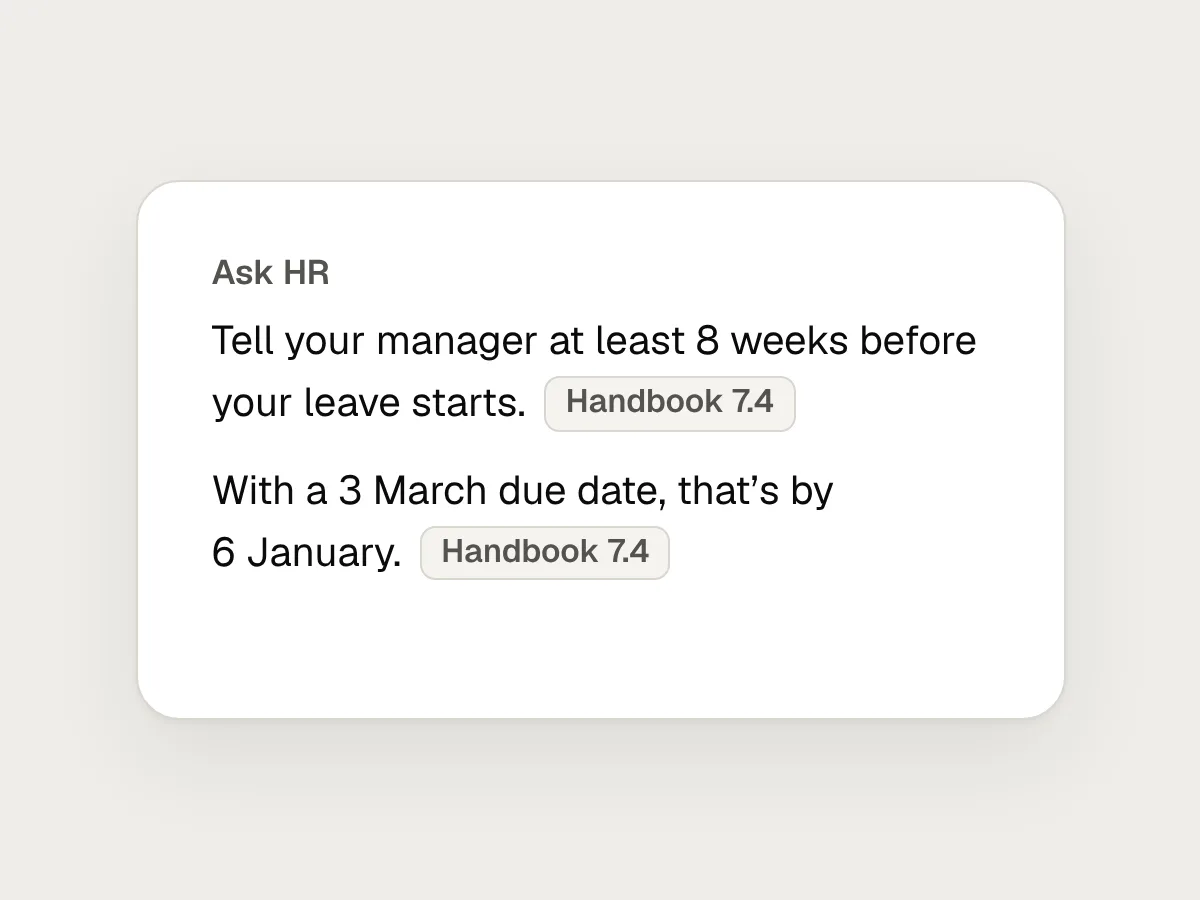
Don’t
Putting a citation on the assistant’s own working.
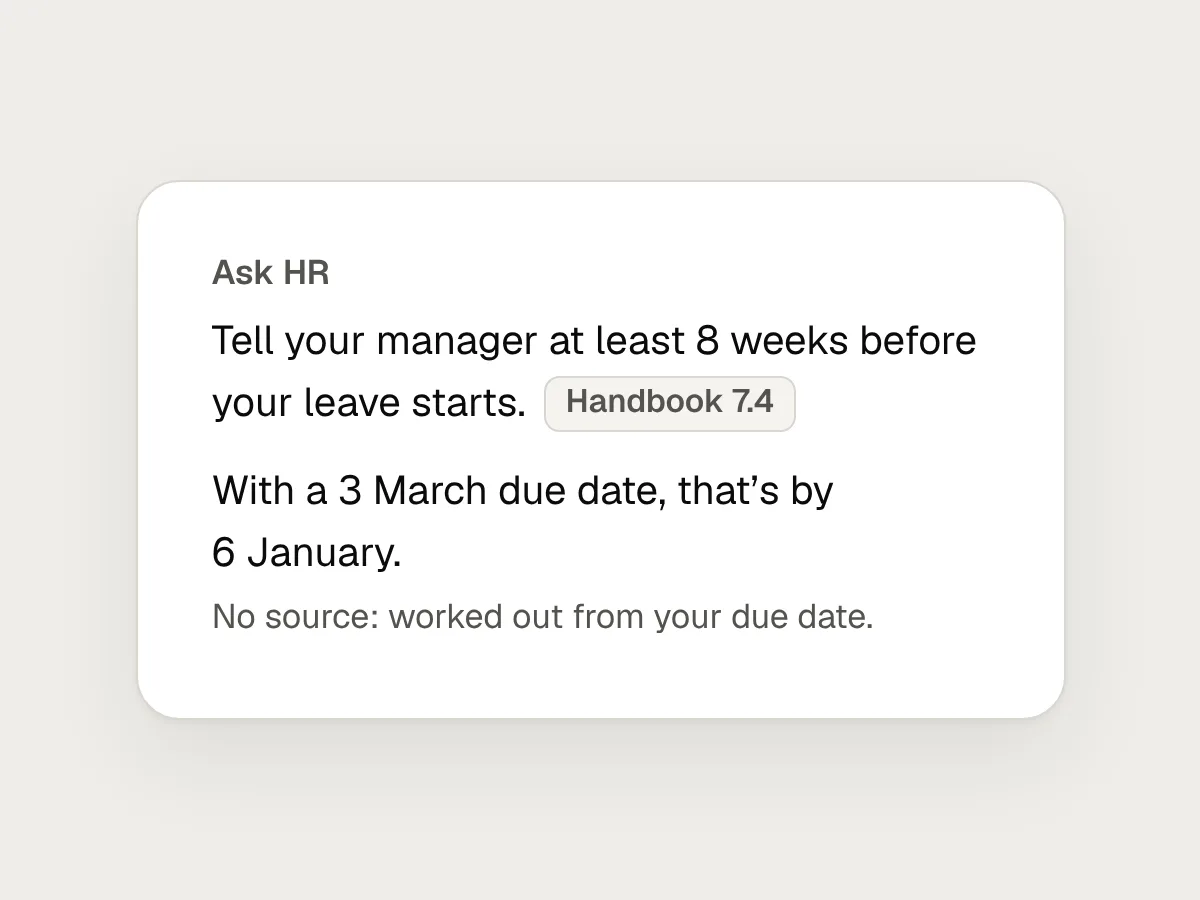
Do
Mark sentences with no source, and say where they came from.
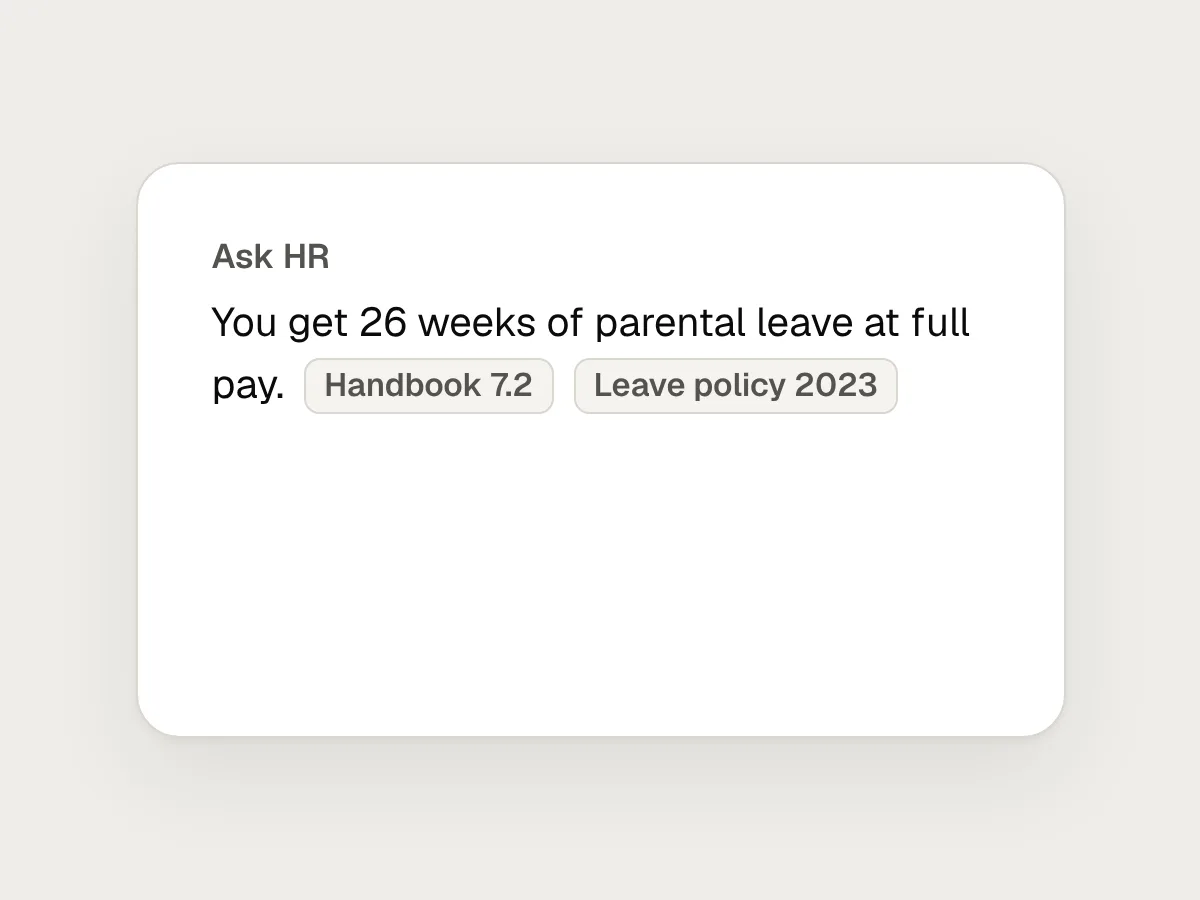
Don’t
Citing an old policy and a new one without saying they disagree.
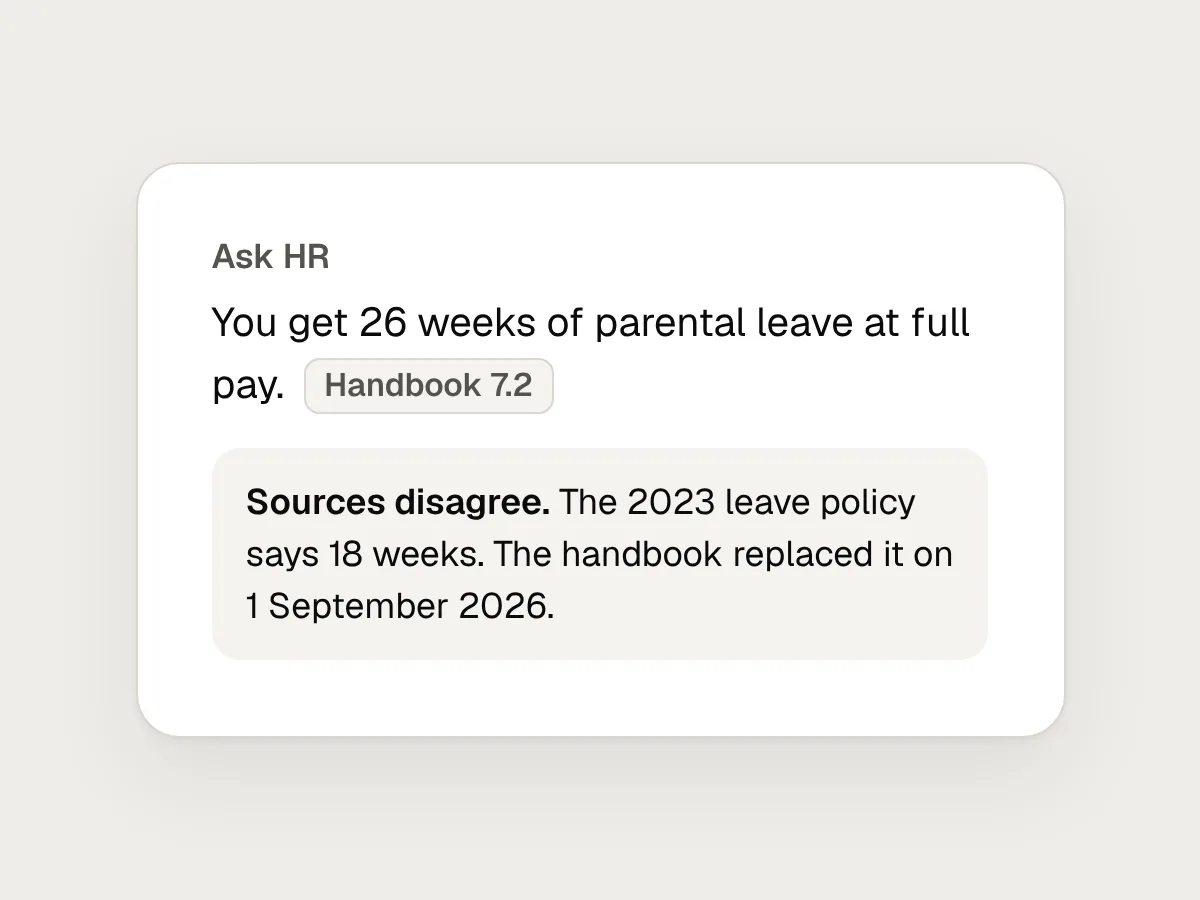
Do
Name the conflict, and say which source is current.
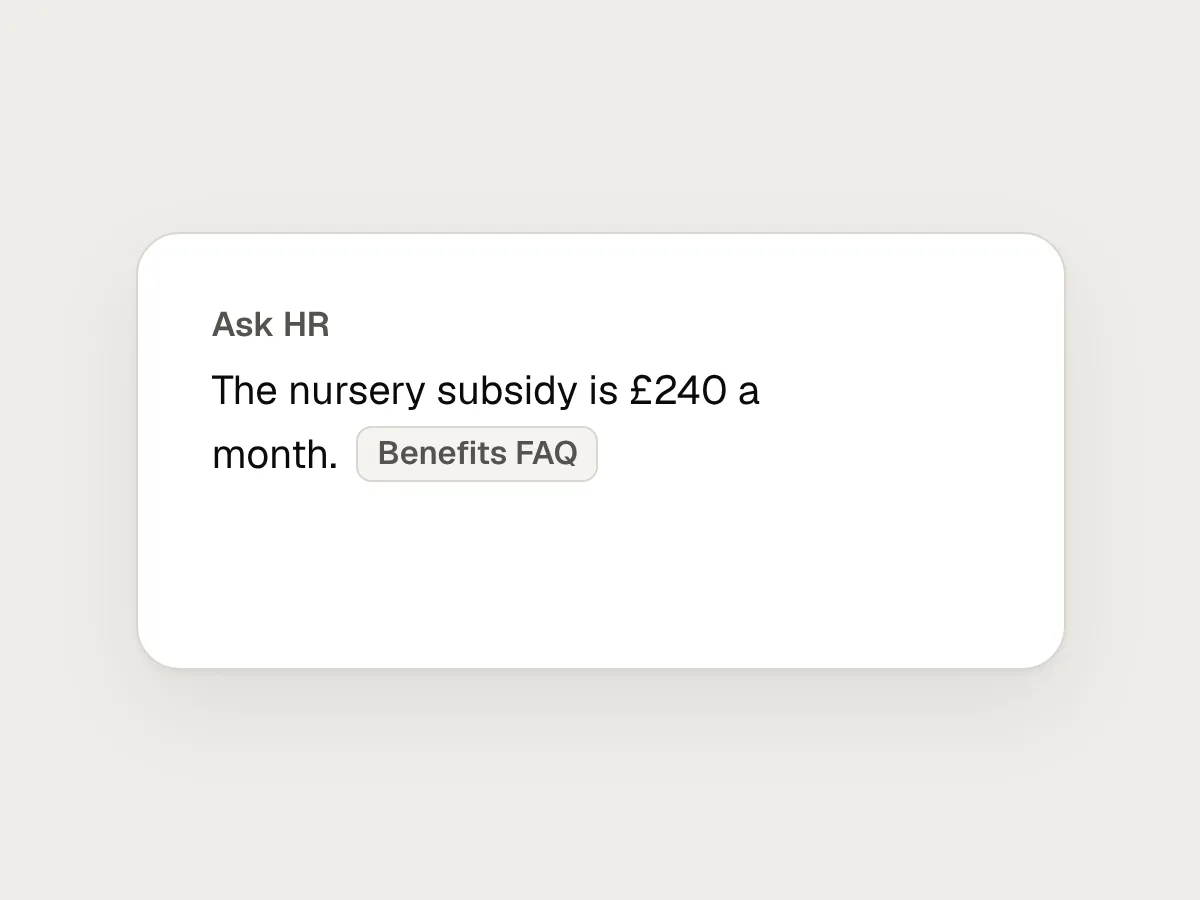
Don’t
A figure that changes every year, with no date on it.
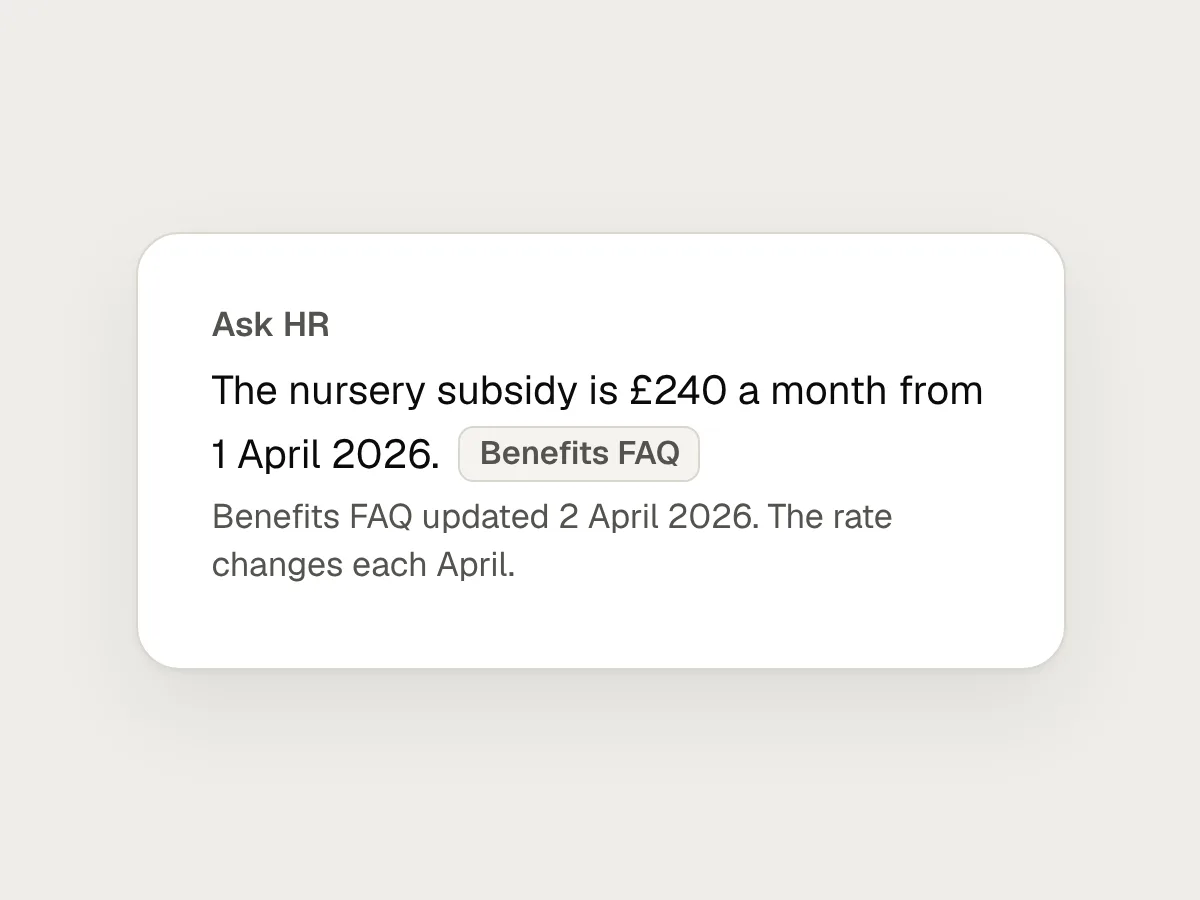
Do
Show when the source was updated, and from when the figure applies.
Before you ship: a checklist
Questions people ask
What is a citation in an AI answer?
A link from a sentence in the answer to the source it came from. A good one points to the exact passage, names the document and section, and says when it was last updated, so someone can check the claim in a few seconds.
Do people click citations in AI answers?
Rarely. Pew Research Center found that people clicked a link inside Google’s AI summaries on just 1% of visits to results pages that showed one. That is a reason to make checking quick, not to drop citations: the person about to act on a claim is the one who checks it.
How many sources should an AI answer show?
As many as the answer actually rests on, which for most answers is two or three. Put anything else the system searched one tap away.
Should an AI answer cite every sentence?
Every sentence that states a fact someone might act on should have a source, or say plainly that it has none. A sentence that is the assistant’s own working, such as a calculation, should be marked as that rather than given a nearby citation.
How do I link to a specific paragraph on a web page?
Use a text fragment: add #:~:text= and the words to the end of the link, and the browser scrolls to them and highlights them. It works in every major browser. In your own help centre, link to the section’s anchor.
Resources
- Explainable AI in Chat Interfaces · Nielsen Norman Group
Why citations go unchecked, and why a well-cited answer can earn too much trust.
- GenAI for Complex Questions, Search for Critical Facts · Nielsen Norman Group
A 2026 study of when people choose AI or search, and how they lose track of which source says what.
- Google users are less likely to click on links when an AI summary appears in the results · Pew Research Center
Browsing data on how rarely people follow the links in AI summaries.
- Citations and Trust in LLM Generated Responses · Ding et al., AAAI 2025
An experiment showing that citations raise trust even when they are random.
- Measuring Google AI Overviews: Activation, Source Quality, Claim Fidelity, and Publisher Impact · Washington University in St. Louis
98,020 claims checked against the pages cited for them.
- Boldly link where no one has linked before: Text Fragments · web.dev
How to link to an exact passage on a page, and have it highlighted.
If this was useful, share it with someone it would help.