Slot-Fit
Two parts. Endless walls.
Systems Design · Industrial Design · 2023
- Role
- Context
- Team
- Timeline
- Tools
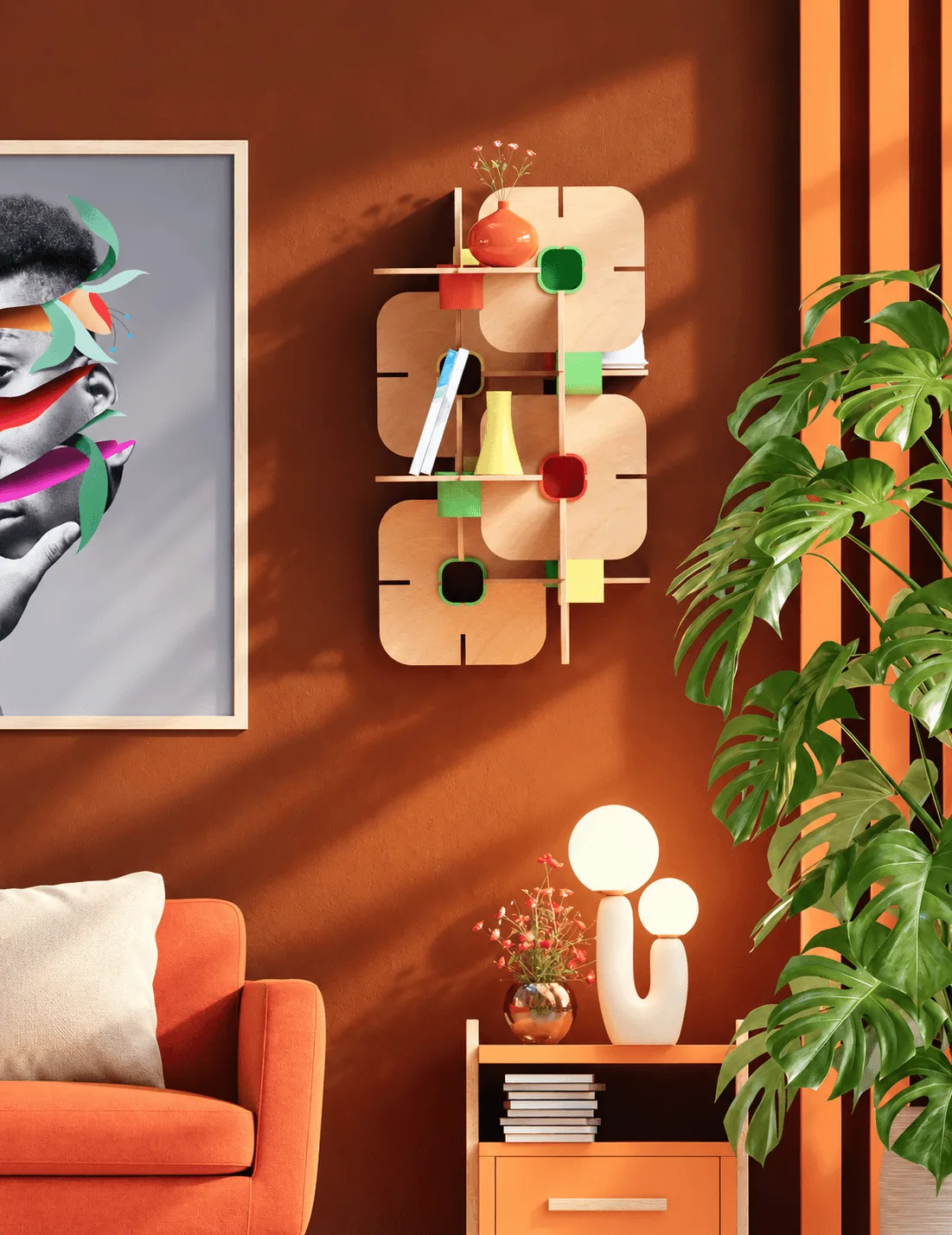
Two bad options, and the way out of both
Wall storage splits into two bad options: a fitted shelf you can never move, or a rail system that grows by the catalogue and looks like a hardware aisle. The way out was a hard constraint — get the whole system down to two repeatable parts.
Every extra part costs twice: once in tooling, once in the decision the owner has to make. And a designed layout dates the moment the room changes, where an arrangement the owner made themselves adapts, because they already know how it comes apart. Hardware is where flat-pack fails — screws strip, brackets go missing, walls disagree — so a quarter-turn clip removes the toolbox from the equation entirely.
Slot, quarter-turn, done
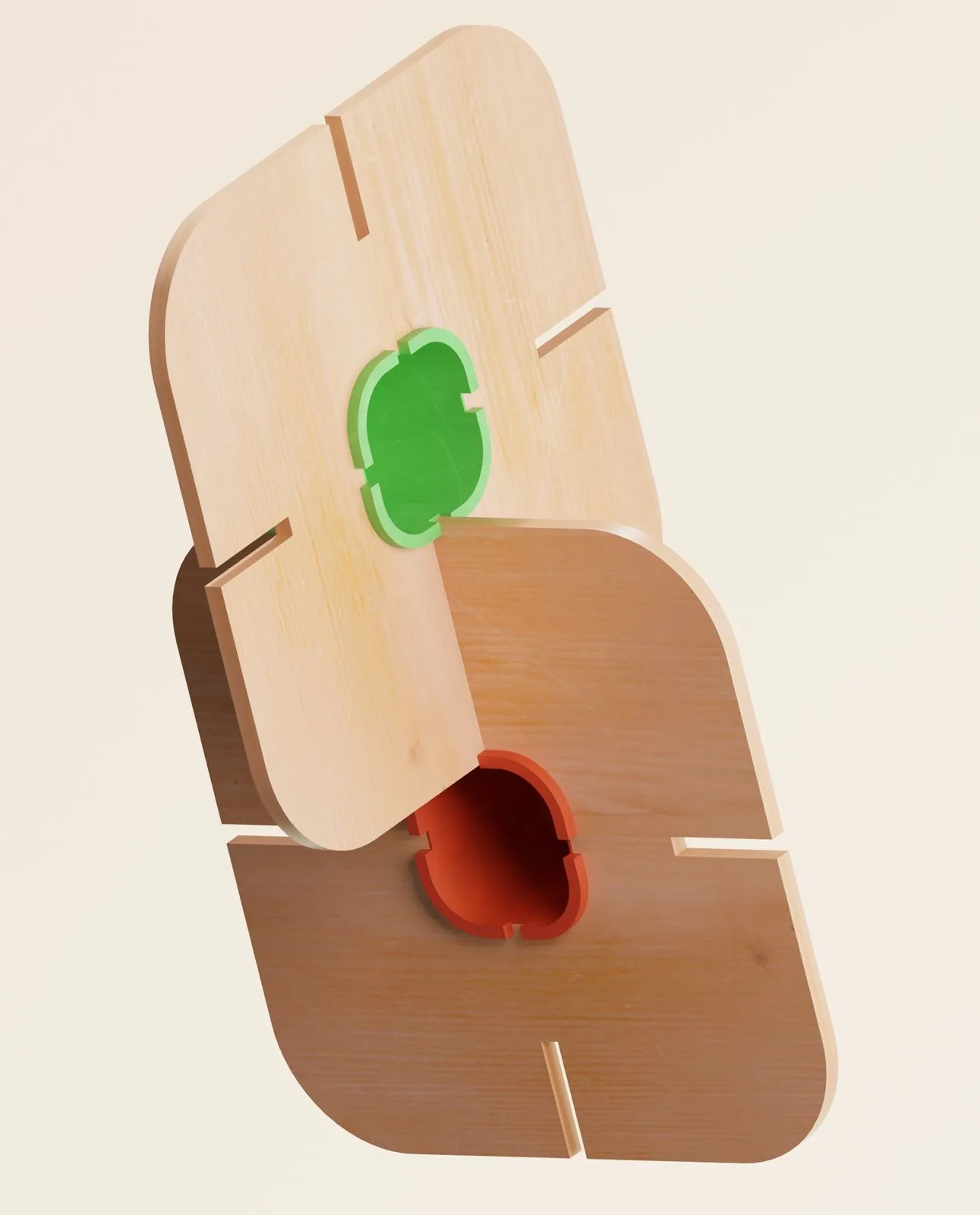
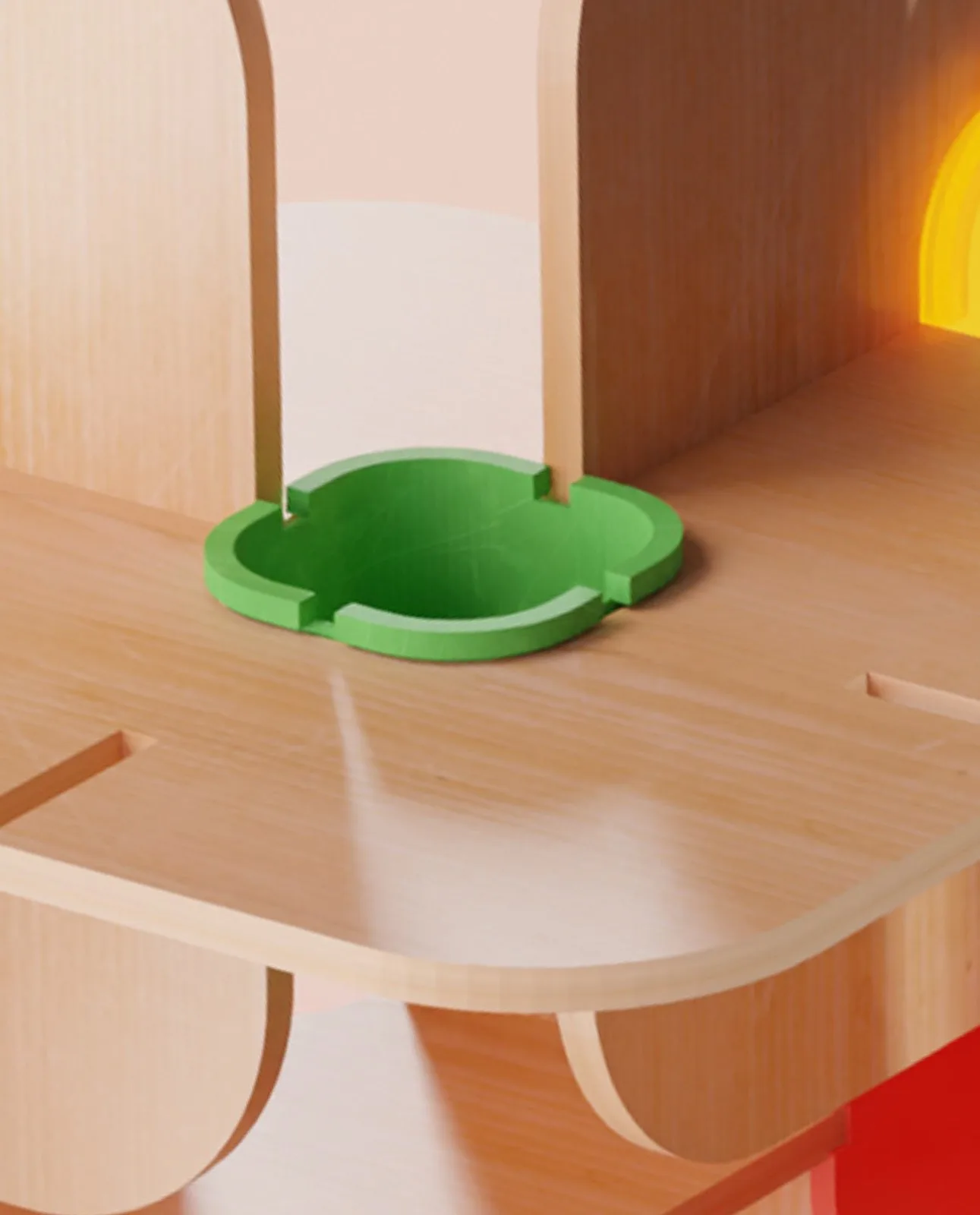
One motion holds the whole system together. The clip enters the cross-slot at any of four orientations, turns ninety degrees, and locks behind the panel — which is also how it comes out again, ten seconds later, somewhere else on the wall.
One panel, repeated
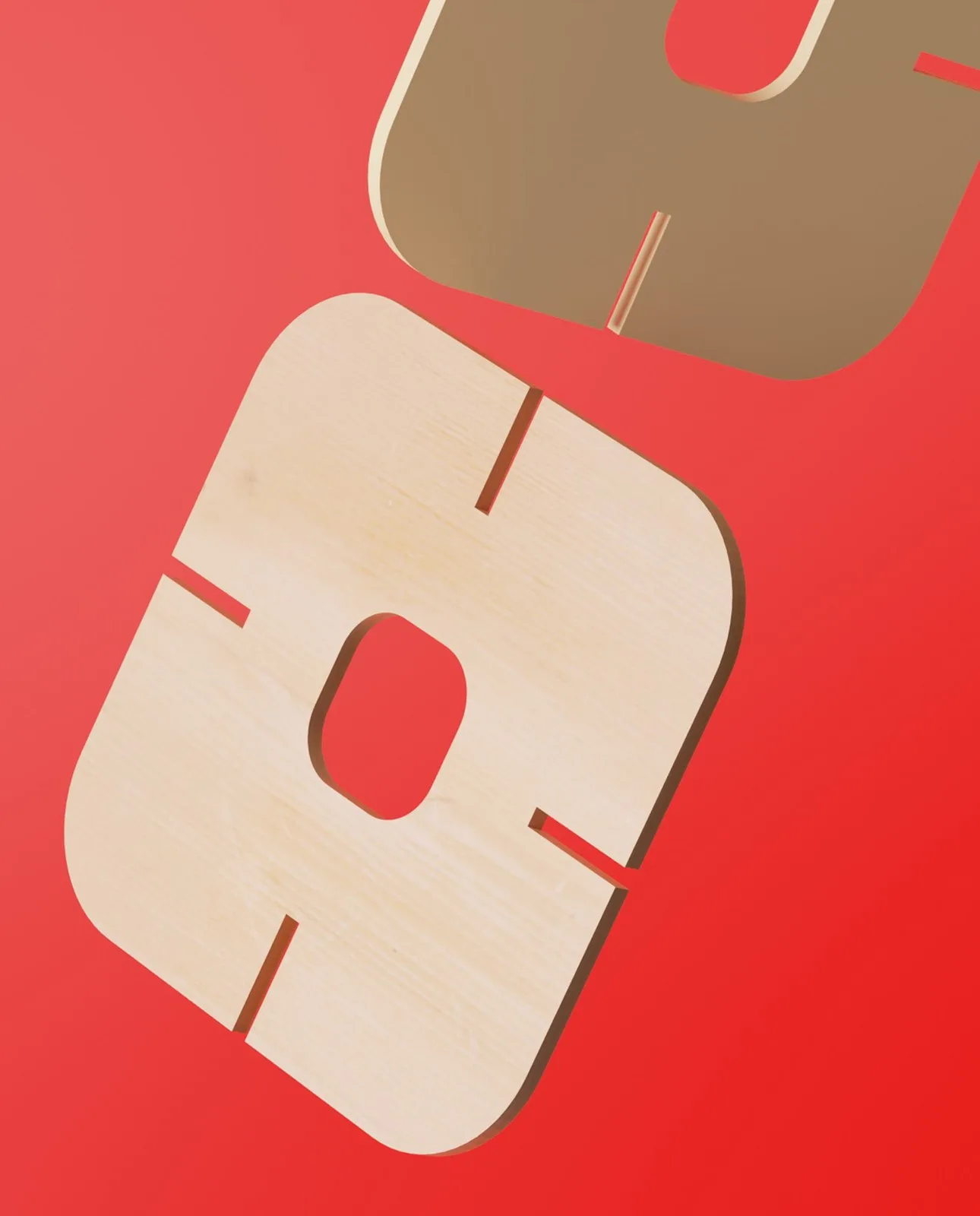
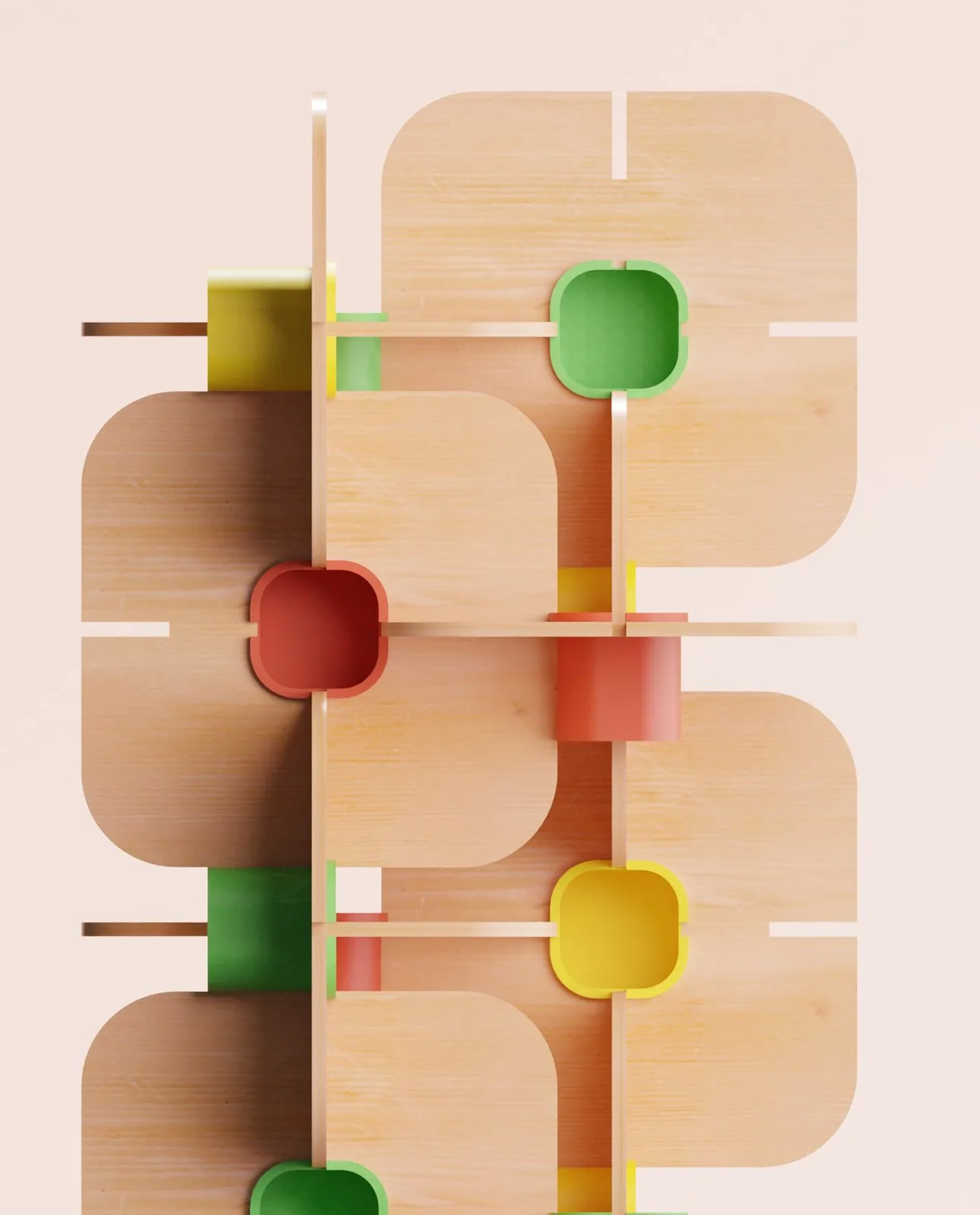
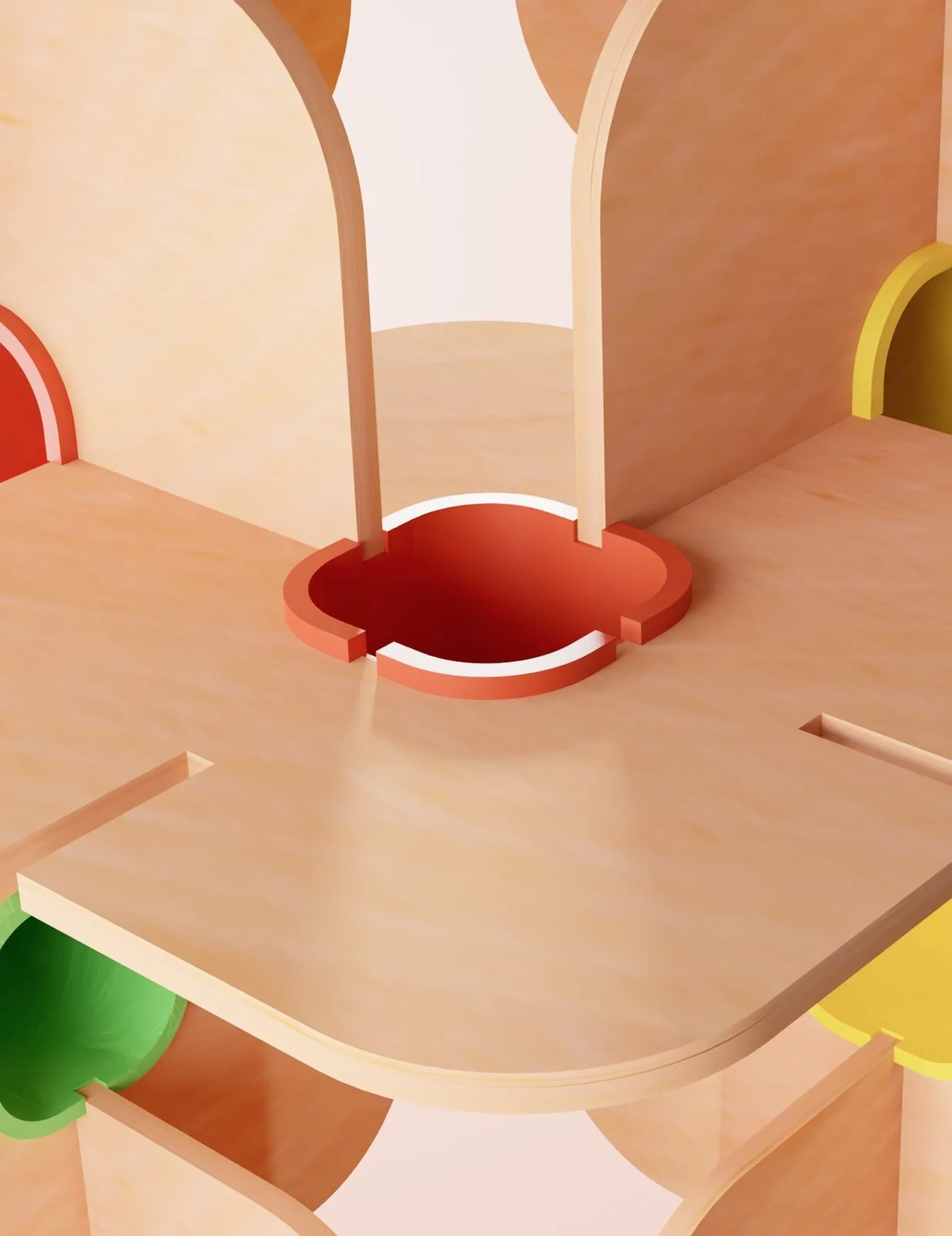
Every panel is identical: a rounded square of birch ply with four cross-slots on its edges. Configurations grow by adding the same part in a different place, so a wall of twelve is no more complicated to understand than a wall of two.
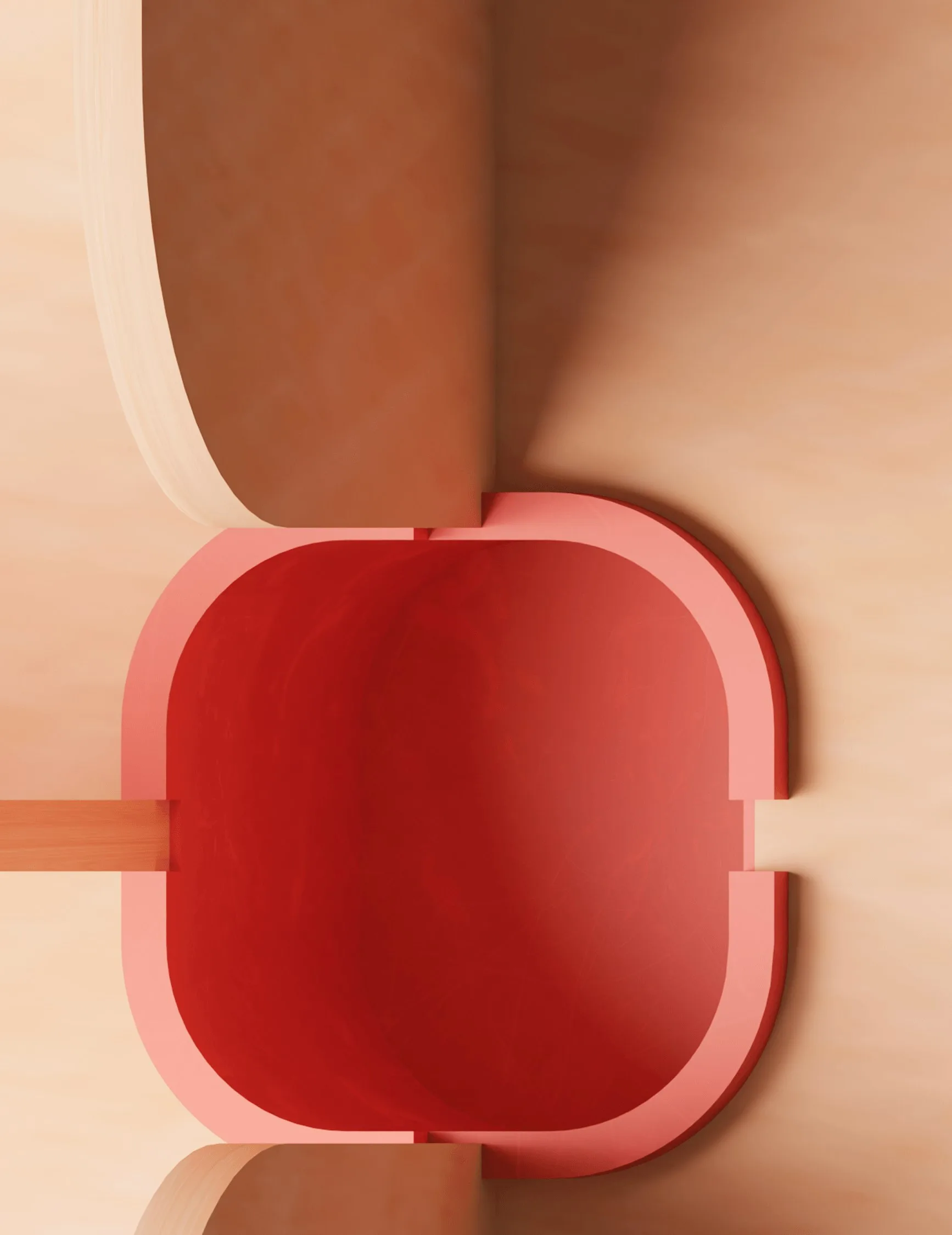
Silicone that grips from behind
The second part is a cast silicone bowl. It presses through the slot, springs open on the far side and holds itself — compliant storage bolted to a rigid system without introducing a third component.

Domestic, not utility
Warm ply and a terracotta accent were chosen so a configuration composes into a living room instead of announcing itself as a storage product hung on the wall.
Card, then ply, then a wall of it
The two-part rule made prototyping cheap: there were only ever two things to get wrong, so we made both of them dozens of times.
The first configurations were cut in card in an afternoon. Crude, but enough to find that the slot had to accept a clip from four orientations rather than one — the decision that made the system reconfigurable at all.
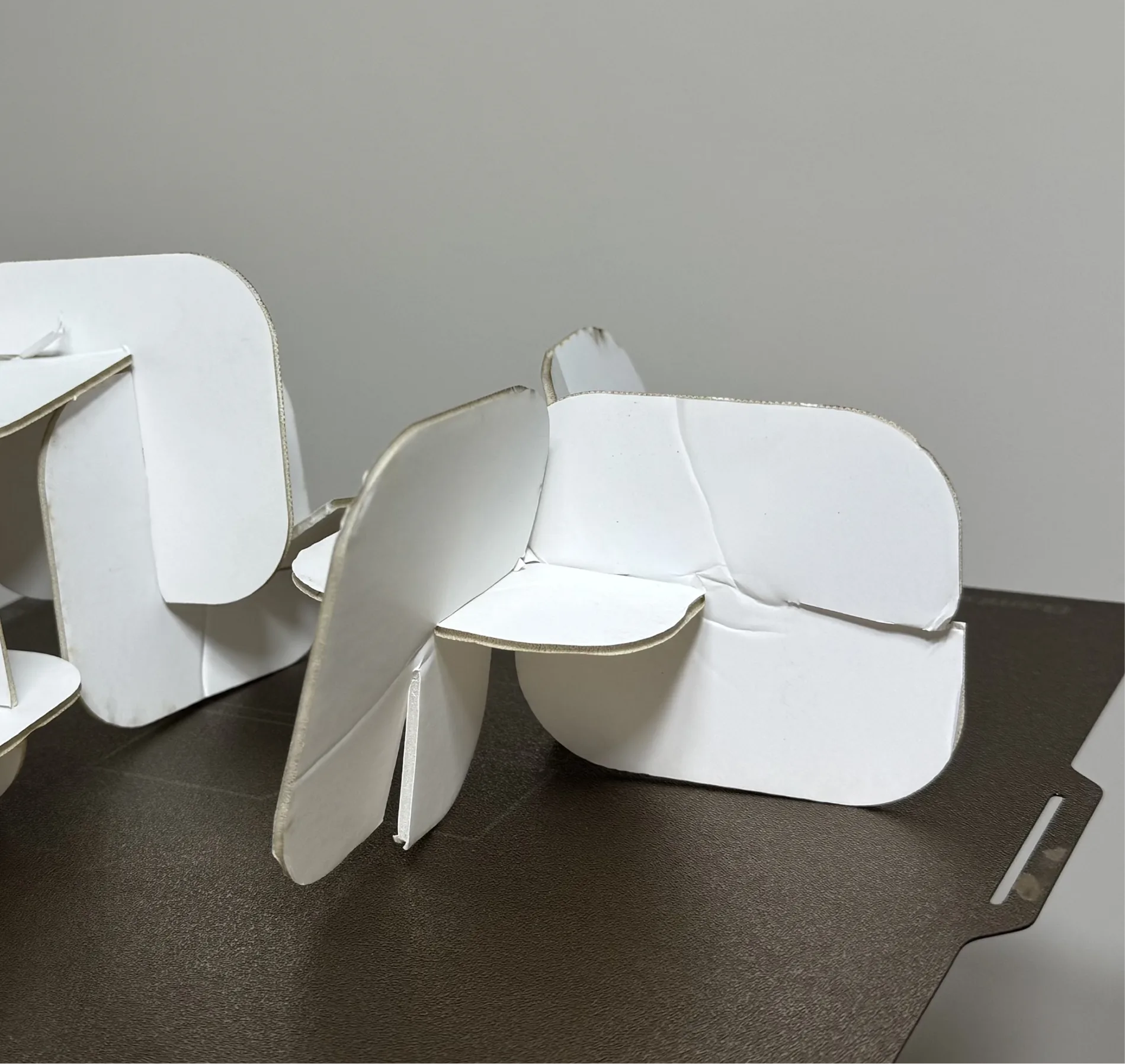
Moving to birch ply changed the problem from geometry to tolerance. A slot that works in card at 3 mm binds in ply at 12 mm; every radius in the finished part exists to make the quarter-turn feel positive rather than tight.
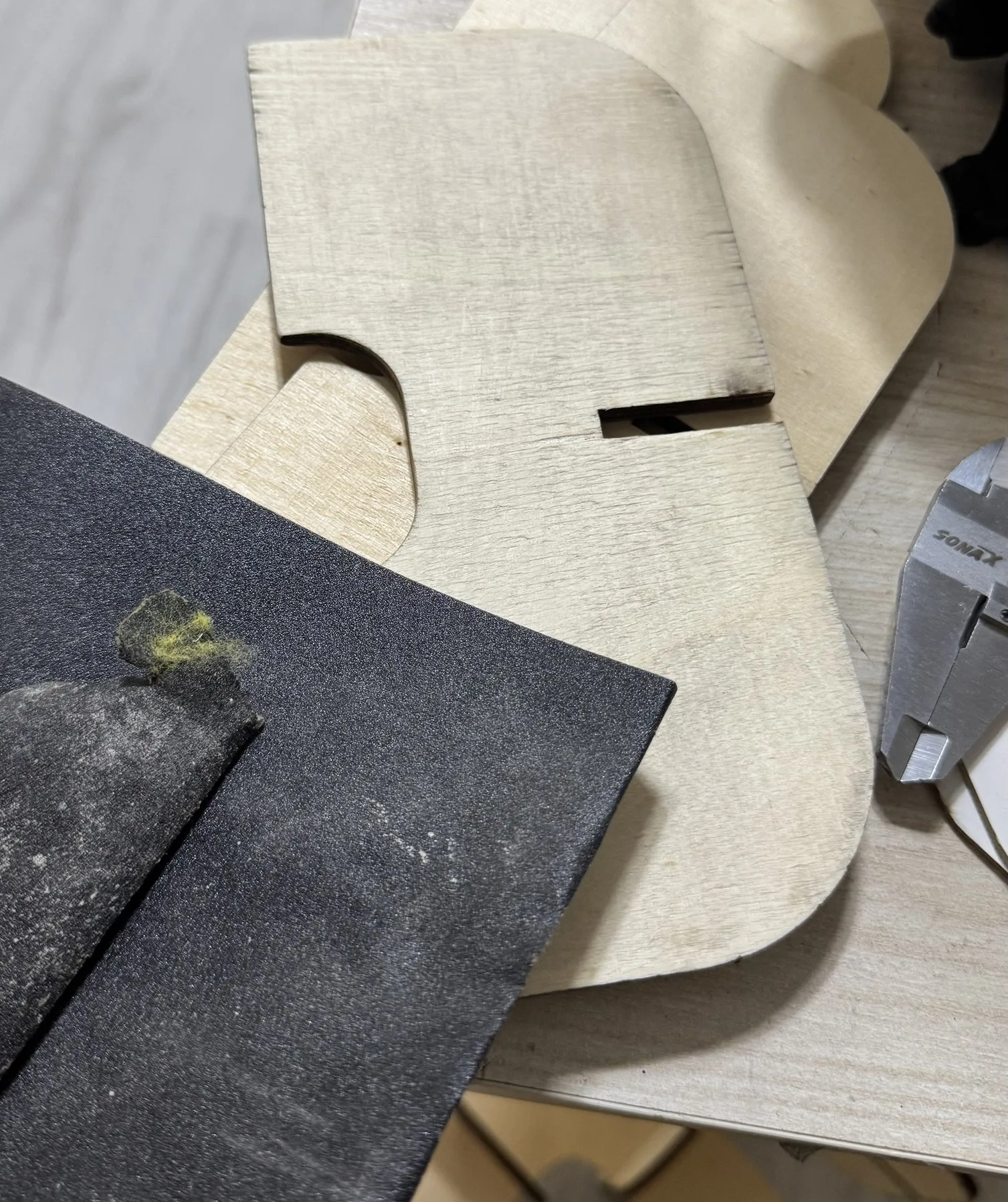
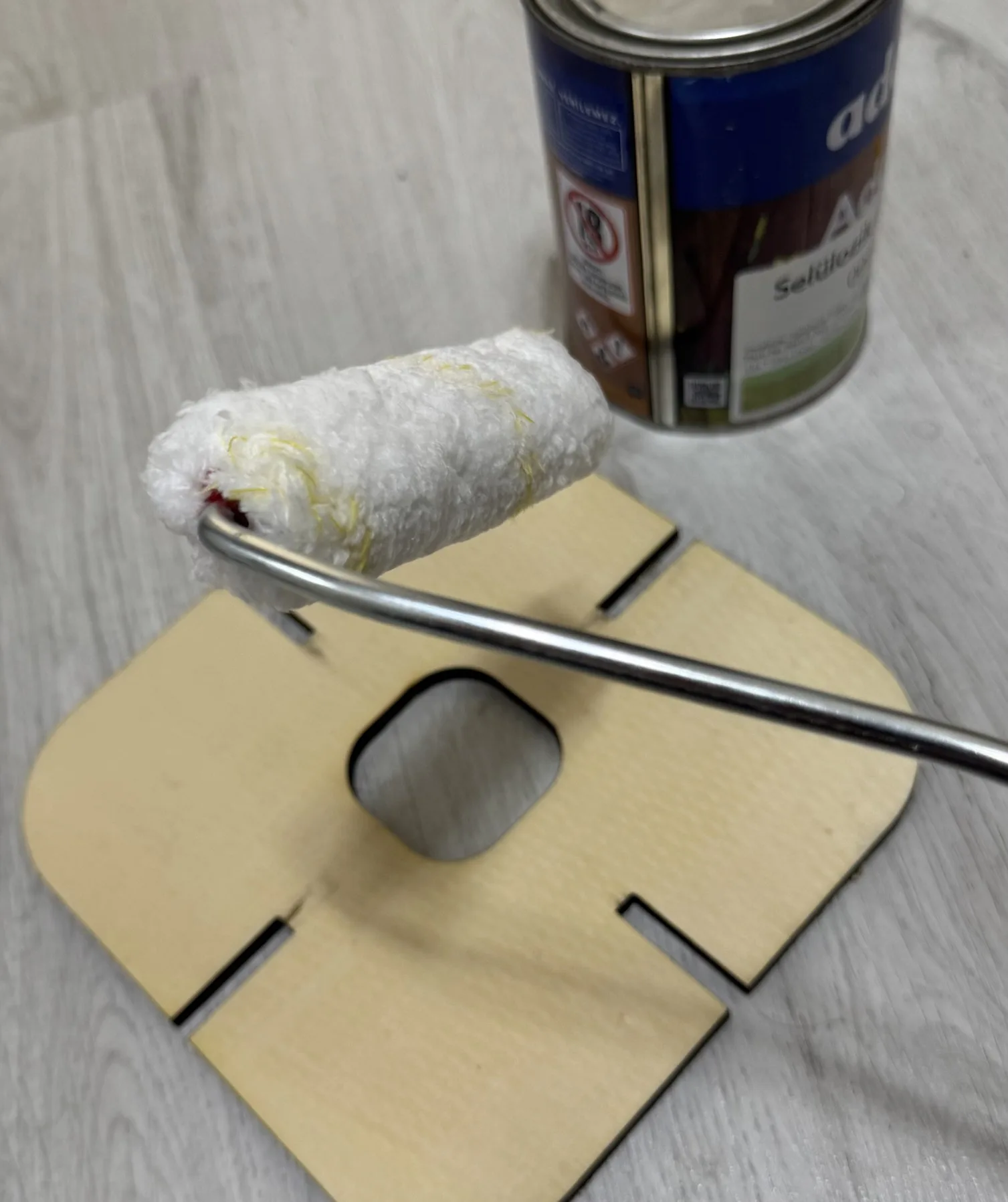
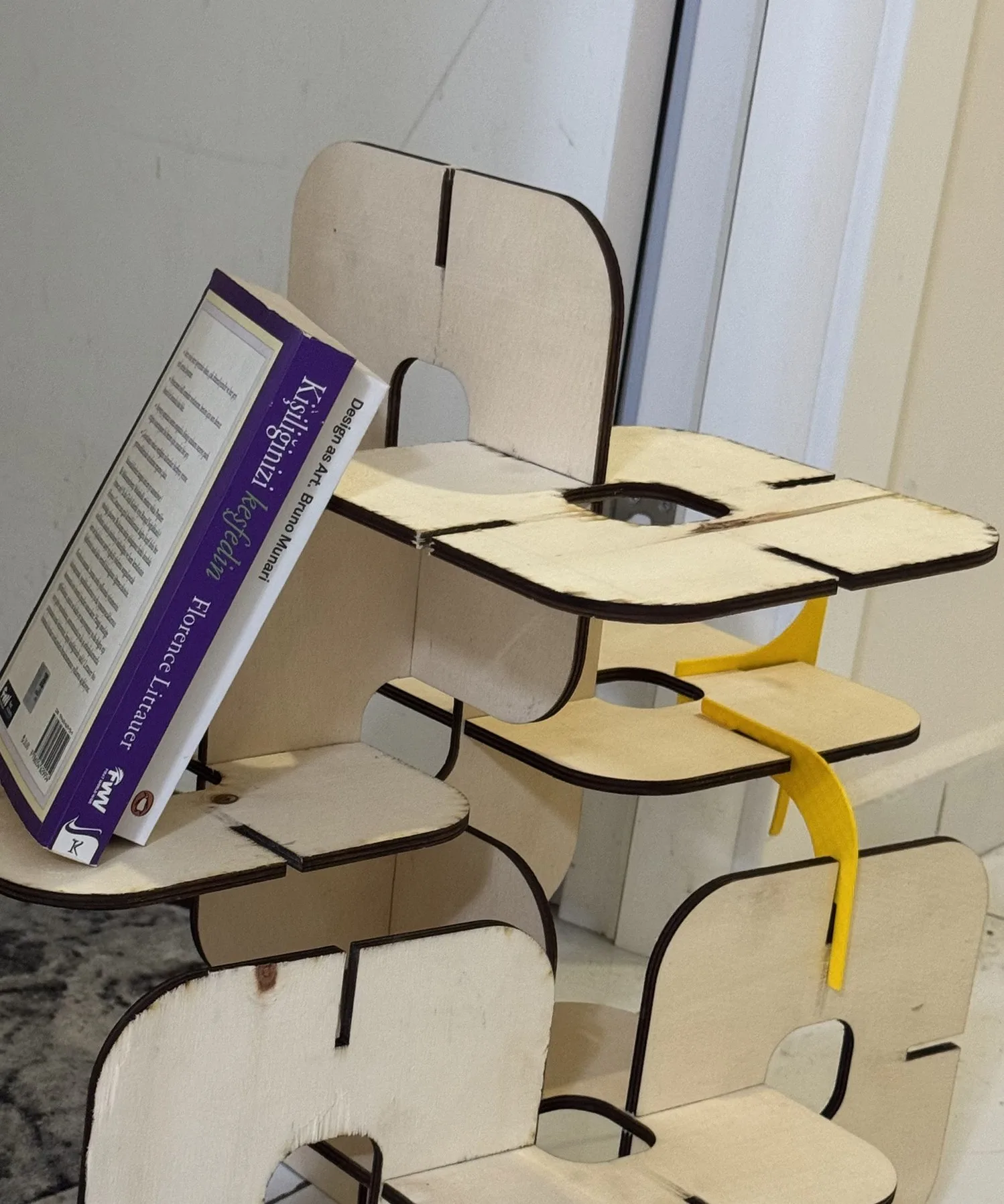
The finished prototype panels were assembled into a configuration and left standing loaded for a week. Nothing sagged, nothing worked loose, and taking it apart to move it took under a minute.
What I'd do next
Fatigue-test the clip over hundreds of cycles, and design a corner part so a configuration can turn a wall.