Morpho
Build. Adapt. Play.
Furniture · Industrial Design · 2025
- Role
- Context
- Team
- Timeline
- Tools
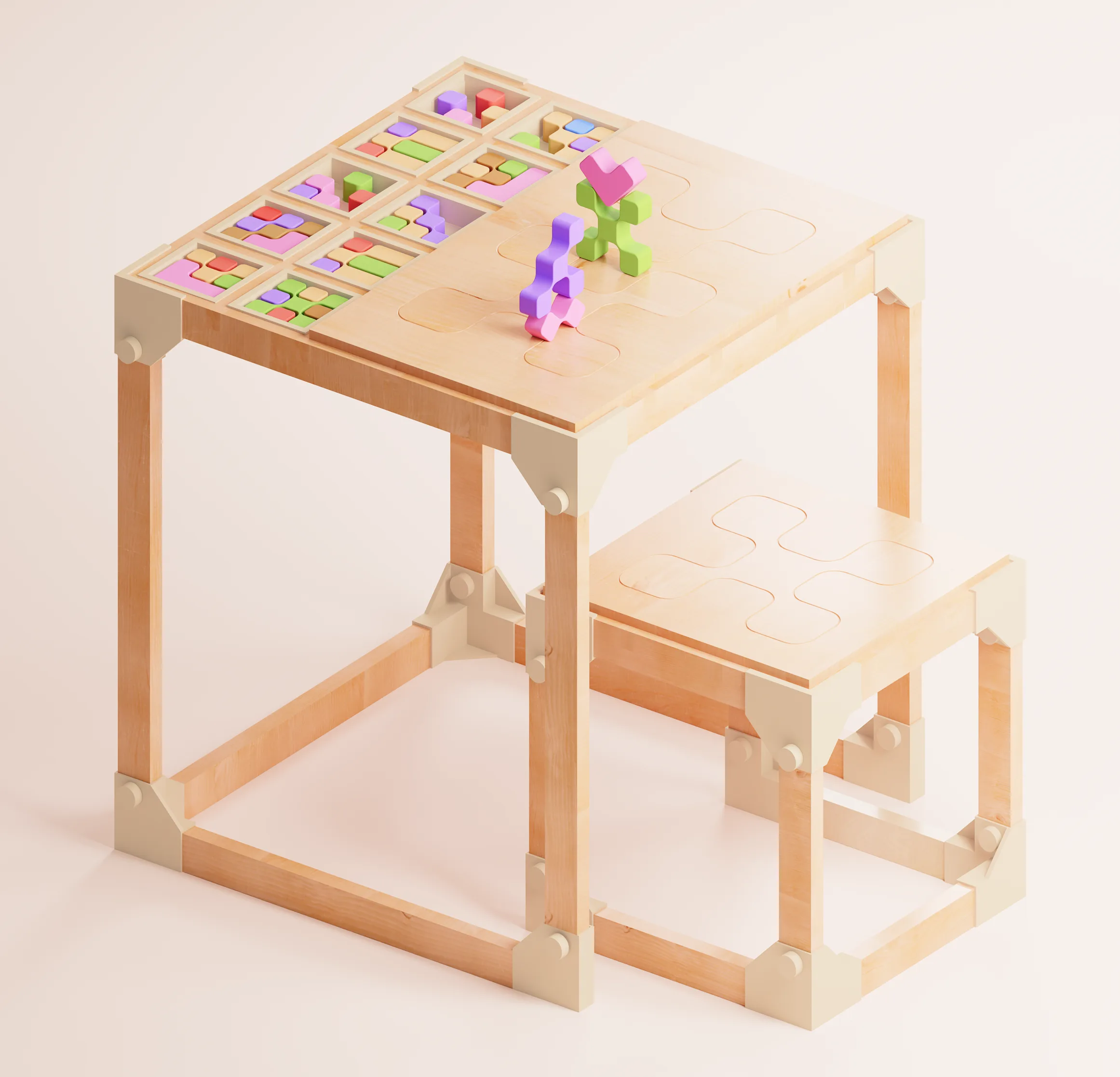
What children actually do with a desk
We spent the first fortnight watching children use furniture instead of drawing it. What they do with a desk, it turns out, is climb on it, hide under it and take it apart — and none of that is in the brief for a desk.
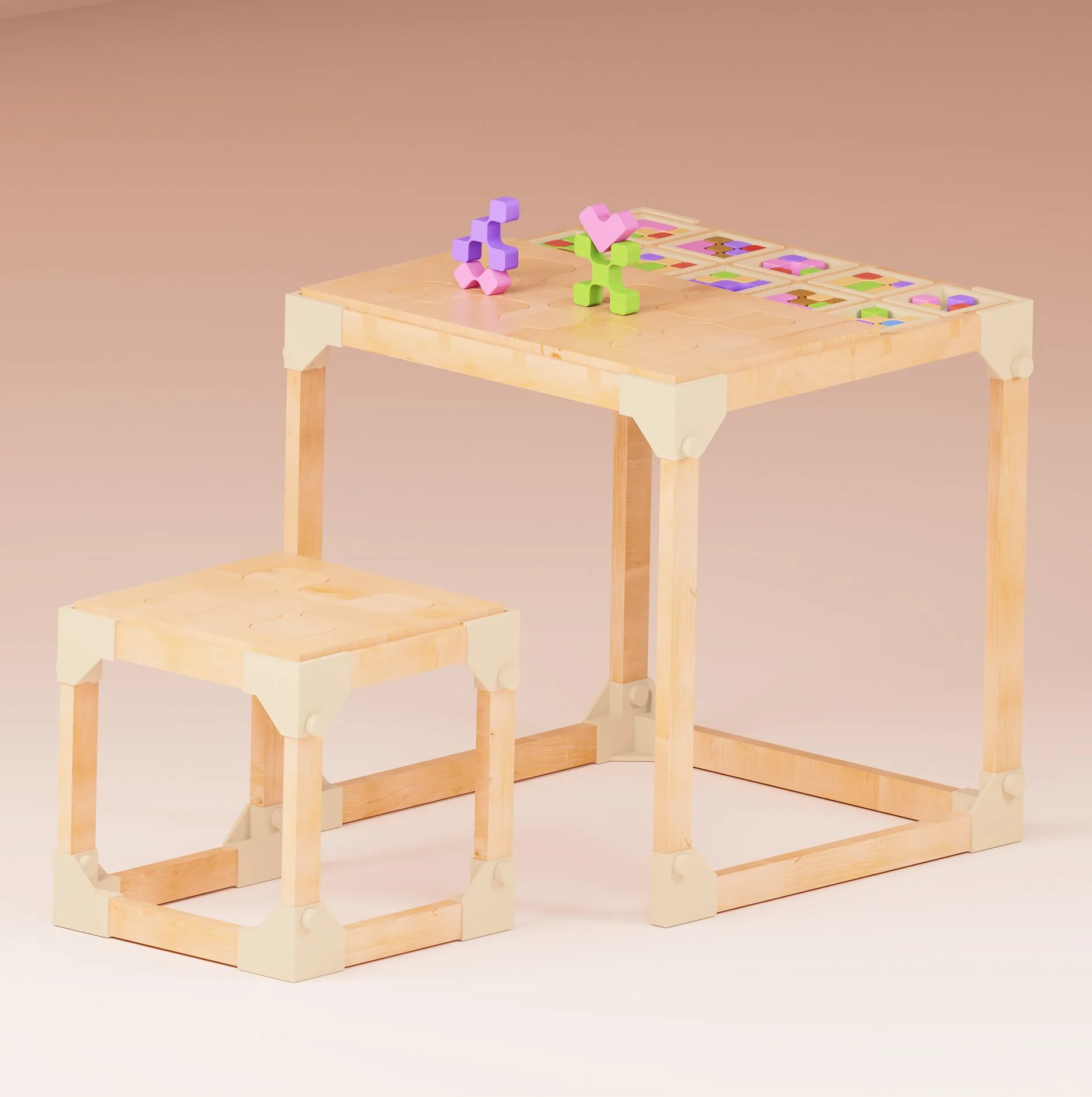
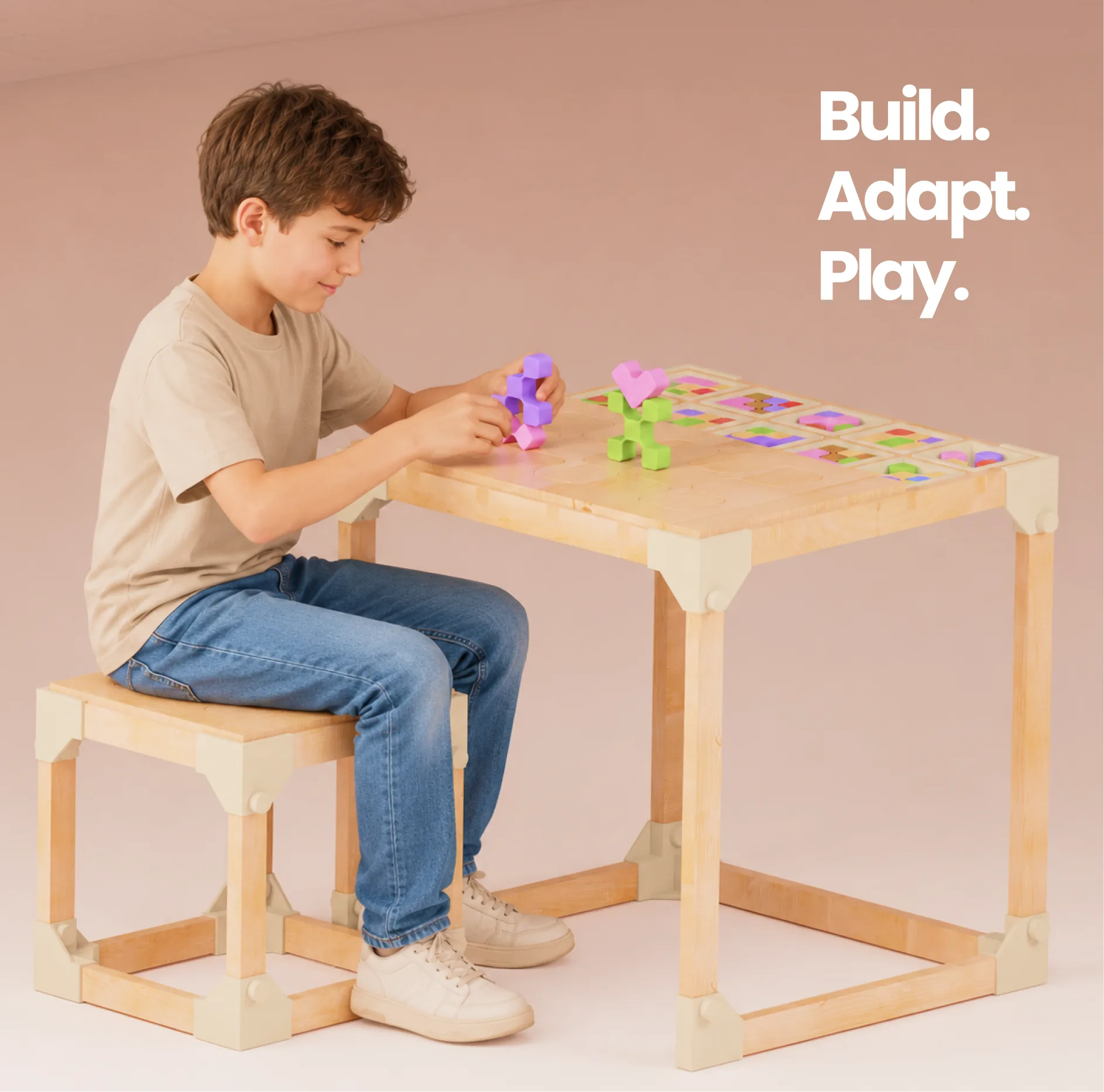
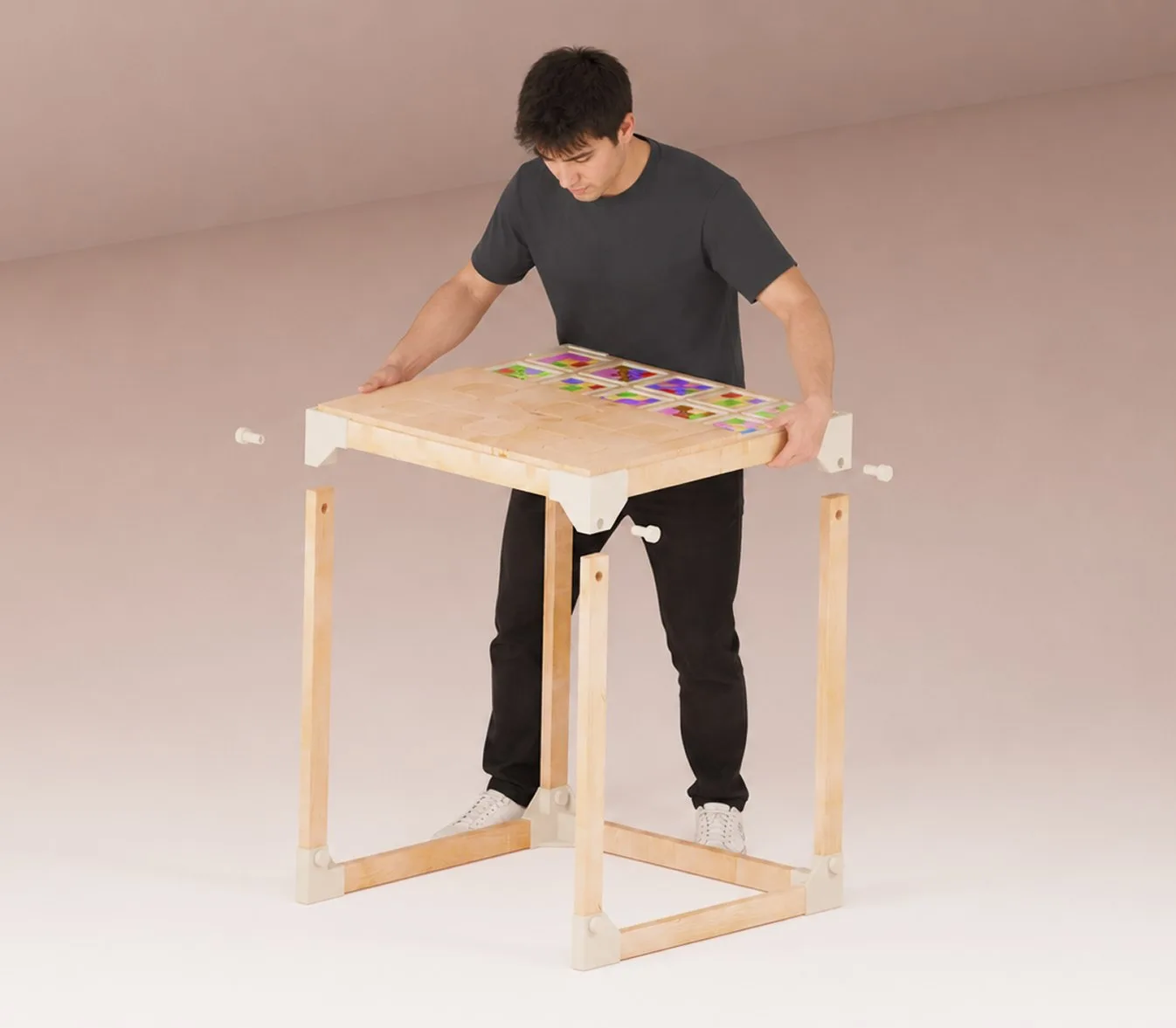
They engage with what they can change: a fixed surface is scenery, but an object with removable parts becomes theirs within minutes. They outgrow the fit rather than the fun — height is why a child's desk gets abandoned, usually inside a year, and reconfigurability buys those years back. And assembly is the first play session. If building it feels like the game, the child is a participant from minute one instead of a spectator to an adult with an Allen key.
The desktop is the toy
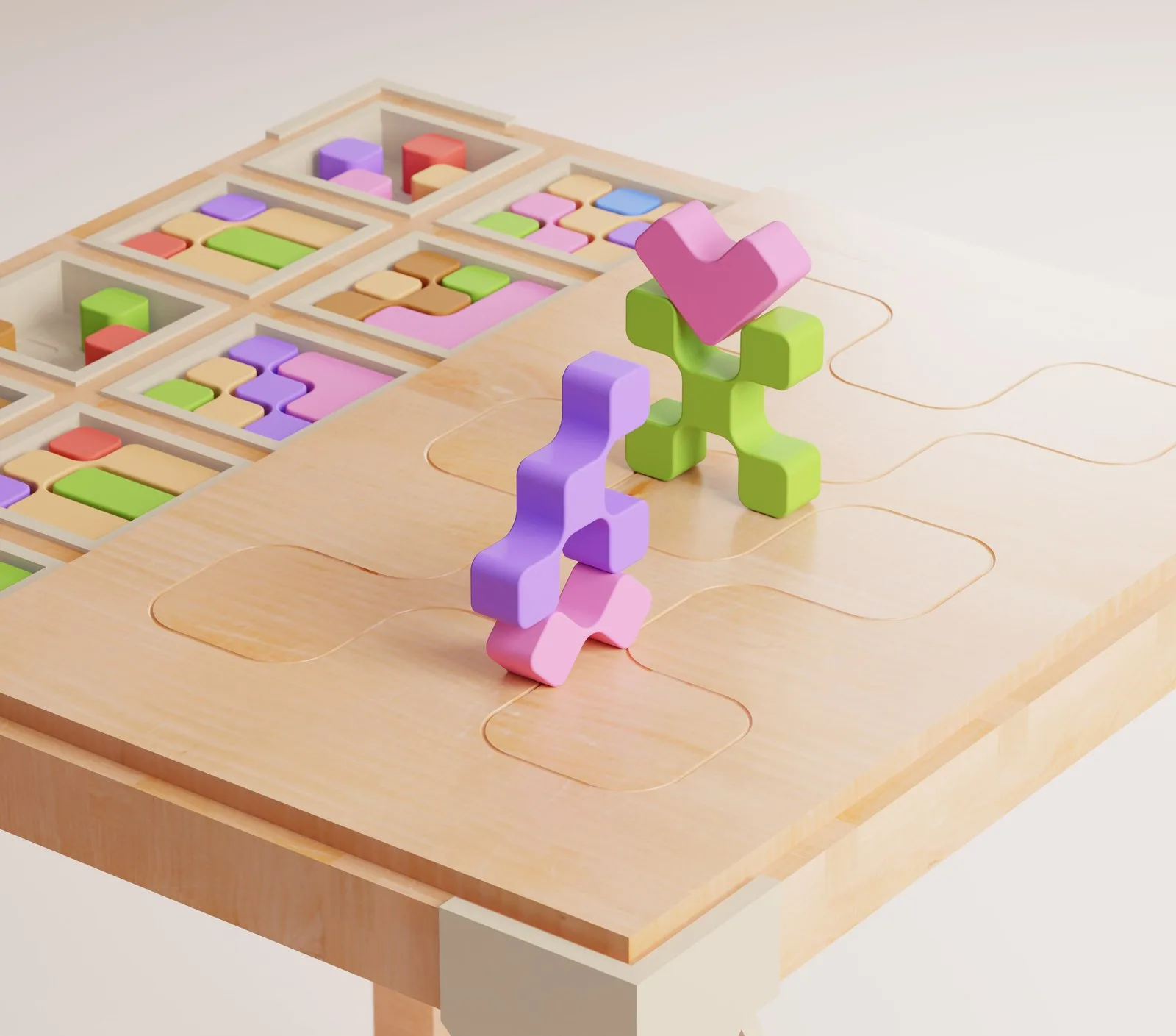
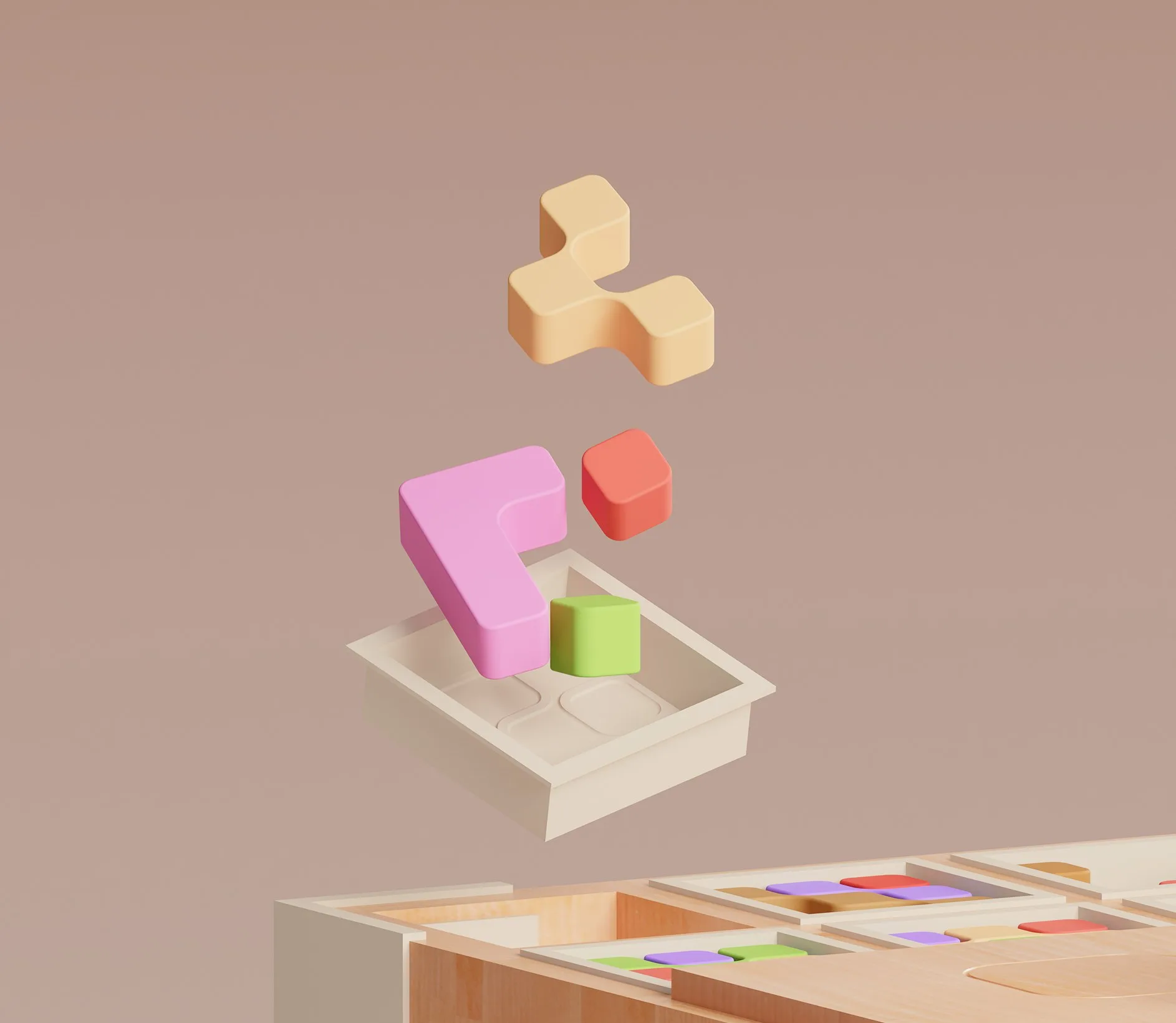
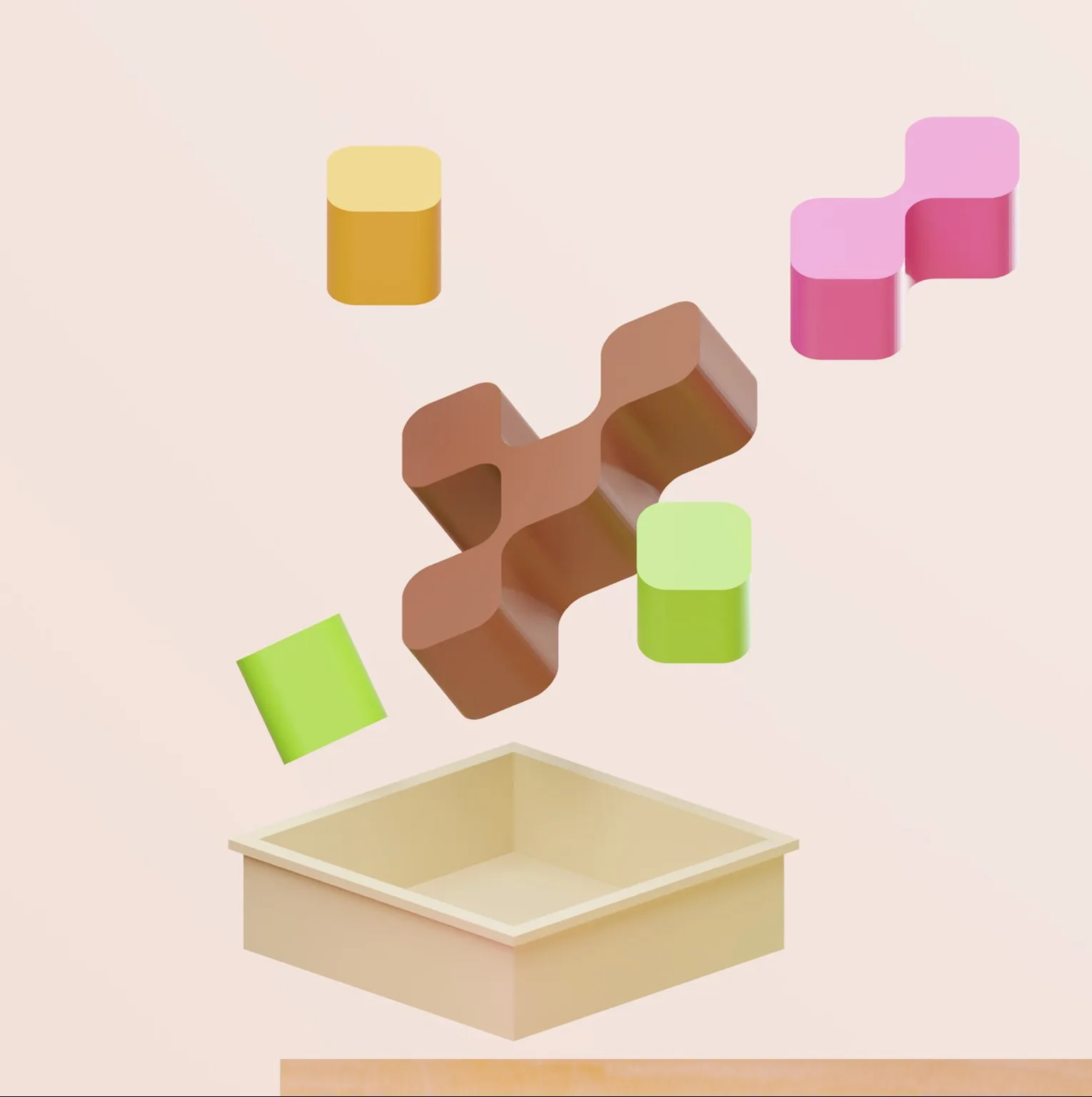
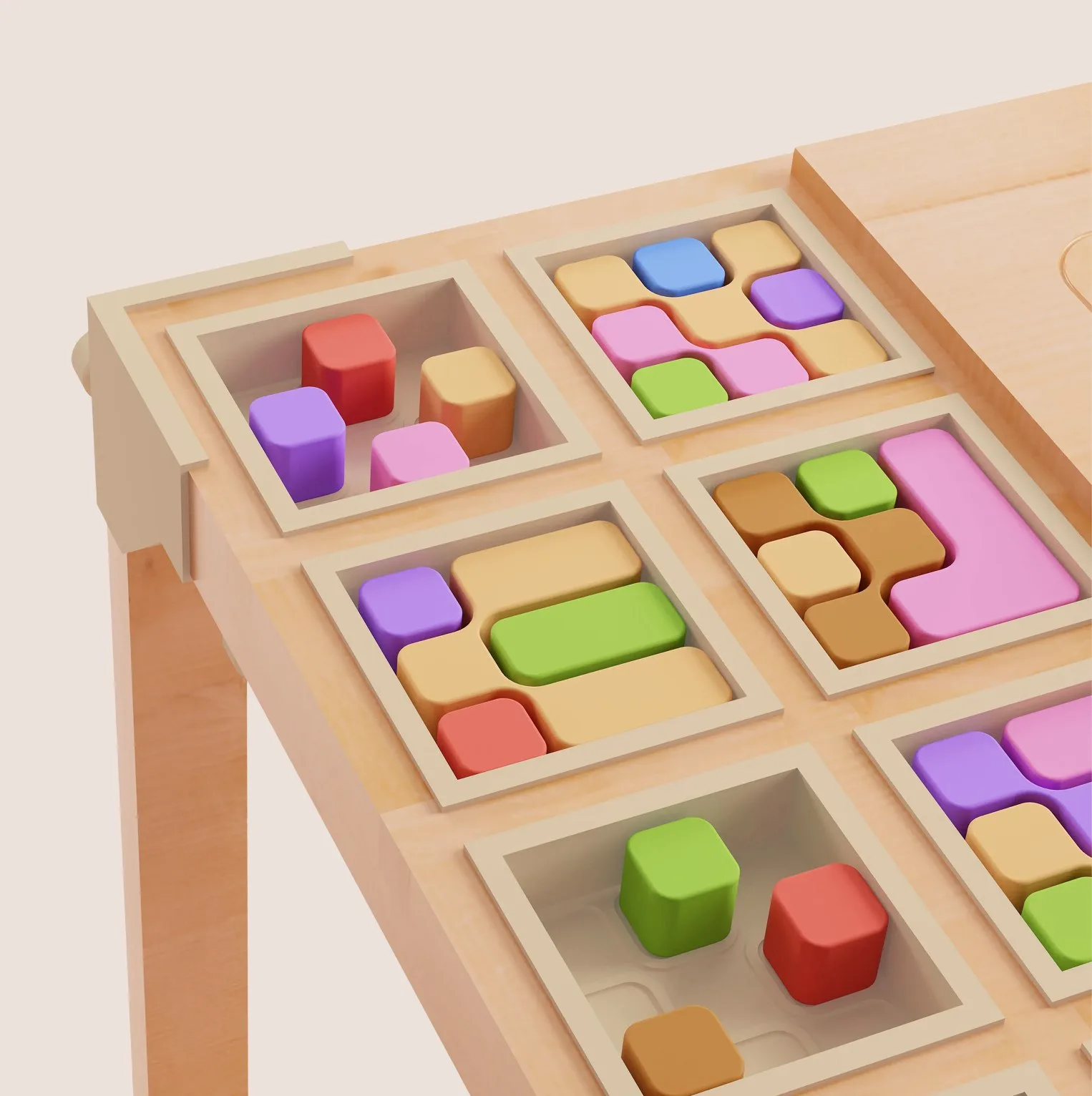
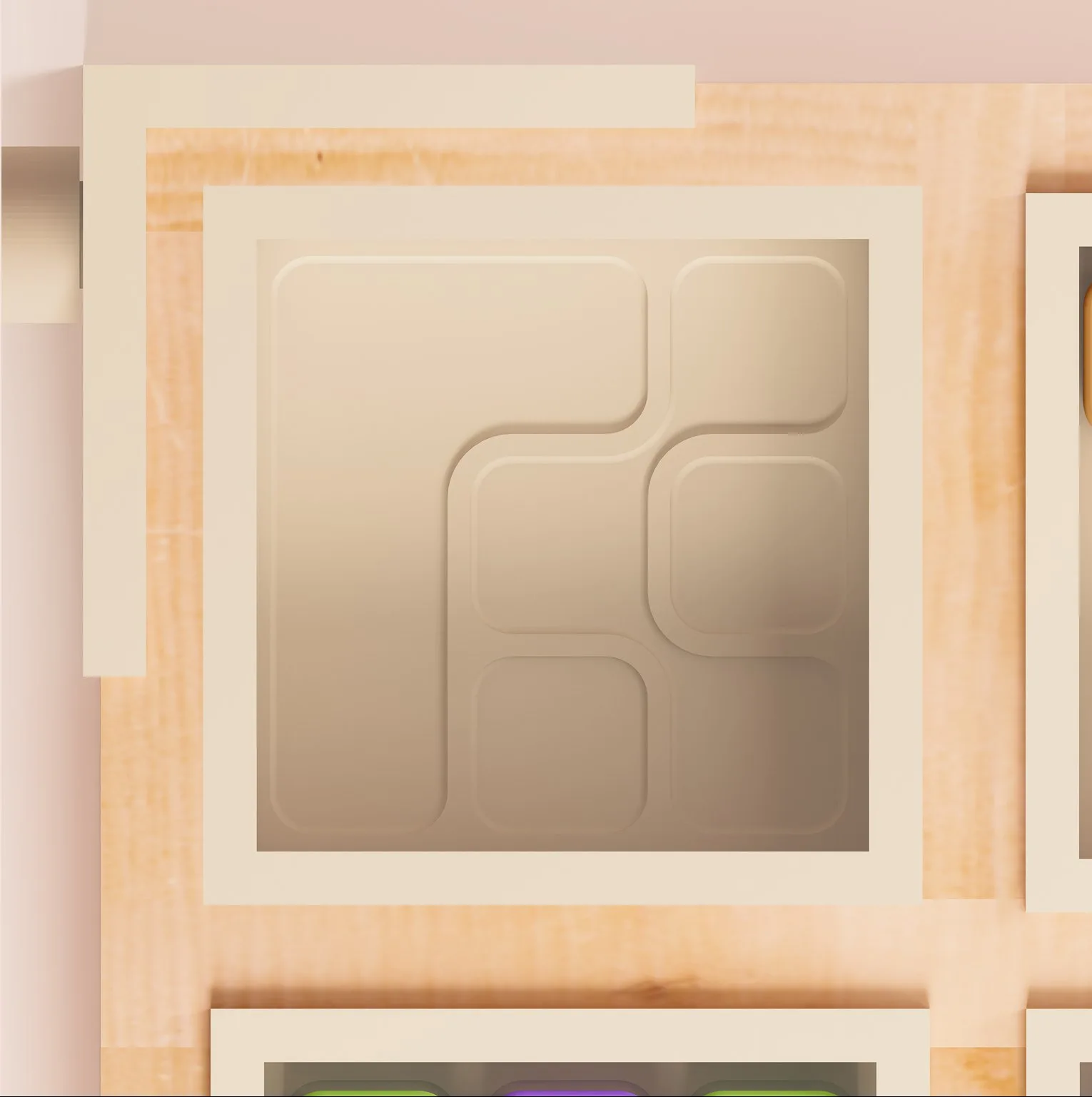
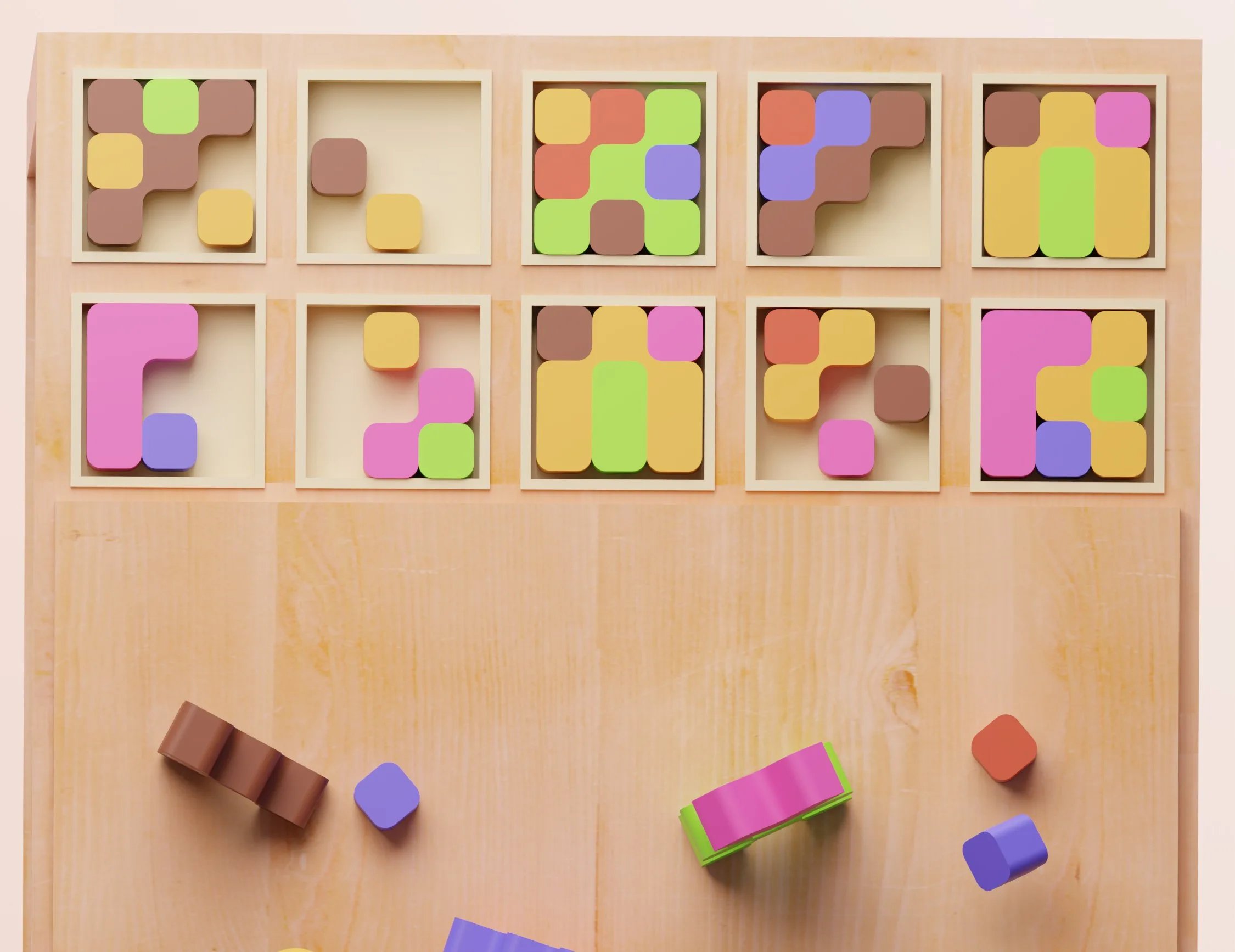
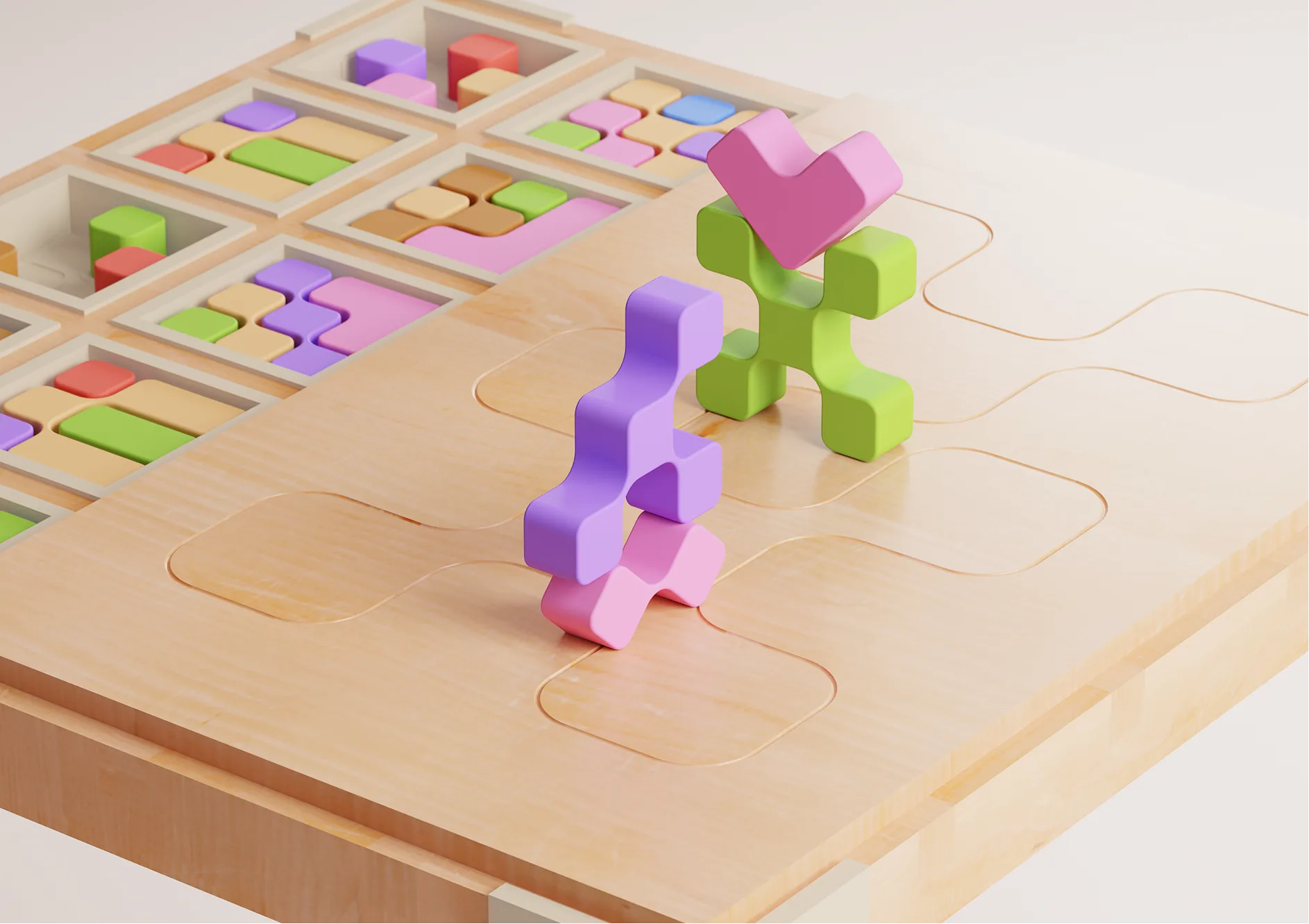
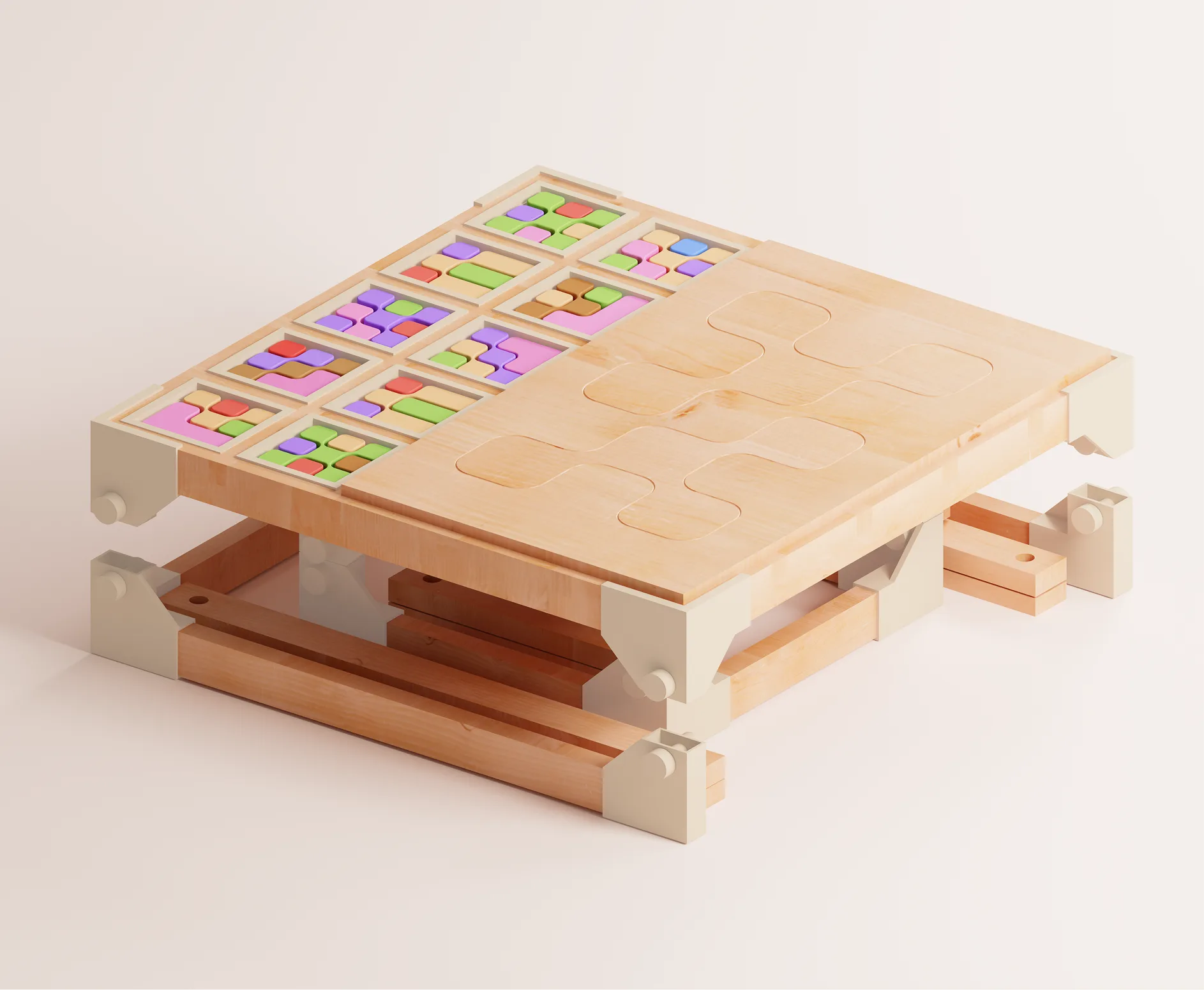
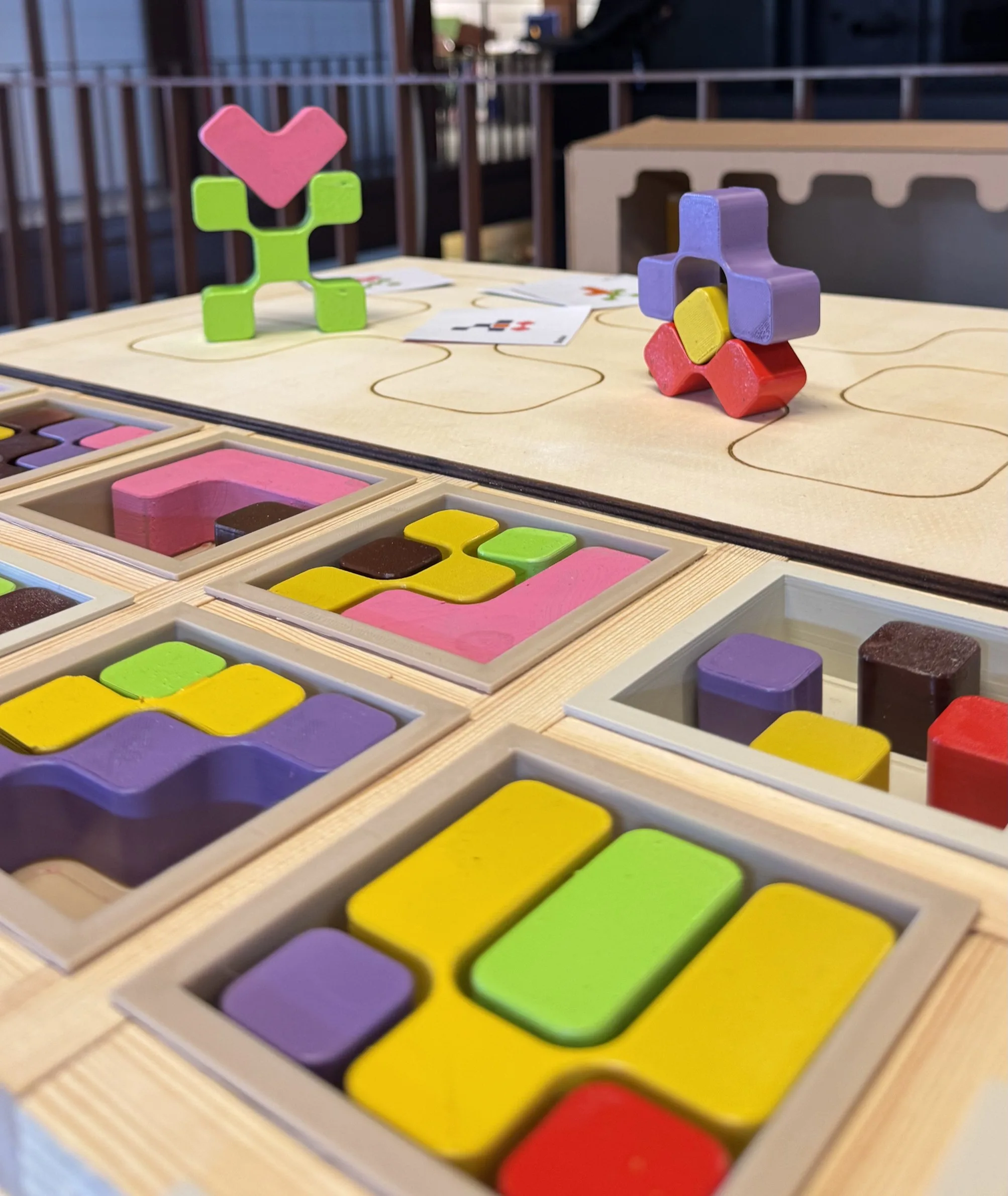
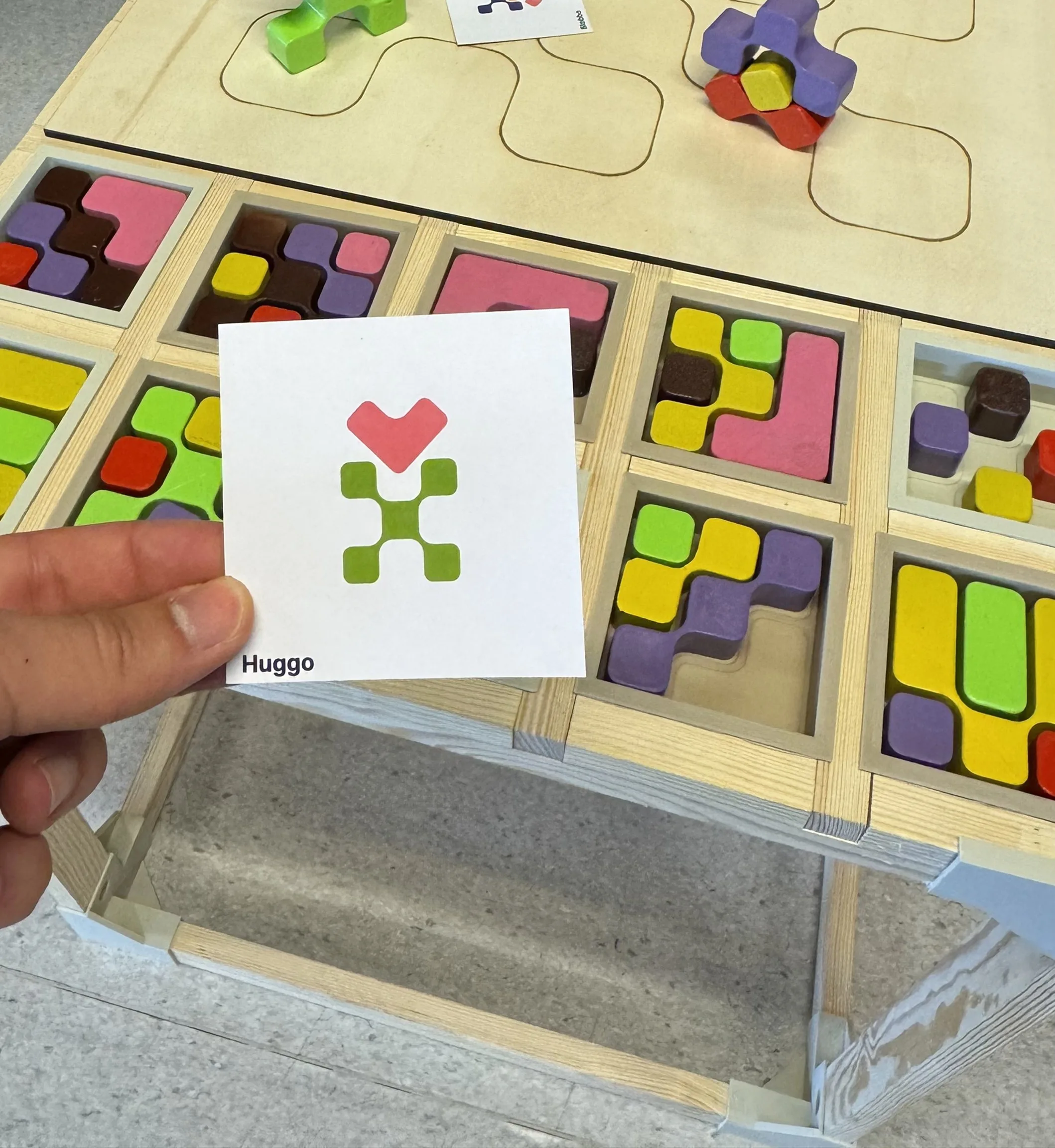
Twelve recessed trays sit flush in the beech top. Pieces drop in for play and stay in for homework — the work surface is the storage, so tidying up is the last move of the game rather than a separate chore.
A box that explains the system
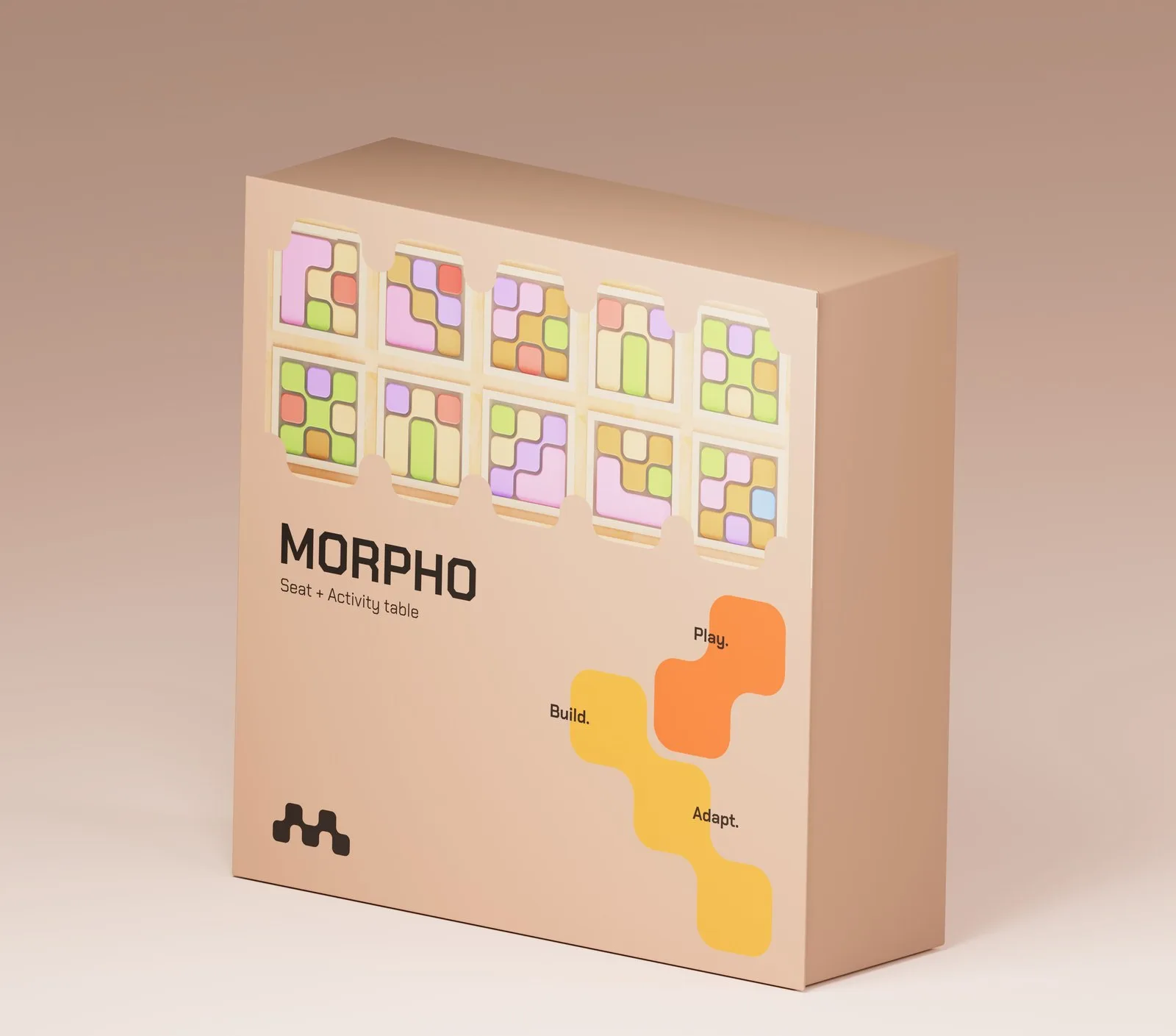
The flat-pack graphic is the tray grid, printed at scale. Before a single piece comes out of the carton, the child has already seen how the game works.
Joints a seven-year-old can close
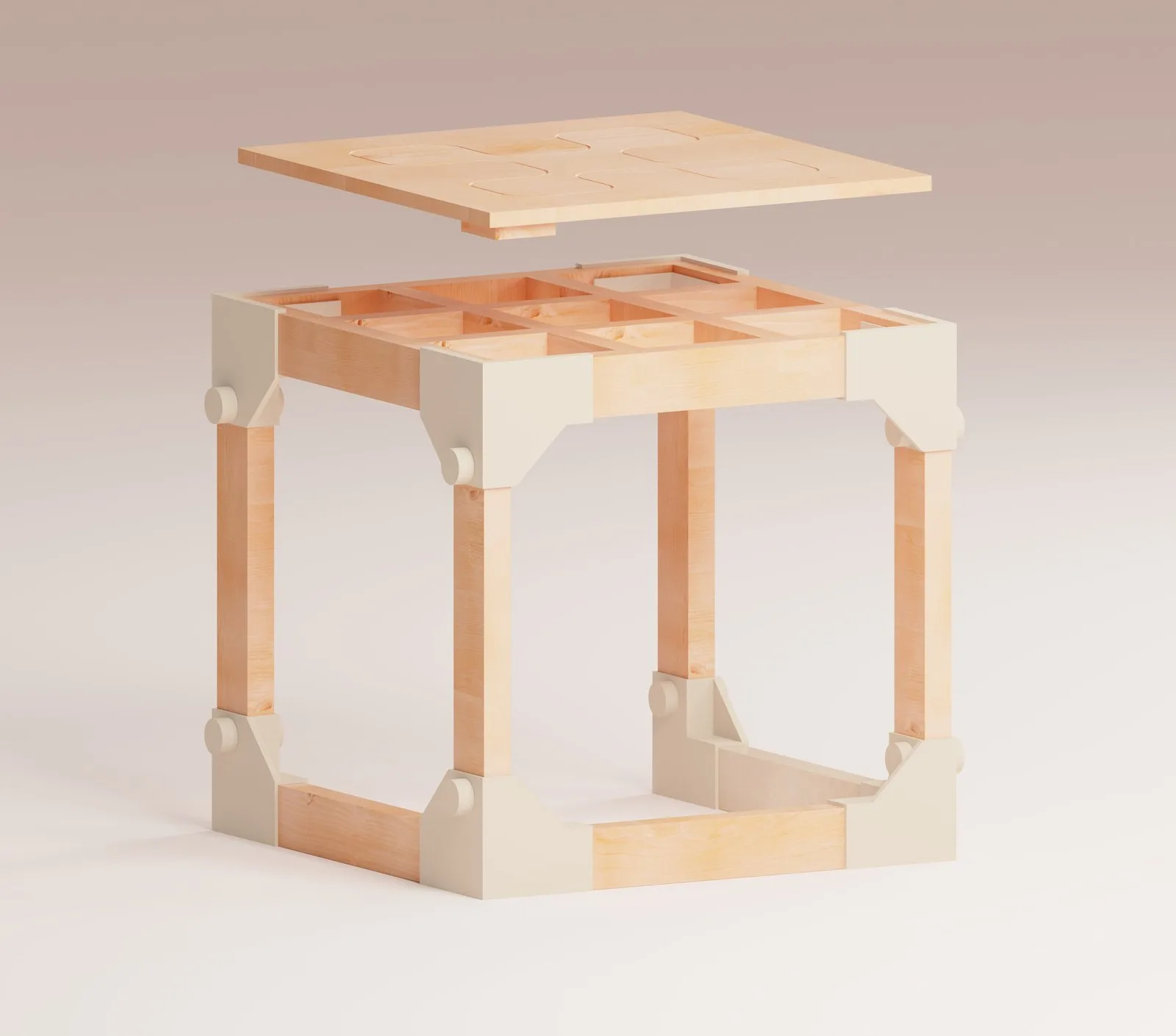
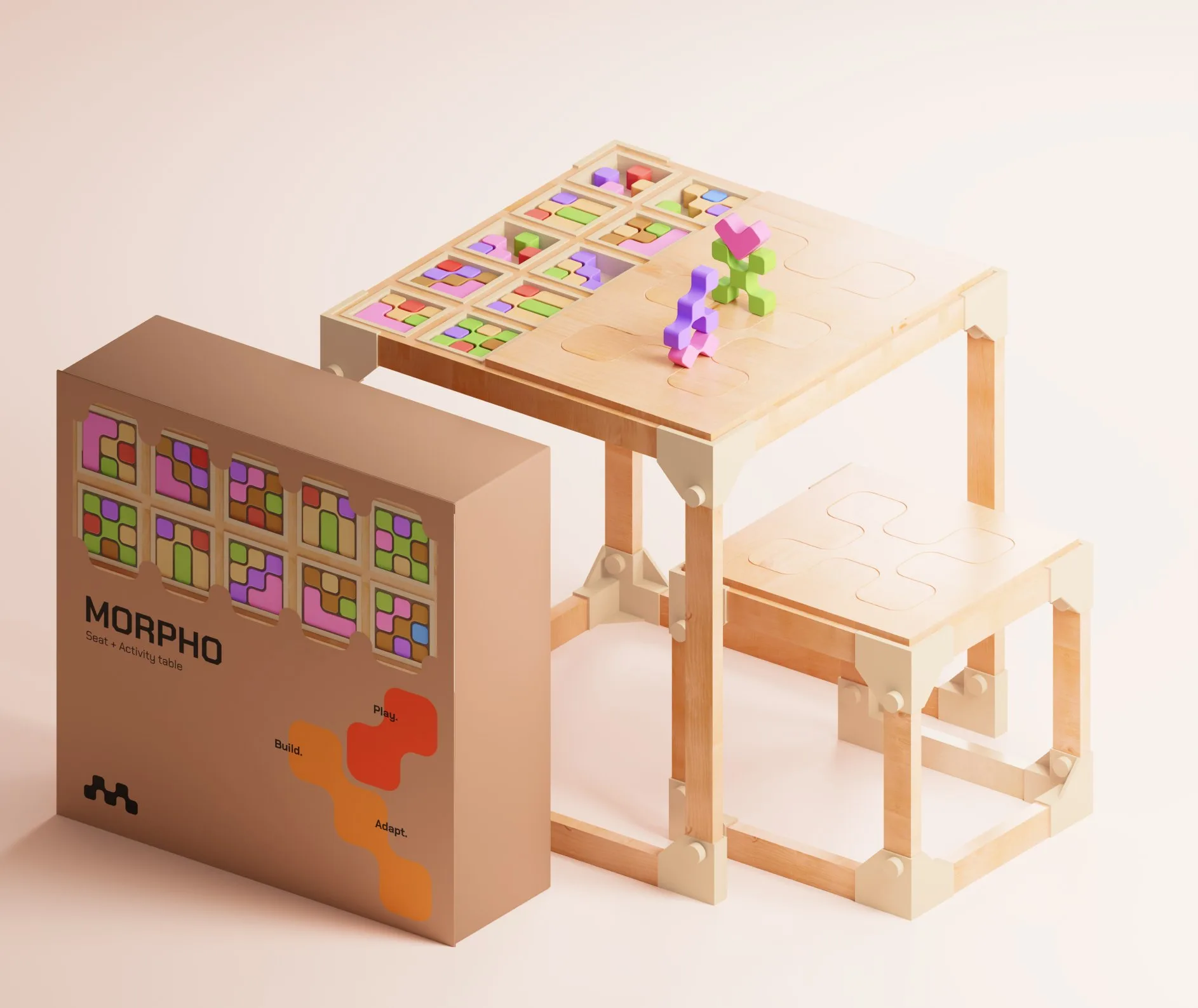
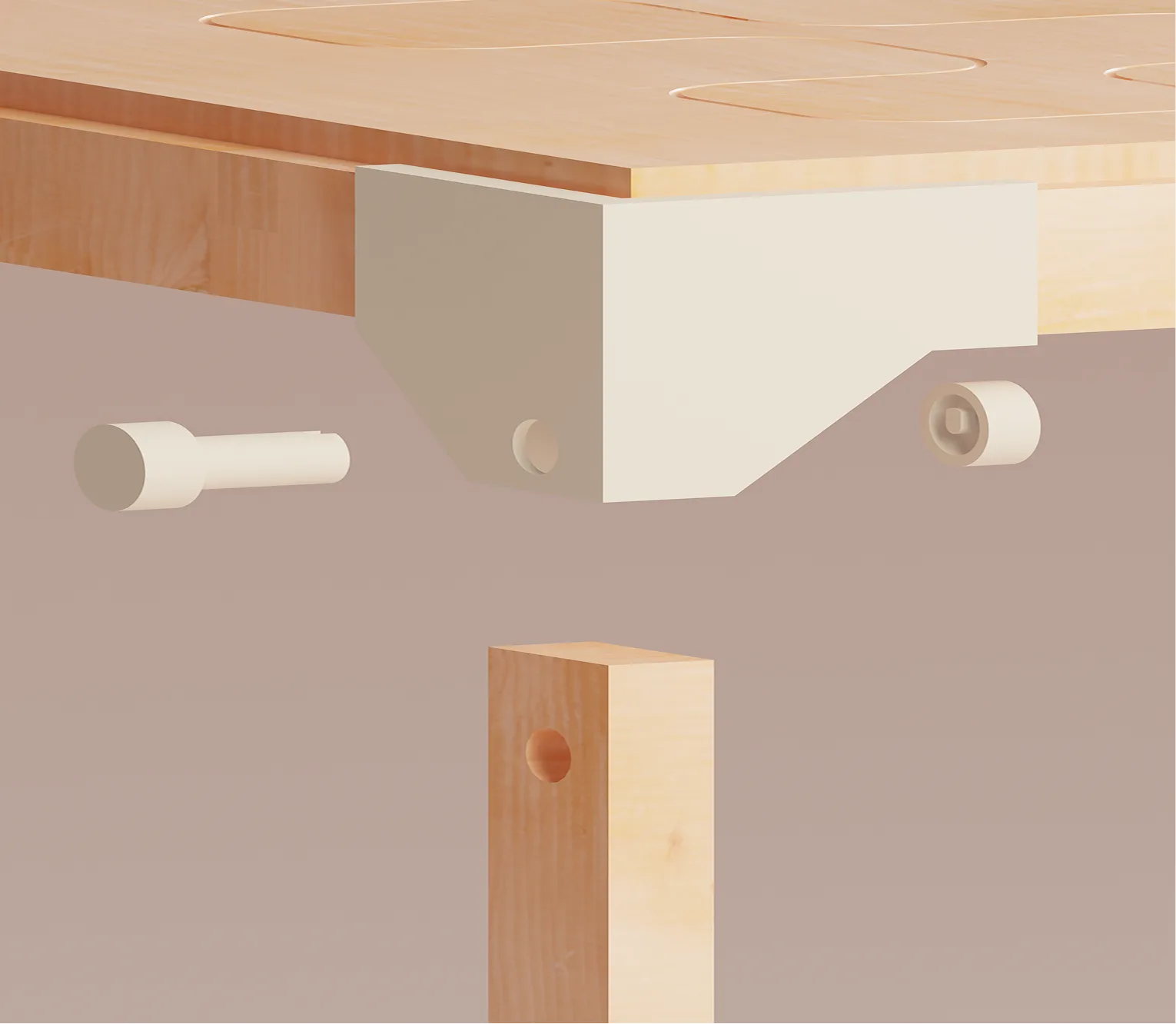
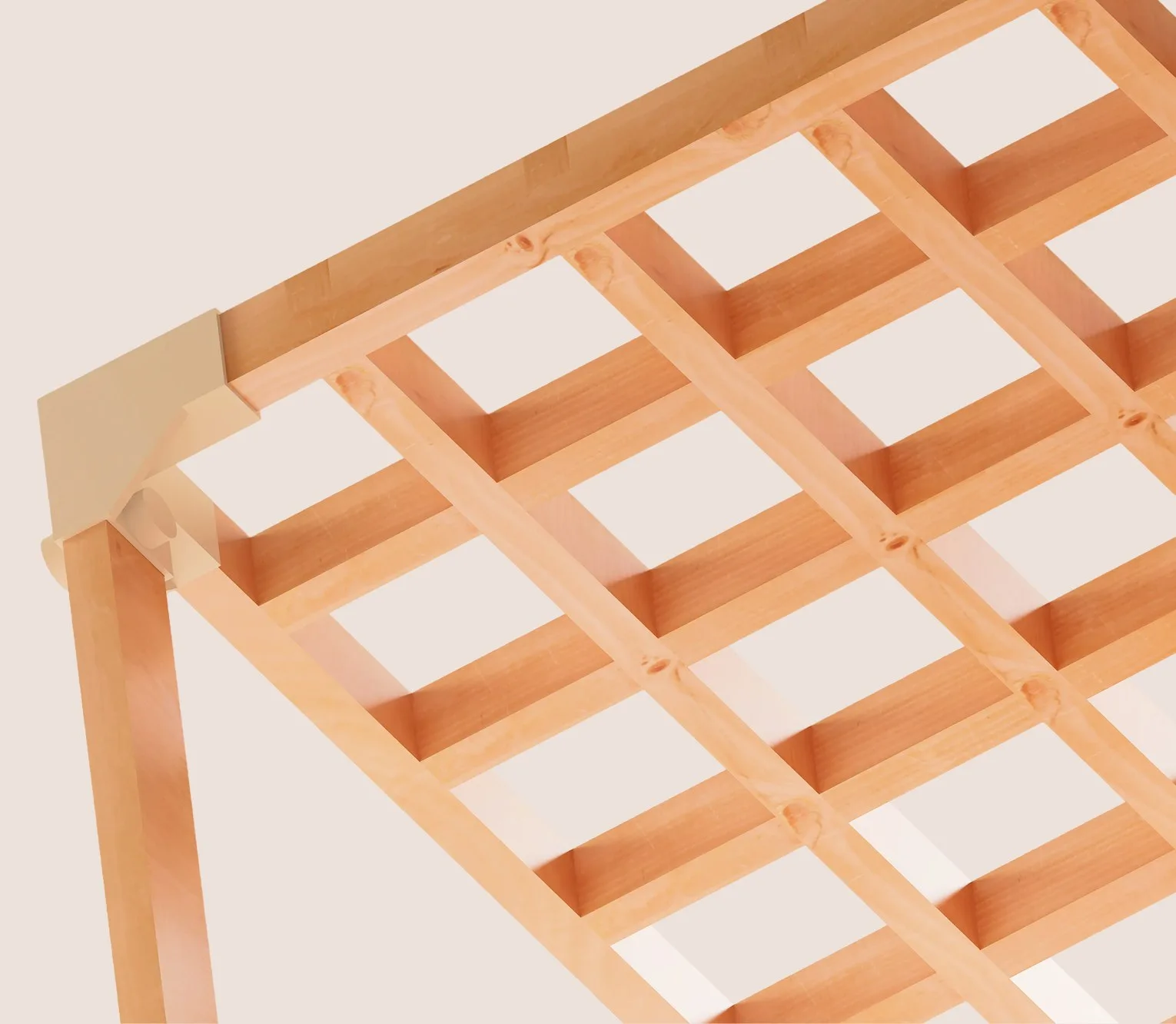
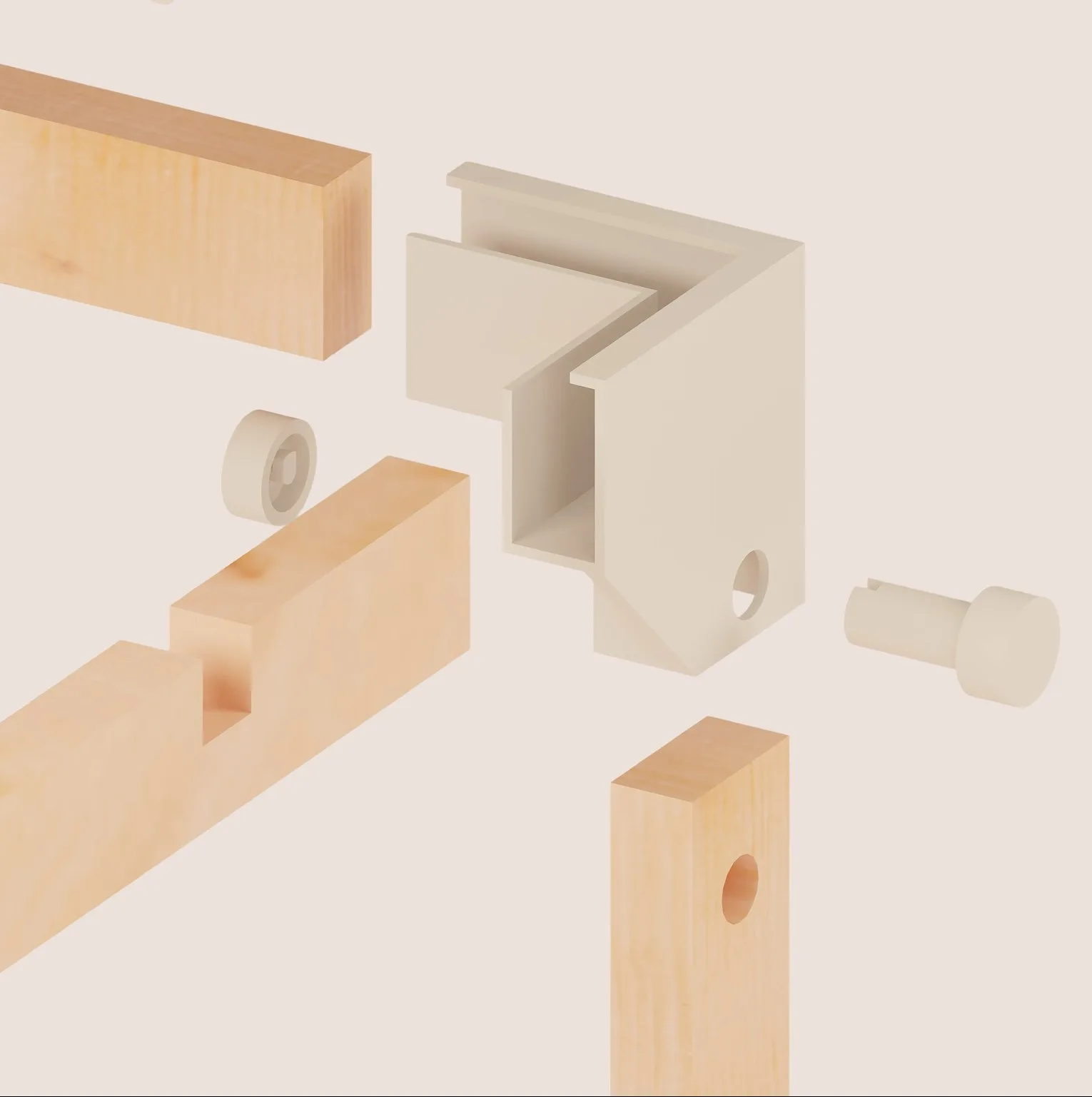
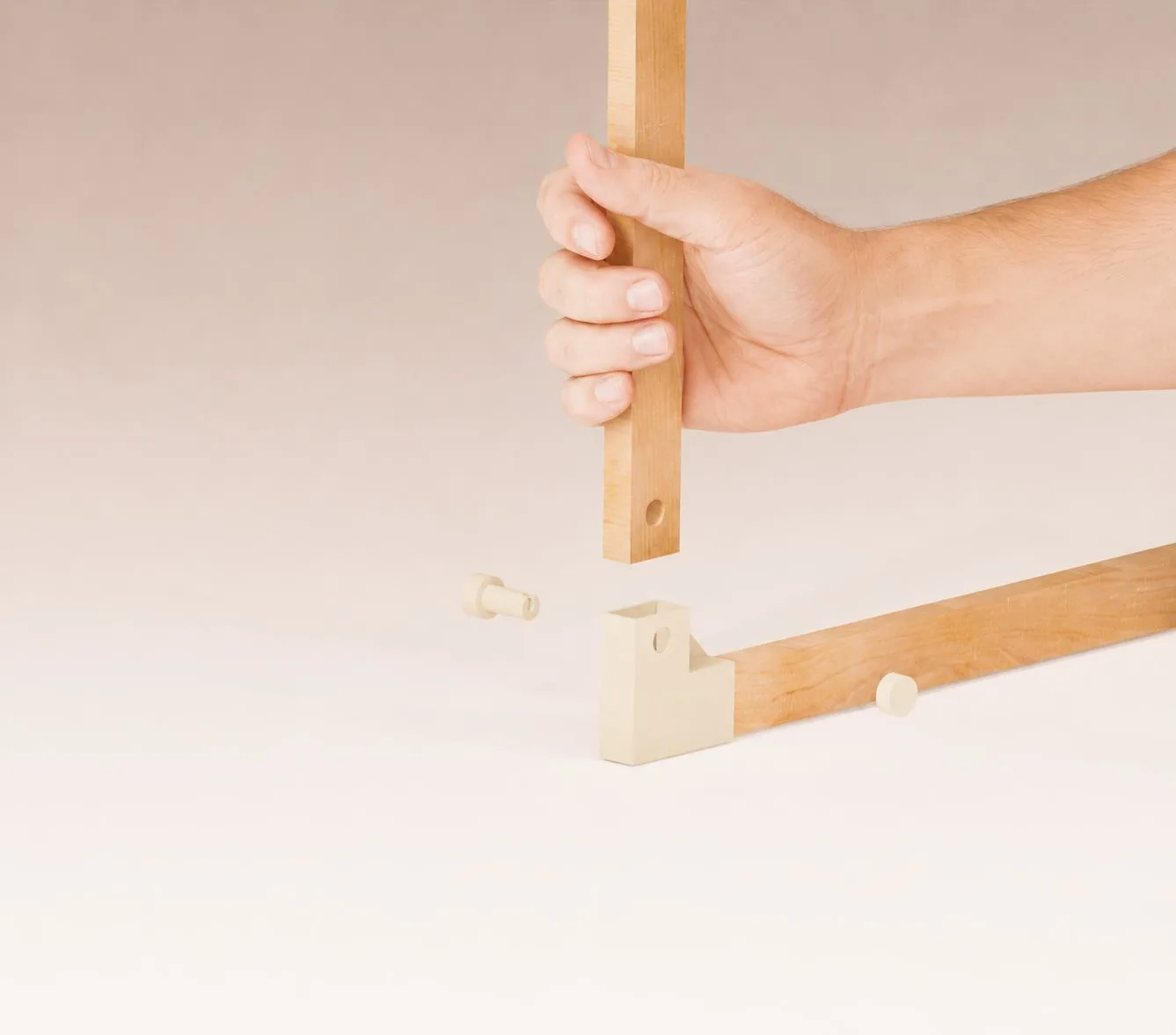
One printed corner takes three members and a hand-tightened pin. No fixings to lose, no orientation to get wrong, and enough grip that the finished desk takes an adult's weight — which we tested, repeatedly.
Painted by hand, built for real
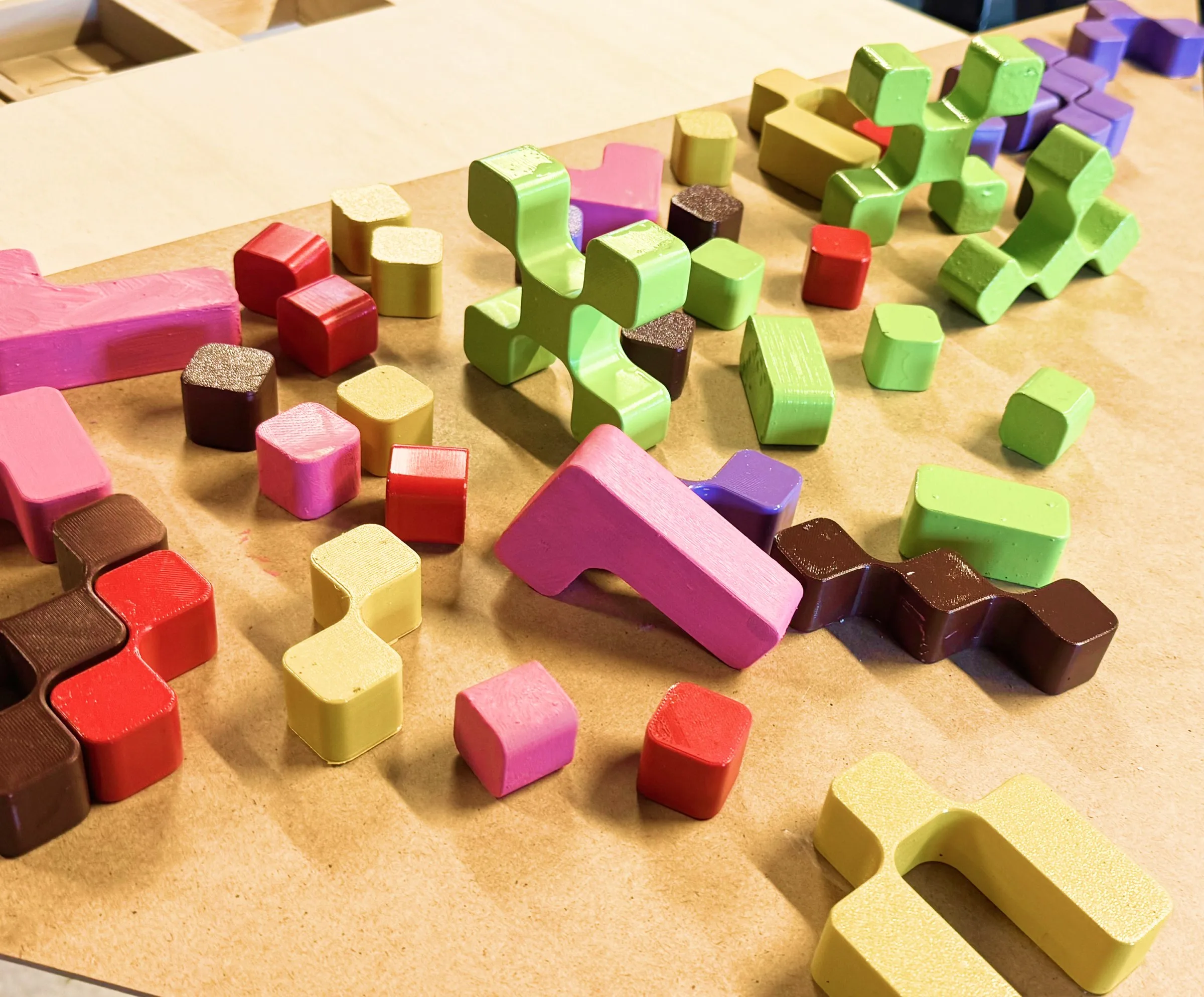
Morpho went from printed joint studies to a full-scale desk and stool that stood up in an exhibition hall and got handled by strangers all week. That is a different quality of evidence to a render.
What I'd do next
Run a months-long play-test with a family to see how the reconfiguration actually holds up, and explore an all-wood joint to drop the printed parts entirely.