Luma
Status you can see across the room.
Industrial Design · Product UX · 2025
- Role
- Context
- Team
- Timeline
- Tools
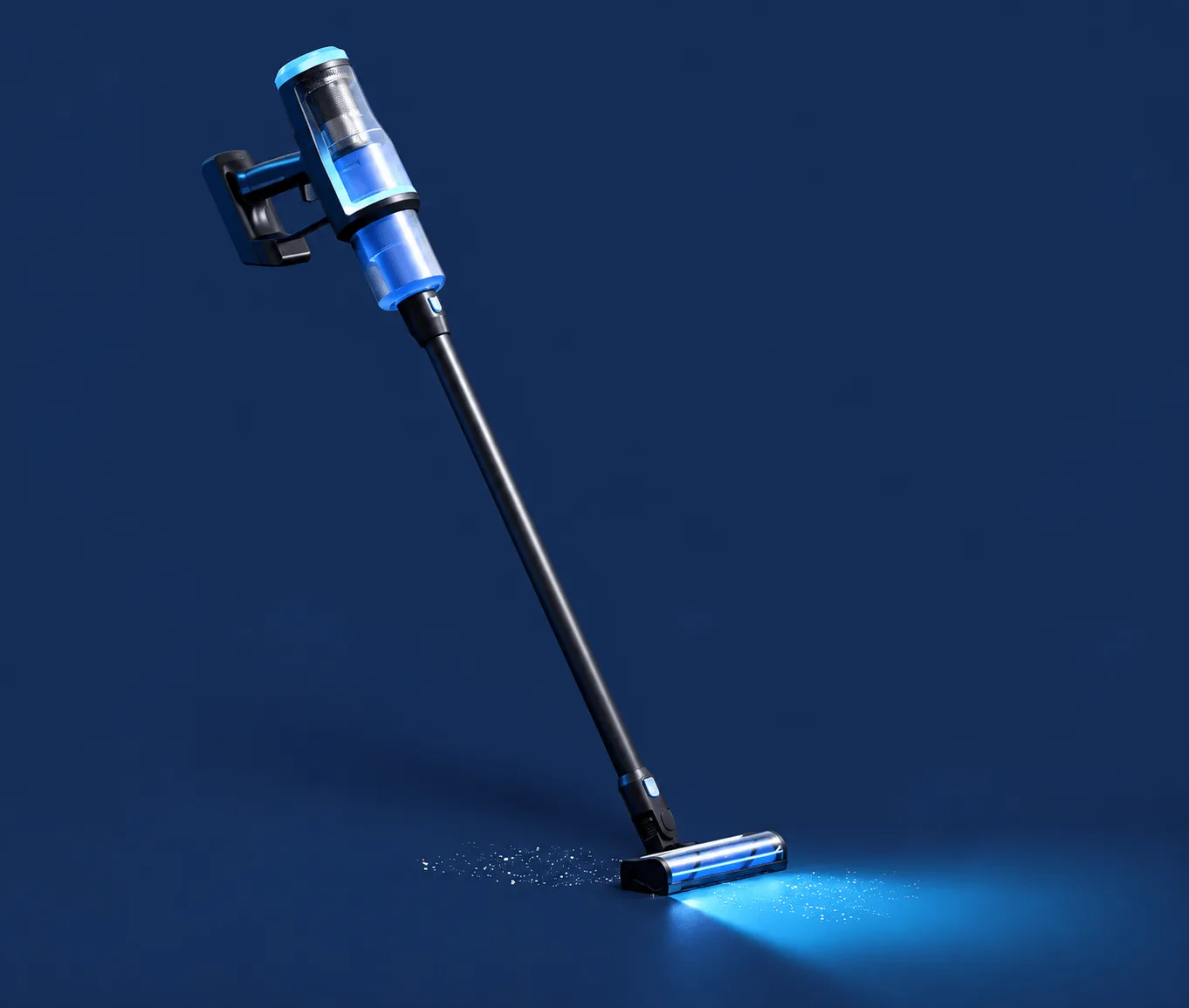
Light does the talking
Twelve homes, one repeated failure
Twelve interviews in people's own homes, watching them clean rather than asking them to describe it. Every frustration we recorded came back to the same thing: the machine knew something the person didn't.
Status was invisible — a full bin or a blockage registered only once suction had already dropped, after the product had been quietly failing for minutes. Beeps did not scale: an audio cue is ignored in a room with a running vacuum in it, and means nothing without the manual nobody kept. And an app adds friction rather than removing it. Not one person would stop mid-clean, dry their hands and unlock a phone to check performance.
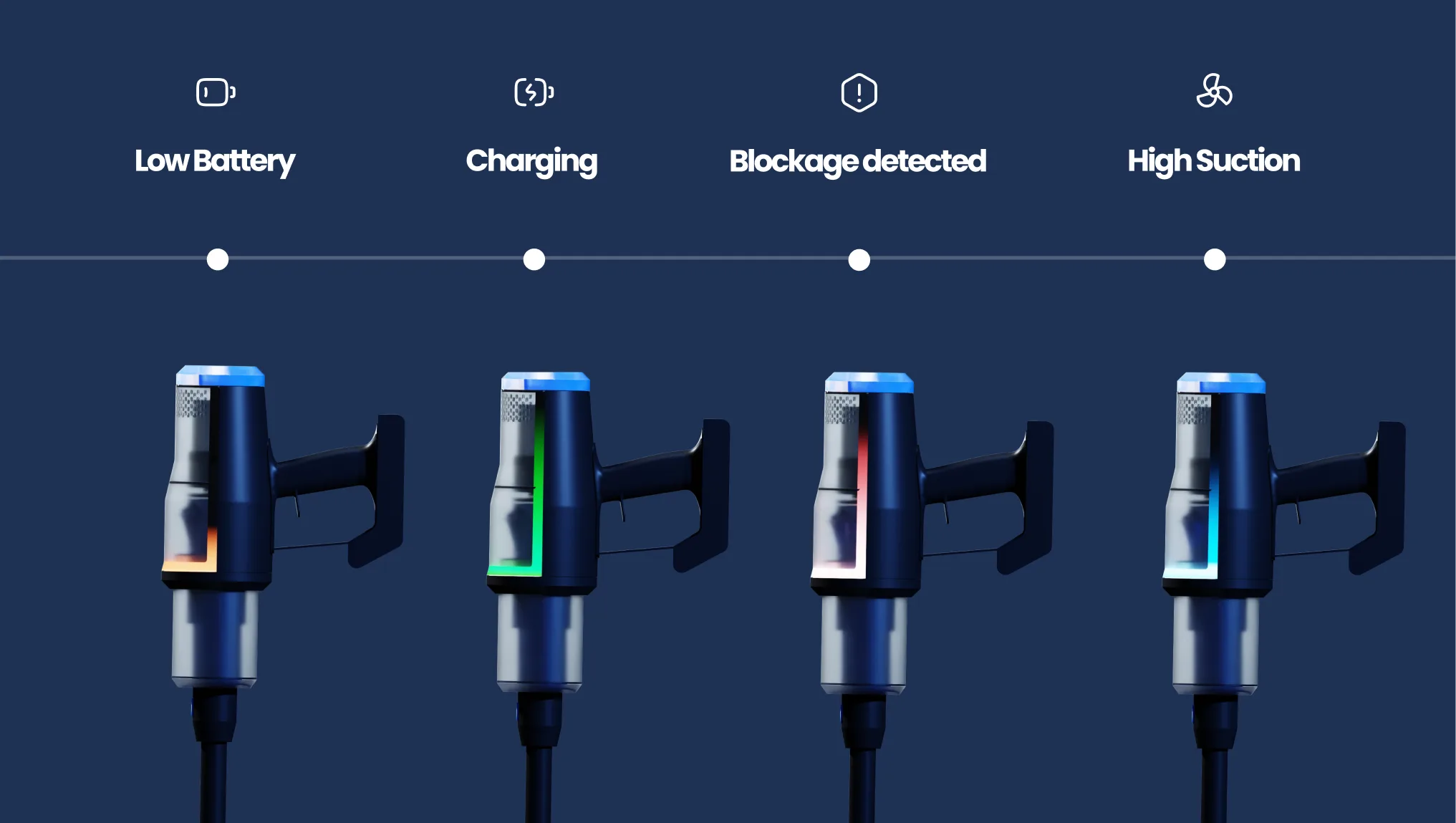
One diffuser, four meanings. The body never changes — only the colour and the way it moves.
A warm amber pulse asks for the dock, visible from across the room. A green fill climbs the strip as the battery charges. Red localises at the chamber, where you would intervene. Cool cyan signals boost mode and live cleaning performance.
A body that is mostly diffuser
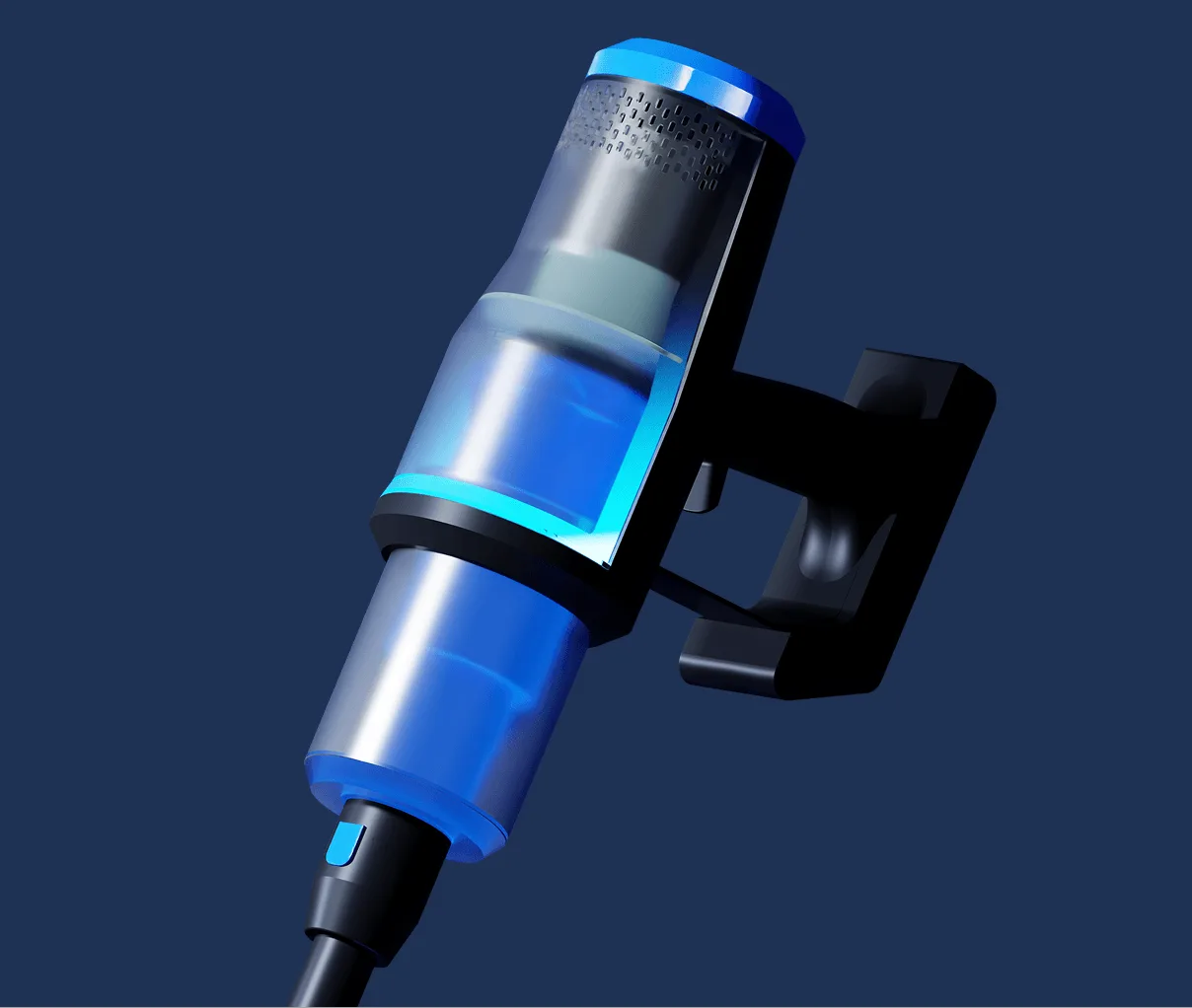
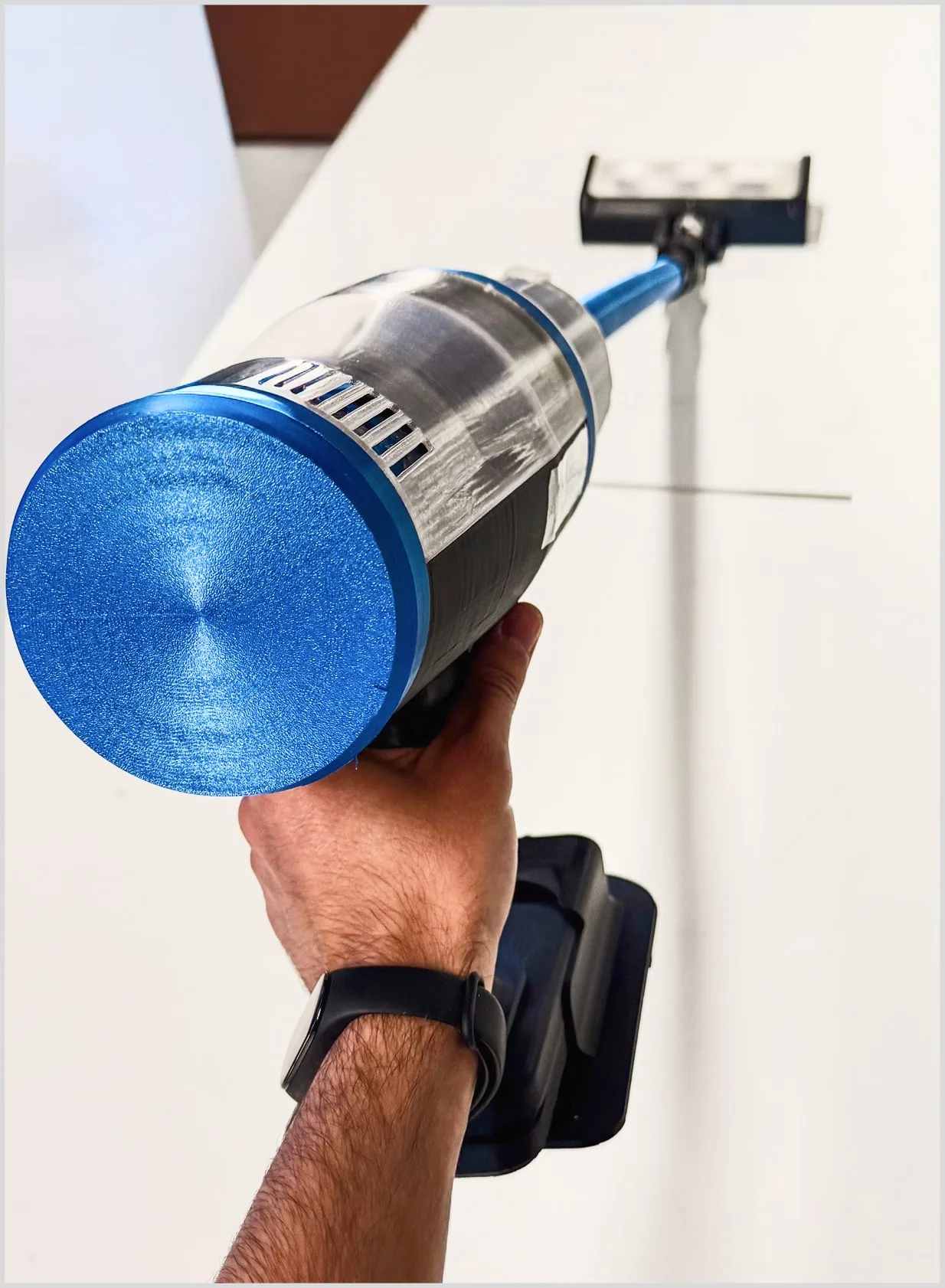
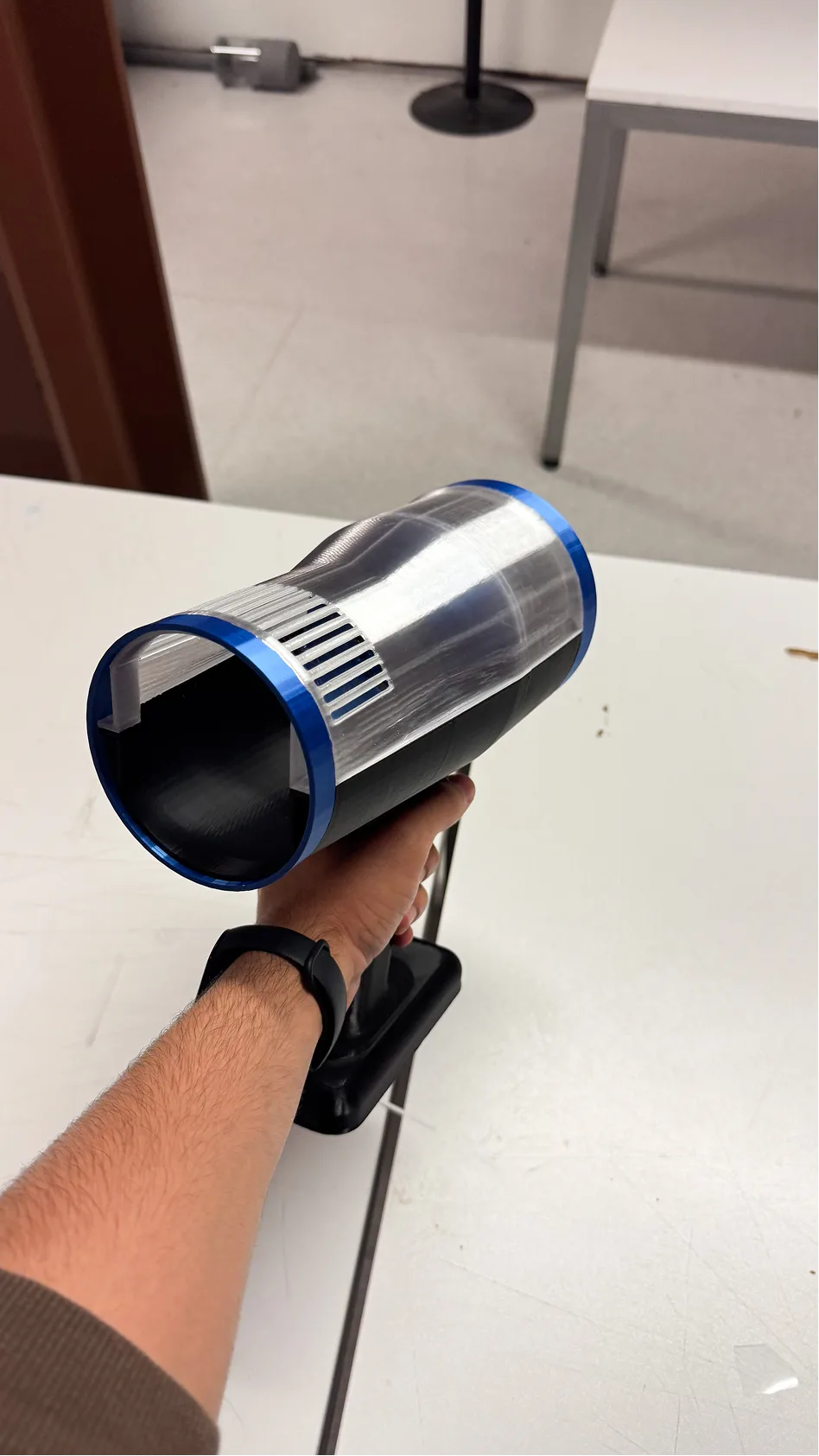
The strip isn't a detail applied to the housing; it is the housing. A frosted band wraps the full circumference of the dust chamber so the signal reads from any angle, standing or docked — on a single flexible PCB, so there is no dark side to the signal and no orientation in which the product goes quiet.
A beam that shows you what you missed
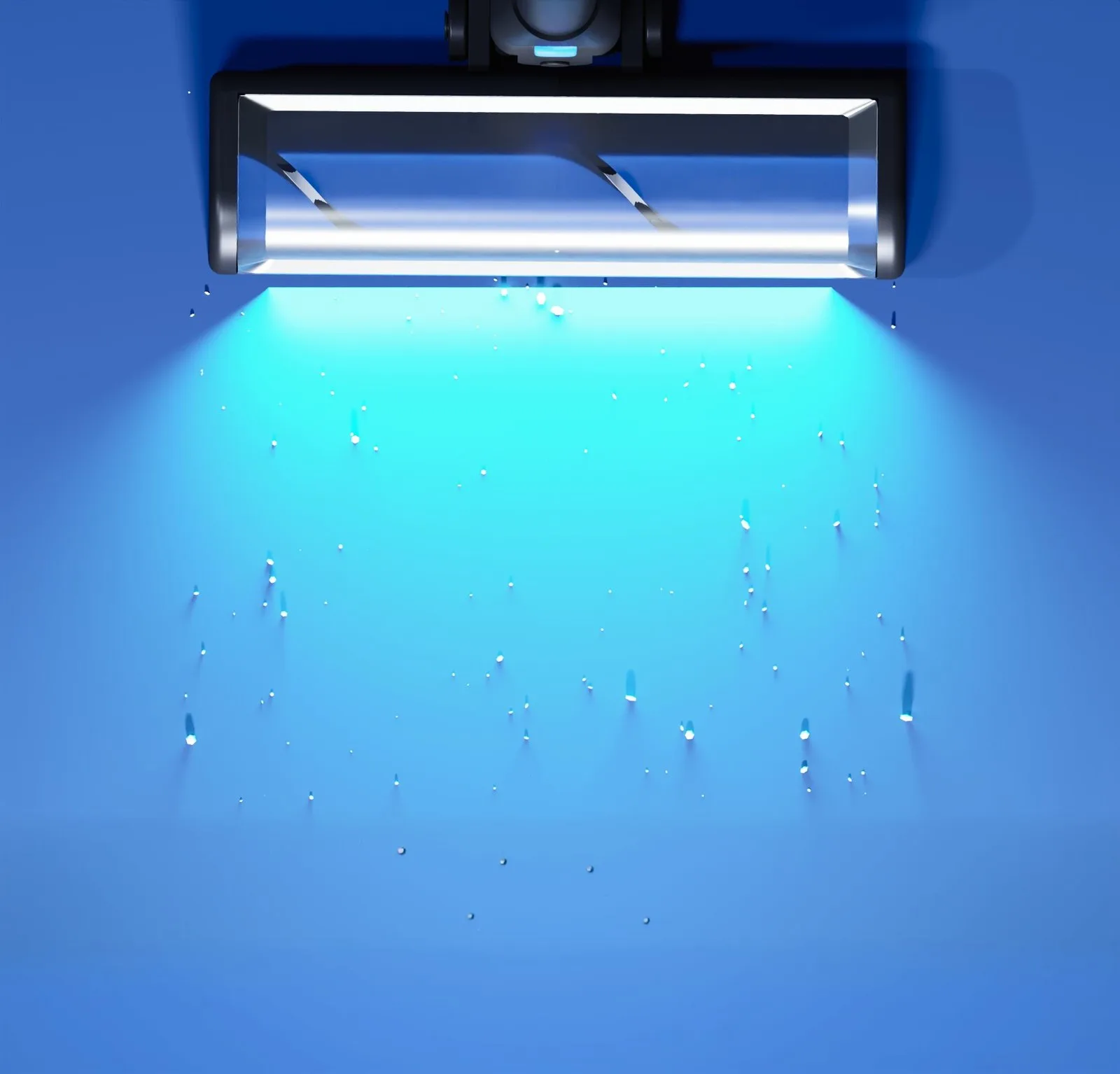
A wide, low-angle beam throws every particle into relief ahead of the brush bar. It is the same idea as the status strip pointed at the floor: put the information where the person is already looking.
Breadboard before bodywork
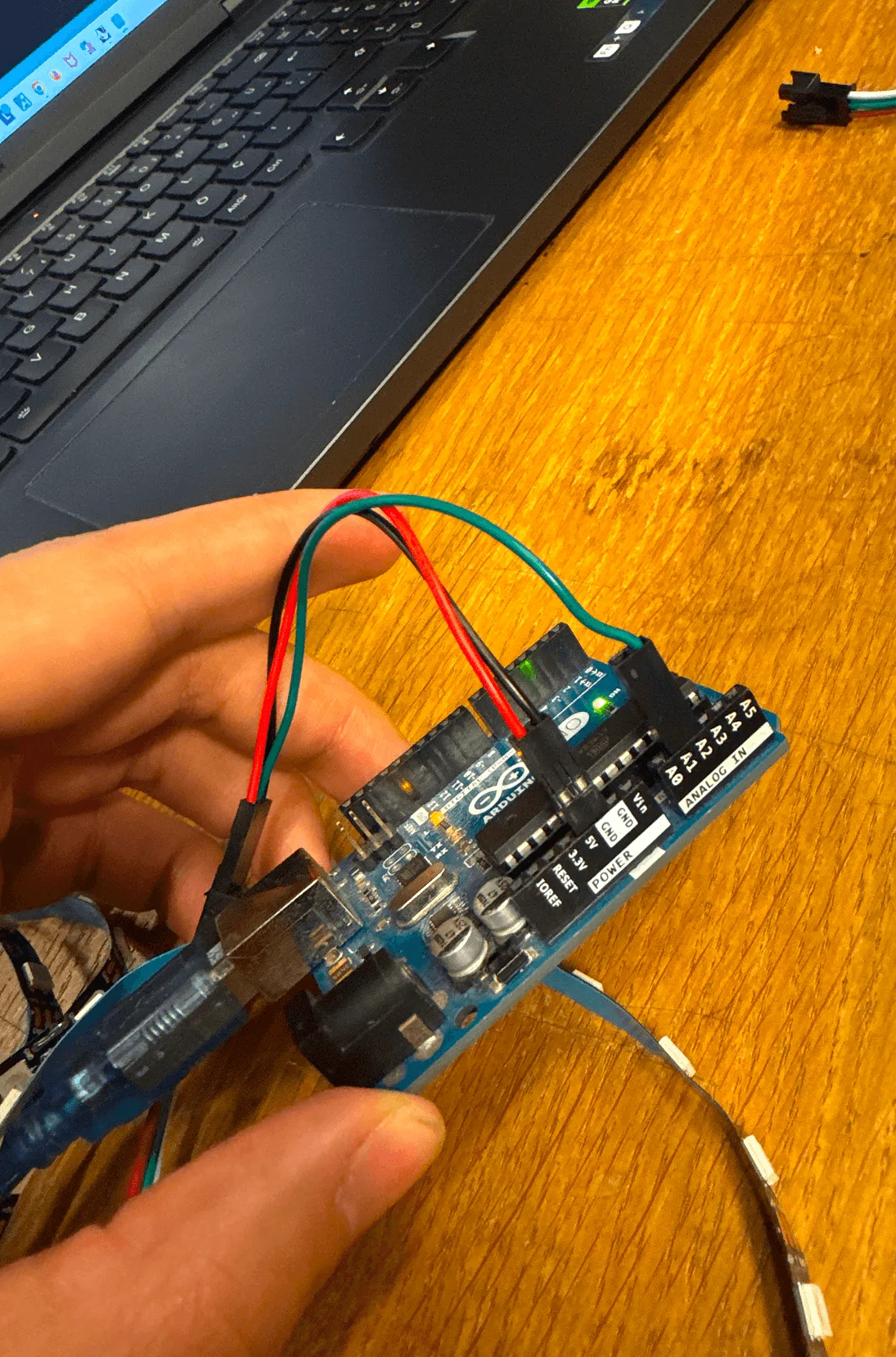
The behaviour had to be right before the form could be. We built the feedback loop first — an Arduino, an addressable strip and a lot of arguing about timing — and only then printed a body to put it in.
Everything about the final language was tuned on that bench: how fast a low-battery pulse breathes, how far a charge fill climbs per minute, how red localises to the blockage. None of it was modelled first.
Rather than print the whole product and learn nothing, each print after that answered one question. Does the chamber diffuse evenly. Does the cyclone geometry clear. Does the dock hold the weight at that angle.
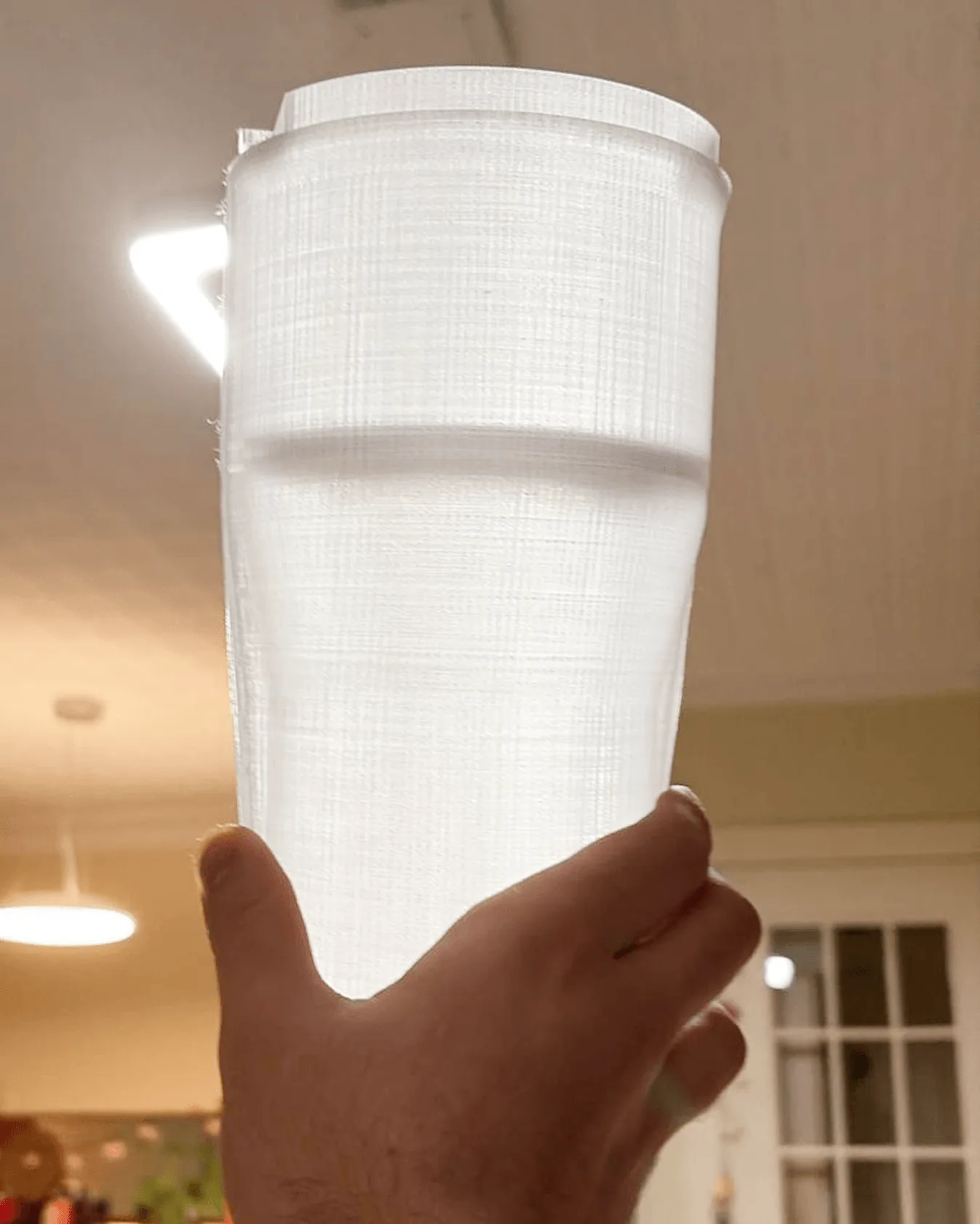
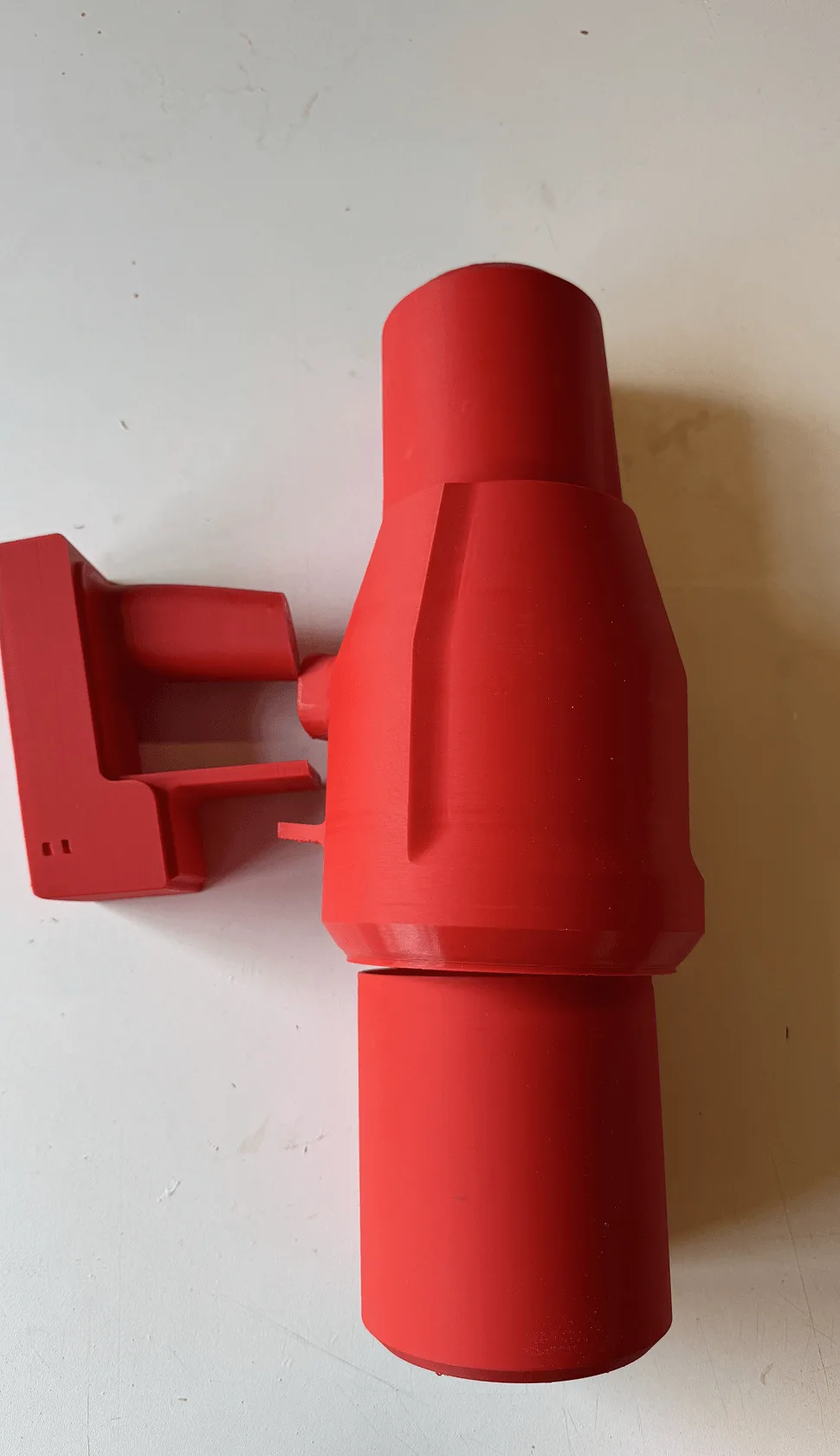
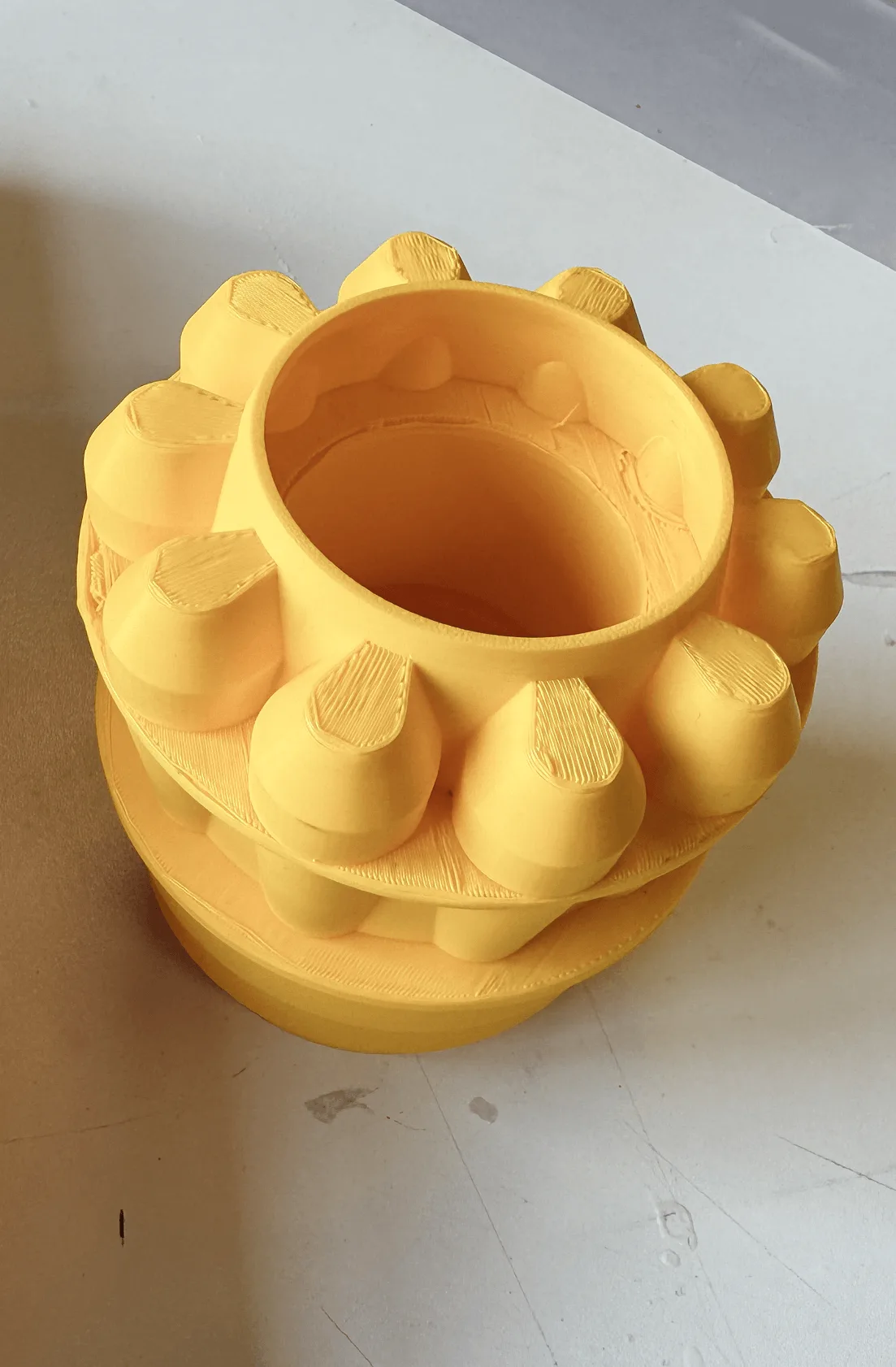
The last prototype existed to answer the only question renders can't: does the strip still read when the thing is in your hand, at arm's length, in a normally lit room. It did — and the balance point moved 20 mm because of it.
Legible before it is switched on
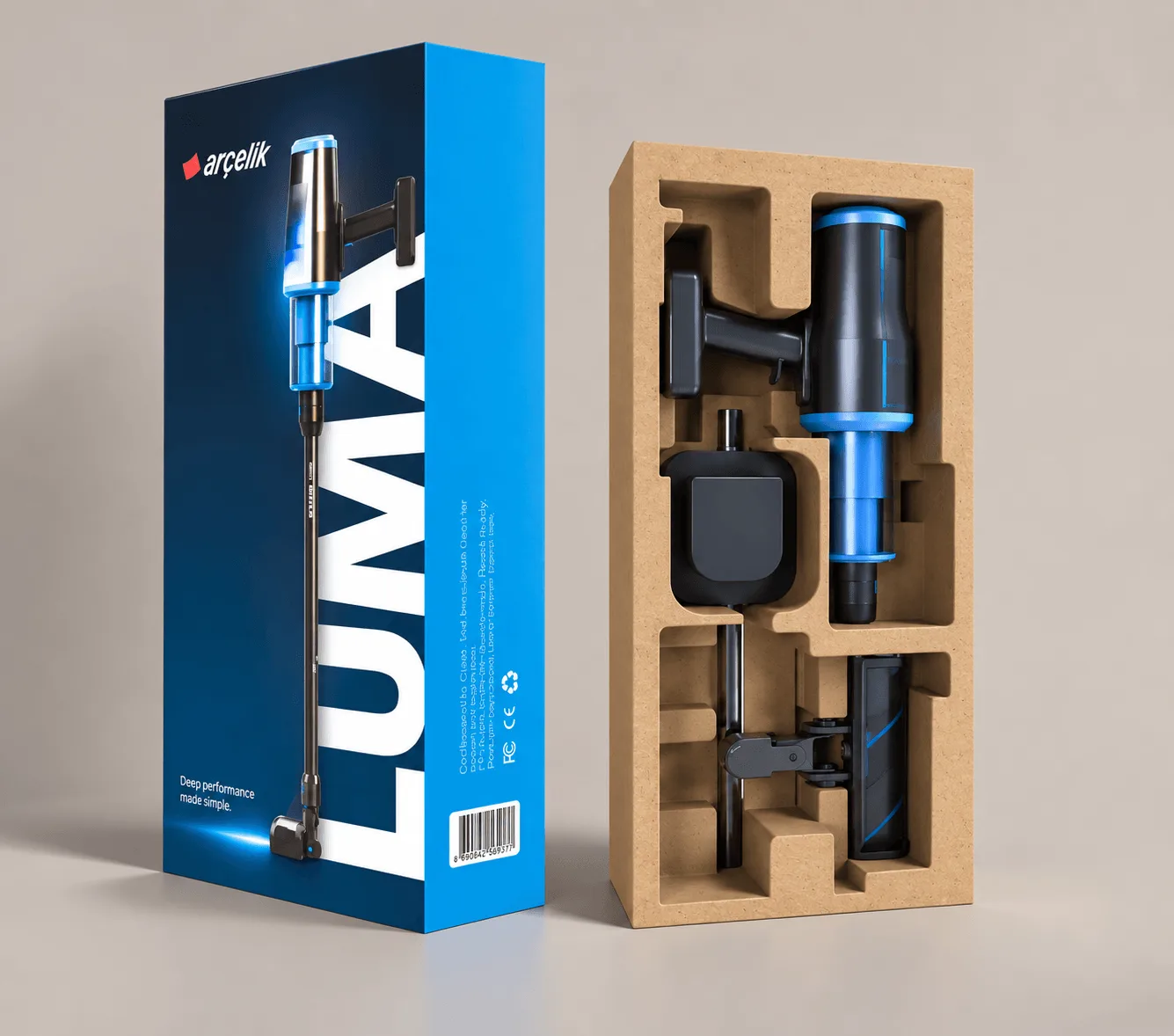
Moulded fibre, one tray, every module visible at once. The first thirty seconds of ownership are the first test of whether a product explains itself.
What I'd do next
Test the colour associations across cultures — the light language assumes a set of meanings that may not travel — and explore subtle haptics as a second feedback channel.